Podcast: Play in new window | Download
Subscribe: Apple Podcasts | Android | Podcast Index | RSS
Podcast (audio): Play in new window | Download
Subscribe: Apple Podcasts | Spotify | Android | Podcast Index | RSS
Show notes
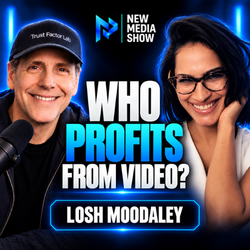
In New Media Show #691, Rob Greenlee and podcast sponsorship strategist Losh Moodaley examine a practical question: when does the cost of video serve the creator’s business? Their conversation connects production economics, audience relationships, sponsorships and human creativity in an AI-driven media environment.
Three practical takeaways
- Build an audience: connect platform discovery to a direct relationship. Rob and Losh discuss newsletters, websites and subscriptions as ways to reduce dependence on one distribution platform.
- Earn trust: make relevance and human connection part of the experience. Their discussion of sponsorships considers how a useful integration can serve the audience, rather than simply increasing the number of ads.
- Grow a media business: evaluate video against a defined goal and its full cost. Losh suggests considering customer acquisition and business value alongside advertising revenue and download counts.
Try this: Add up the time and money behind one episode. Choose the outcome it should support—such as a qualified inquiry, a subscription or a useful audience response—and track the available evidence over a defined period. Compare that evidence with the cost before expanding production. This is an editorial exercise, not a prediction of revenue or growth.
Who benefits from the move to video?
Losh’s article, The Price of Visibility: The Hidden Economics of Podcast Video, frames the discussion. Video can introduce a show to new people, but equipment, editing, lighting and publishing work add costs. More viewing time does not automatically produce a sustainable business for the creator.
Rob and Losh discuss changing viewing habits and the distinction between discovery, attention and commercial value. Their views on platform incentives and the future of distribution are interpretations and predictions expressed in the conversation.
Evaluate the investment around your business
Losh argues that the right decision depends on the purpose of the show. A hobby, an advertising-supported podcast and a show that supports consulting or product sales have different economics. She suggests looking at video as a possible customer-acquisition and marketing investment, rather than relying on one measure such as CPM or downloads.
The useful test is what happens after someone discovers the content. A new viewer might become a subscriber, customer, community participant or professional contact. Those outcomes need evidence; they cannot be inferred from views alone.
Build relationships and retain control
Rob and Losh discuss using websites, newsletters, subscriptions and communities to maintain direct audience relationships. They also emphasize the value of intellectual property and the risks of relying entirely on another company’s distribution rules.
The conversation considers direct brand relationships, memberships, services and experiences alongside conventional advertising. Losh questions generic sponsor integrations and discusses approaches that create a useful audience experience. These are opportunities to evaluate, not evidence of a particular show’s revenue.
Community, commerce and the audience experience
Rob describes his observations of Whatnot, including live sales, audience participation and collaborations between creators. He and Losh explore how elements of that experience might apply to other media businesses.
They also consider where the model may not fit. Some visual content loses meaning when heard without a screen. Rob explains why he has sometimes edited audio and video separately, and questions whether a single production approach serves every audience.
Measurement, AI and the human connection
The discussion moves from what audiences call a podcast to how creators evaluate attention and business outcomes. Rob speculates that AI might eventually help reconcile fragmented metrics. This is a prediction, not a claim that a reliable unified measurement system already exists.
Rob and Losh distinguish human-created work, AI-assisted human work and fully synthetic media. They explore the possibilities for new characters and experiences while returning to human connection, judgment and responsibility. Their forecasts about synthetic media should be understood as opinions about possible developments.
Build for your audience and your own goals
Losh’s closing advice emphasizes consistency, a suitable niche, understanding the audience and considering business models beyond standard advertising. Rob argues for testing whether a workflow and idea are sustainable before making a larger investment.
The central editorial takeaway is to assess what video contributes to the creator’s goals, rather than treating platform visibility as an end in itself.
Video chapters
Choose a chapter to jump within the video player. These timings follow the edited video; the separate audio edition may differ.
- 00:00 — Who profits from video?
- 02:14 — Meet Losh Moodaley
- 06:22 — Demand for video and changing consumption
- 14:19 — Production costs and revenue pressure
- 15:13 — Video as customer acquisition
- 20:33 — Audience relationships and ownership
- 28:20 — HLS and distribution predictions
- 32:54 — Host reads and sponsor integration
- 35:47 — Direct audience support
- 38:19 — Live commerce and creator collaboration
- 43:08 — Different audio and video experiences
- 50:32 — Podcast definitions and measurement
- 53:48 — The human trust layer
- 55:47 — Human, AI-assisted and synthetic content
- 1:05:32 — Creative possibility and responsibility
- 1:10:24 — Creator purpose and business goals
- 1:14:36 — Advice for new creators
- 1:16:59 — Connect with Losh
Guest resources
Losh Moodaley is a podcast sponsorship and brand-partnerships strategist.
- Losh Moodaley on LinkedIn
- The Price of Visibility: The Hidden Economics of Podcast Video
- Beyond the CPM
About the host and the show
Rob Greenlee hosts New Media Show and founded Trust Factor Lab. He is a 2017 Podcast Hall of Fame inductee. Explore the episode library and episode newsletter.
AI disclosure
AI tools assisted with transcription, organization and editing of these show notes. The summary paraphrases the recorded conversation; the “Try this” exercise is an editorial suggestion. The episode features human host Rob Greenlee and human guest Losh Moodaley.
 In New Media Show #689, I’m joined by
  In New Media Show #688, Rob Greenlee welcomes back James Cridland, Editor of
  In New Media Show #687, Podcast Hall of Famer
  In this episode #686 of the
 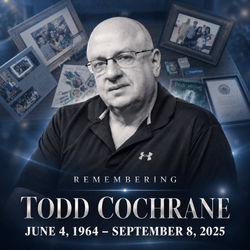 Todd was my longtime co-host on the New Media Show, a podcast builder from the medium’s earliest days, and one of its strongest advocates for independent creators, open RSS, ownership, and direct connection with audiences.
 In Episode #685 of the
  AI can now reproduce a person’s face, voice, movement, and likeness with increasing realism.
 Podcasting has one advantage that much of digital media struggles to maintain: trust.