Who Profits From Video? The Real Cost of Video Podcasting | #691

“Is video podcasting making creators more profitable, or simply making their content more valuable to YouTube, Spotify, Apple, and other platforms? Plus the brewing AI content vs Human content battle that is developing”
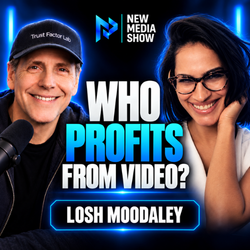
New Media Show with Podcast Hall of Famer Rob Greenlee and Guest: Losh MoodaleyIn New Media Show #691, Host Rob Greenlee, Founder of TrustFactorLab.com, and Podcast Hall of Famer, welcomes guest Losh Moodaley, a podcast sponsorship and brand partnerships strategist. 

They together explore the economics of video podcasting, creator monetization, platform control, audience ownership, and the future of human-centered media.

Losh brings more than 15 years of commercial experience across entertainment, retail, sports, and brand partnerships. Her article, The Price of Visibility: The Hidden Economics of Podcast Video, raises an important question for independent creators: when does investing in video actually make business sense?

What starts as a discussion about podcast profitability expands into a larger conversation about the changing definition of podcasting, direct sponsorships, live commerce, AI-generated media, human creativity, and audience trust.

Who Really Profits From Video Podcasting?

Video has become a major driver of podcast discovery. YouTube is attracting podcast audiences, Spotify and Apple are expanding their video capabilities, and creators are being encouraged to produce more visual content.

But financial tension underlies that growth.

Adding video often means additional equipment, production time, editing, graphics, lighting, and publishing work. Those costs do not automatically produce equivalent revenue.

Losh explains why creators should evaluate video as a business investment rather than simply follow platform expectations.

The question becomes: Are you building a more profitable creator business, or helping platforms generate additional viewing time?

The Video Threshold: When Does Video Pay for Itself?

Losh introduces her Video Threshold framework, which identifies the point where additional video production costs are justified by the revenue and business value created.

She discusses research suggesting that producing a video podcast can cost substantially more than an audio-only show, with one industry analysis finding production costs approximately 3.6 times higher.

But the economics vary considerably depending on how a creator earns revenue.

  • A podcast dependent on CPM-based advertising may need a very large audience to support professional video production.
  • A smaller show generating consulting clients, direct sponsorships, memberships, or product sales may justify video much sooner.

Video can be valuable without paying for itself through advertising alone.

Video as a Customer Acquisition Strategy

One of the most useful distinctions in the conversation is looking at video as marketing and customer acquisition rather than simply another content format.

A YouTube appearance, short clip, or full video episode might introduce someone to a creator for the first time.

But what happens afterward?

Does the viewer become a subscriber, customer, community member, consulting client, or someone who develops a meaningful relationship with the creator?

Rob and Losh discuss why discovery numbers alone cannot answer those questions.

The business value may come from the relationship that develops after someone finds the content.

Own Your Audience Instead of Renting It

The conversation turns toward the growing power of distribution platforms.

YouTube, Spotify, Apple, and other services provide access to enormous audiences, but their business priorities do not always align with those of independent creators.

Platforms optimize for engagement, viewing time, subscriptions, and their own revenue models.

Creators need to think differently: build relationships and assets they can control.

Rob and Losh discuss newsletters, websites, memberships, subscriptions, communities, and direct customer relationships as ways to reduce platform dependence.

They also emphasize owning intellectual property and building a business that doesn’t depend entirely on one distribution company.

Beyond CPMs: Sponsorships, Products, and Community

Traditional podcast advertising remains important, but Losh sees significant opportunity beyond standard host-read advertising and programmatic CPM revenue.

The discussion explores direct brand partnerships, integrated sponsorship experiences, premium offerings, consulting, live events, and audience-supported businesses.

Instead of simply inserting more ads into episodes, creators may develop experiences that connect sponsors and audiences more naturally.

An independent creator with a smaller but highly engaged community may generate substantial business value without competing for millions of downloads.

Audience trust and relevance can become more important than raw scale.

When Video, Community, and Commerce Come Together

The episode moves into live video commerce and a possible future for creator-led media businesses.

Rob Greenlee shares his experience and observations of the fast-growing platform Whatnot, where creators combine live video, merchandise, auctions, audience interaction, and collaborative community events.

That model suggests opportunities for podcasts and creator brands to extend beyond advertising into products, retail, live experiences, and direct transactions.

Losh sees growing potential in combining video, commerce, and community.

The future creator business may not be defined by a single show or distribution platform, but by the relationships and opportunities built around its audience.

Audio and Video Are Different Experiences

Rob brings his experience producing New Media Show in both audio and video for many years into the discussion.

As Apple Podcasts and other platforms adopt HLS streaming and integrated audio-video experiences, creators face new decisions about how to produce their content.

Should the audio and video versions always be identical?

  • Can a visually driven program deliver the same value when someone turns off the screen?

  • Do creators need separate edits to produce the strongest experience in each format?

Rob argues that creators should retain flexibility to build content around the strengths of the medium rather than be forced into one production model.

What Is a Podcast Now?

The conversation also tackles the continuing identity debate around podcasting.

Traditional podcasting was built around open RSS distribution, but audiences increasingly identify long-form conversations on YouTube and even streaming services such as Netflix as podcasts.

Rob Greenlee argues that audience behavior and platform terminology are increasingly shaping what people understand a podcast to be.

Losh and Rob discuss whether the industry can establish common definitions and meaningful measurements as video, streaming, downloads, and social media consumption converge.

Measuring Attention, Outcomes, and Trust

Views, downloads, listening time, impressions, conversions, and customer value each provide a different piece of the picture.

Rob and Losh explore whether the future of creator measurement should place greater emphasis on audience attention, financial outcomes, and return on investment.

They also consider whether AI might eventually help connect fragmented measurement systems and reveal deeper signals about the value of audience relationships.

The discussion returns repeatedly to trust as an important element of creator success, particularly when media is used to build professional authority, relationships, and business opportunities.

AI Media and the Future Human Creator

The second half of the conversation expands into the future of AI-generated and AI-enhanced media.

Rob Greenlee describes three developing categories:

  1. Fully human-created content.
  2. Human-created content enhanced through AI tools.
  3. Fully AI-generated content.

Losh emphasizes the continuing value of human connection, particularly in conversational media where audiences develop relationships with real people.

The conversation then moves into synthetic characters, virtual personalities, immersive storytelling, digital worlds, and the potential for AI-created intellectual property to become part of real-world entertainment and commerce.

As production capabilities expand, imagination, creativity, judgment, responsibility, and ownership may become increasingly important.

Build a Business That Makes Sense for You

Losh closes with practical advice for creators. Do not invest in video simply because platforms encourage it. Consider why you are creating, who your audience is, what value you provide, and how the content supports your goals.

A podcast created as a hobby has different requirements from one designed to generate business revenue.

For creators building a business, consistency, a clear niche, audience trust, sustainable costs, and direct relationships remain essential.

Rob Greenlee also notes that creators should test whether their ideas and workflows are sustainable before making major investments in production and business infrastructure.

The central takeaway:

Video can grow your audience, but audience growth alone does not guarantee a sustainable business. Build for your audience and your own economic goals, not simply the objectives of the platforms carrying your content.

Key topics:

– The real economics of video podcasting
– Why video production can increase costs faster than revenue
– Losh Moodaley’s Video Threshold framework
– Video as customer acquisition and marketing
– Platform incentives versus creator profitability
– Owning audience relationships and intellectual property
– Direct sponsorships and alternatives to CPM advertising
– Community, memberships, products, and live experiences
– Whatnot, live shopping, and creator-led commerce
– Audio versus video production workflows
– HLS streaming and the future of podcast distribution
– YouTube, Spotify, Apple Podcasts, and Netflix
– The changing definition of podcasting
– Attention, ROI, and creator business measurement
– Human trust in AI-enhanced and synthetic media
– Building sustainable creator businesses

Chapter timestamps:

  • 00:00 Who profits from video podcasting?
  • 02:00 Meet Losh Moodaley
  • 06:00 The pressure to move from audio to video
  • 07:00 Is video becoming the price of discoverability?
  • 10:00 Podcasts move into the living room
  • 14:00 The rising production costs of video
  • 16:00 Video as a customer acquisition investment
  • 18:00 Building revenue beyond traditional advertising
  • 20:00 Why creators need to own their audiences
  • 25:00 Platform economics versus creator economics
  • 28:00 HLS streaming and a video-first future
  • 32:00 Direct sponsorships and authentic brand integration
  • 36:00 Audience support, memberships, and premium content
  • 39:00 Live commerce and the future of creator retail
  • 43:00 Why audio and video need different creative approaches
  • 47:00 Podcasting’s identity and measurement challenges
  • 51:00 Attention, return on investment, and AI measurement
  • 54:00 The human trust layer and AI agents
  • 56:00 Human-created, AI-enhanced, and synthetic content
  • 60:00 Virtual characters, intellectual property, and creativity
  • 65:00 Limitless AI production and creative responsibility
  • 70:00 Build the podcast around your business goals
  • 75:00 Final advice for independent creators
  • 77:00 Where to connect with Losh Moodaley

Chapter markers are based on the recording transcript and should be verified against the final edited video.

Guest: Losh Moodaley

Losh Moodaley is a podcast sponsorship and brand partnerships strategist with 15+ years of experience across entertainment, retail, sports, and commercial partnerships.

Her work focuses on helping independent podcasts develop sustainable sponsorship revenue, direct brand relationships, and business models that reflect the value of their audiences.

Connect with Losh:

Host: Rob Greenlee

Rob Greenlee is the host of New Media Show, founder of Trust Factor Lab, a 2017 Podcast Hall of Fame inductee, and Chair of the Podcast Hall of Fame.

AI disclosure

AI tools helped organize and draft these show notes from the original episode transcript. The conversation features human participants. Editorial review and final publishing decisions remain with Rob Greenlee.

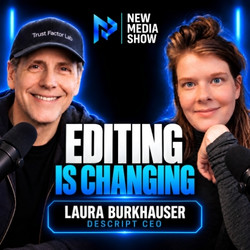
How AI Is Changing the Creator Workflow | Descript CEO Laura Burkhauser #690

WATCH OR LISTEN · EPISODE 690

Watch video  |  Listen to audio  |  Read show notes

Watch video

Prefer audio? Listen here.

Open audio in a new window  |  Download audio

Follow the audio podcast: Apple Podcasts  |  Spotify  |  RSS

Show notes

New Media Show with Podcast Hall of Famer Rob Greenlee and Guest: Laura Burkhauser, CEO, Descript.com In New Media Show #690, Host Rob Greenlee, Podcast Hall of Famer and Founder of TrustFactorLab.com, joins Laura Burkhauser, CEO of Descript (https://www.descript.com), to explore how AI is changing the way creators edit, produce, and share their work.

As AI takes on more production tasks, what becomes more valuable about the human creator? Laura and I discuss creative direction, storytelling, authenticity, audience trust, and the role of tools such as Descript’s Underlord. The conversation also looks beyond editing to the business of creating media and the pressure to show up across more platforms.

From Editing to Creative Direction

We start with a question many creators are facing: is editing becoming more like directing?

Laura distinguishes between people whose craft is editing and people whose craft is the story they want to tell. Both can benefit from AI, but they may want very different levels of control.

For an editor, the small decisions are part of the art.

For a storyteller, editing may be the obstacle between recording an idea and sharing it with an audience.  We discuss why a clear creative vision still matters.

Asking AI to edit a podcast can produce a usable result, but communicating a specific perspective, reviewing its choices, and refining the work are what help a creator make something distinctive.

Let AI Handle the Friction

Laura’s approach to AI starts with understanding what creators actually want help doing.

Creators want relief from repetitive production work while keeping their voice, vision, and story. Laura describes Descript’s philosophy as “struggle with your art, not with your tools.”

That leads to a discussion about the promises AI companies make and the trust they can lose when those promises overlook how creative work happens.

Rob Greenlee shares his experience moving from assembling radio shows by hand to using Descript in my current workflow. We explore how creators can choose the right balance of manual editing and AI assistance for the content they want to make.

Authenticity and the Choices Behind an Edit

Does editing make a conversation less authentic? Laura argues that thoughtful editing can bring its meaning into sharper focus.

A reaction shot or a well-timed close-up can help an audience understand the emotion in a conversation. The question is whether an edit serves what happened between the people involved.

We also talk about the difference between being authentic and performing authenticity online. Showing up as yourself can build connection, but it can also leave creators exposed to criticism.

Laura explains why a recognizable human presence and community engagement matter to her.

Rob connects that discussion to my work with Trust Factor Lab and the challenge of building trust as more synthetic media enters the mix is the growing opportunity.

Start Creating Before Expecting a Business

Laura was a Descript customer before she joined the company. Editing a podcast with a friend showed her she could put her own humor and perspective into the world without mastering a complicated production tool.

Her practical advice is to begin by recording something.

The opportunity is to talk about a problem you understand, a subject you care about, or an issue you can explore with another person. Then edit it, share it, and keep going long enough to learn from the experience.

We discuss how the expectation of immediate revenue can get in the way of the authentic creator process.

Creating media can support a business even when the media itself is not the product. For coaches, consultants, founders, and other professionals, a video or podcast can show their expertise and help start a relationship that leads to work.

Community, Revenue, and Reaching the Right People

Our business discussion moves into audience support, Patreon, and sponsorship opportunities.  

Laura points to community support as one possible path for working creators. We also explore why a business serving a specific audience may be a better sponsorship prospect than a broad advertising buyer.

Local businesses and companies serving a particular interest give us examples to consider.

The discussion focuses on understanding your audience, what they care about, and which relationships could create value.

We also look at why more companies are building their own media operations and why creators feel pressure to produce both long-form conversations and short clips.

Algorithms and What Comes Next for Descript

Laura describes being intentional about her own media consumption, including turning off YouTube recommendations. I share how I use both subscriptions and algorithmic discovery.

A broader conversation starts about personalization.

Laura argues that the goals given to an algorithm matter. A system rewarded for attention does not automatically distinguish between an experience that helps someone and one that keeps them engaged through anger or distrust.

We close with Laura’s BIG Direction for Descript:

Helping creators across more of their content workflow, including identifying the subjects they want to own, building a library of useful material, publishing across platforms, and learning from what works. Laura describes that as a direction for future development as creators manage growing demands on their time.

Key takeaways:

AI can make production easier, but your perspective still gives people a reason to listen. Use the tools to reduce friction, make deliberate creative choices, and invest in the relationships that give your work lasting value.

Key topics

– AI editing, Underlord, and the changing creator workflow
– The difference between editing as a craft and editing as a production task
– Creative direction, specific prompts, and human judgment
– Reducing repetitive work while preserving a creator’s voice
– Authenticity, thoughtful editing, and audience trust
– Getting started without expecting immediate monetization
– Using media to support a coaching, consulting, or founder-led business
– Community support, Patreon, and targeted sponsorships
– YouTube discovery, subscriptions, and personalization
– Descript’s direction beyond editing into broader content workflows

Chapter timestamps

– 00:00 AI workflows and the value of the human creator
– 02:00 Meet Descript CEO Laura Burkhauser
– 03:00 Is editing becoming directing?
– 05:00 When storytelling is the creator’s main craft
– 07:00 Creative vision and directing AI
– 10:00 Standing out through your voice and perspective
– 12:00 AI promises, creator trust, and tool friction
– 14:00 From manual production to AI-assisted editing
– 16:00 Authenticity and the role of a good editor
– 18:00 What does it mean to be authentic online?
– 21:00 Technology, human needs, and useful AI
– 24:00 Trust Factor Lab and finding a balance with AI
– 26:00 Laura’s experience as a Descript customer
– 28:00 Record, edit, share, and build confidence
– 30:00 Does pressure to monetize hold creators back?
– 32:00 Content as a way to grow a business
– 35:00 Community support and creator revenue
– 36:00 Local businesses and targeted sponsorships
– 39:00 YouTube recommendations and intentional viewing
– 42:00 Personalization, engagement, and human outcomes
– 46:00 What comes next for Descript
– 48:00 Closing thoughts

Guest Laura Burkhauser

Laura Burkhauser is CEO of Descript. In this conversation, she shares her perspective as a technology leader, a humanist, and a former Descript customer who discovered the creative possibilities of editing her own podcast.

– Descript: https://www.descript.com
– Descript Underlord: https://www.descript.com/underlord
– Laura Burkhauser on the Descript blog: https://www.descript.com/blog/author/laura-burkhauser

Host Rob Greenlee

Rob Greenlee is the founder/builder of Trust Factor Lab (https://TrustFactorLab.com), host of New Media Show, and a 2017 Podcast Hall of Fame inductee and Chair. His work connects podcasting, video, creator platforms, audience trust, and the media business.

– New Media Show: https://newmediashow.com/
– New Media Show on YouTube: https://youtube.com/@TheNewMediaShow
– Rob Greenlee: https://robgreenlee.com/
– Rob Greenlee on LinkedIn: https://www.linkedin.com/in/robgreenlee
– Podcast Hall of Fame: https://podcasthall.com
– Adore Network Audio: https://www.adorenetwork.com/show/new-media-show-audio
– Adore Network Video: https://www.adorenetwork.com/show/new-media-show-video
– Apple Podcasts Audio: https://podcasts.apple.com/us/podcast/new-media-show-audio/id392545649
– Apple Podcasts Video: https://podcasts.apple.com/us/podcast/new-media-show-video/id392545647

AI disclosure

AI tools helped organize and draft these show notes from the completed Episode #690 transcript. Rob Greenlee and guest retain all editorial responsibility. The New Media Show is human-hosted with human guests. AI is used for light editing of the actual audio and video media files.

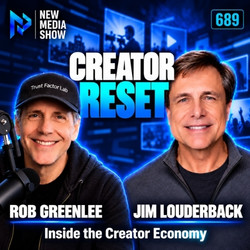
The Creator Reset: AI, Trust and What Comes Next | Jim Louderback #689

New Media Show with Podcast Hall of Famer Rob Greenlee and Guest: Jim Louderback, Editor of Inside the Creator Economy Newsletter, Former CEO of Vidcon.
In New Media Show #689, I’m joined by Jim Louderback, publisher of Inside the Creator Economy and former CEO of VidCon and Revision3, to explore what the next phase of the creator economy means for people building media businesses.

Jim and I have lived through several shifts at the intersection of media and technology. This conversation connects the early days of video podcasting with today’s AI tools, changing audience habits, and the search for a lasting creator business. More ways to create and distribute content bring opportunity, but they also raise questions about attention, ownership, and trust.

Digital Jim and the Human Premium

We start with Digital Jim, the AI version of Jim that turns his human-written newsletter into short videos.

Jim explains how the team at Popcorn uses his words, an AI voice, and a visual avatar to help him reach audiences on LinkedIn, TikTok, Instagram, and YouTube Shorts. He still writes the newsletter and reviews the videos before sharing them.

That experiment leads to one of the episode’s central ideas: the human premium.

Jim’s hypothesis is that, as audiences encounter more AI-generated media, they may place greater value on recognizable human voices, imperfect conversations, and experiences with real people. We discuss what that could mean for audience relationships, advertising, and in-person events.

Podcasting in a Bigger Creator Economy

We revisit Revision3, Diggnation, and the early use of short clips to introduce people to longer shows. Video podcasting and distributing a conversation in several formats have a longer history than today’s debate sometimes acknowledges.

Jim describes an audio-plus approach: people can listen when that suits them, while video creates another way to discover and experience a show. We also discuss why creators spread their work across platforms, how short-form awareness differs from monetization, and the risks of depending on one platform’s rules.

Could Personalized AI Media Disrupt YouTube

Our platform conversation moves from Netflix’s interest in creator programming to a bigger question:

What could disrupt YouTube? Jim suggests that a major technological shift, rather than another similar video service, could open the door.  His audience-of-one idea goes beyond recommending existing videos. We explore the possibility of media generated specifically for an individual, along with what Jim calls robo-social relationships with AI characters that respond to and remember their users.

We debate these predictions, including how they might compete for time people currently spend with human creators.

Your Identity and Archive Have Value

We discuss the business value of a creator’s name, image, likeness, voice, and archive. I share my experience exploring Royall.ai and receiving inquiries about using past New Media Show conversations as AI training material.

That raises questions about guest permission, licensing, tracking use, and maintaining control over future uses of a creator’s work.

Jim also describes an audio watermarking approach he has encountered, while acknowledging that he has not independently established how well it works. The discussion is about taking identity and content rights seriously as new business models emerge.

Live Shopping and the Next Media Business

Jim explains what he wants readers to get from Inside the Creator Economy: timely reporting, his interpretation of the news, and ideas they can question. We talk about the differences between email subscribers, LinkedIn newsletter subscribers, and the audience numbers platforms report.

We then explore global creator markets, Whatnot, live shopping, and the role of personality and audience participation in commerce.

TBPN’s combination of a live show, a focused audience, and widely distributed clips gives us another example to examine. We close with local AI tools and a practical encouragement from Jim: keep experimenting.

My key takeaways:

Use these tools to expand what you can create, while giving people a reason to connect with you. Your ideas, judgment, and relationships shape the value of the media business you build.

Key topics

  • How Digital Jim turns a human-written newsletter into AI video
  • The human premium and the value of real audience relationships
  • Video podcasting’s history and an audio-plus approach
  • Multi-platform distribution, short clips, and platform dependence
  • Netflix, YouTube, and media generated for an audience of one
  • Robo-social relationships and competition for audience attention
  • Creator identity, archive licensing, AI training, and permission
  • Newsletter measurement, global creator markets, and live shopping
  • Whatnot, TBPN, and building a focused media business
  • Local AI tools, creative judgment, and continued experimentation

Chapter timestamps

  • 00:00 Welcome to New Media Show 689, and the creator reset
  • 01:00 Meet Jim Louderback and watch Digital Jim
  • 03:00 How Popcorn produces Jim’s AI newsletter videos
  • 06:00 Bringing podcasting and the creator economy together
  • 10:00 Audio plus video and reaching audiences in more formats
  • 13:00 Multi-platform distribution and creator business risk
  • 17:00 The human premium in an AI media world
  • 24:00 Younger creators and the changing meaning of podcasting
  • 27:00 AI visuals and turning audio into video experiences
  • 30:00 Netflix and the value of creator programming
  • 32:00 What could disrupt YouTube
  • 34:00 Personalized media and the audience of one
  • 37:00 Robo-social relationships and AI companions
  • 43:00 Human creativity and the limits of average content
  • 44:00 Royall.ai and capturing a creator’s digital identity
  • 47:00 Archive licensing, AI training data, and guest permission
  • 49:00 Watermarking, content control, and future use
  • 53:00 Inside the Creator Economy and newsletter measurement
  • 57:00 Global creator markets and live shopping
  • 58:00 Whatnot, collectibles, and audience participation
  • 01:02:00 TBPN, live shows, and the power of distributed clips
  • 01:06:00 AI platforms, local models, and new media tools
  • 01:08:00 Keep experimenting and closing thoughts

Guest Jim Louderback

Jim Louderback publishes the weekly Inside the Creator Economy newsletter and produces, curates, and moderates creator events around the world. He is the former CEO of VidCon and Revision3, and his career also includes leadership and editorial roles at Discovery Digital Networks, TechTV, and PC Magazine.

Host Rob Greenlee

Rob Greenlee is the founder of Trust Factor Lab, host of New Media Show, and a 2017 Podcast Hall of Fame inductee and Chair. His work connects podcasting, video, creator platforms, audience trust, and the media business.

AI disclosure

AI tools helped organize and draft these show notes from the completed Episode #689 transcript and edited the full show. Rob Greenlee retains editorial responsibility. The New Media Show is human-hosted with human guests; this episode also includes a disclosed AI-generated Digital Jim video demonstration.

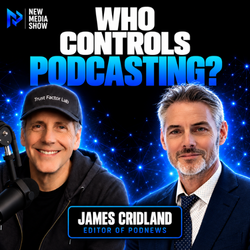
Podcasting’s Identity Crisis: Who Controls Podcasts Now? | James Cridland #688

Your podcast can be available everywhere and still be hard to find. So who controls its future: the creator, the audience, or the platform?

New Media Show with Podcast Hall of Famer Rob Greenlee and Guest: James Cridland, Editor of Podnews.netIn New Media Show #688, Rob Greenlee welcomes back James Cridland, Editor of Podnews, co-host of the Podnews Weekly Review, and a 2026 Podcast Hall of Fame inductee, for a conversation about what Podcast Week in New York City revealed about our industry.
We compare notes on the IAB Podcast Upfronts, CreatorFronts, and a very different NYC Podcast Movement. James also shares his experience at the Sounds Profitable Business Summit.

The week had plenty of energy, but it also exposed real differences in how creators, platforms, and advertisers see podcasting’s future.

Podcast Movement’s Terminal 5 venue brought challenges around meetings, exhibitor space, and crowding.

James argues that the headphone-based sessions worked better than expected. We also reflect on Tom Webster’s tribute to Todd Cochrane and why the industry still needs people willing to speak up when something is wrong.

Podcasting has expanded its distribution. That doesn’t mean it controls where people discover shows.

Sounds Profitable: Tom Webster’s presentation leads us into YouTube, Spotify, and Netflix, where podcasts compete with much more than other podcasts. James Cridland also cautions against confusing whether someone has ever used a platform with where they regularly listen.

A major part of our conversation is measuring media consumption.

James challenges the IAB’s approach to audio and video, while making another important point: tearing down the download without a workable replacement can undermine the business we already have.

James offers a proposal worth discussing: share advertising revenue with podcast apps that provide useful consumption data.

James argues that apps need a financial reason to invest in discovery and better listening experiences. I raise the concern about taking revenue from creators, and we explore whether growing listening could make that trade worthwhile.

Rob and James also discuss open RSS, HLS video, and Podcasting 2.0 as ways to expand access. That includes discovery built around places and local interests, along with AI production tools that help humans make better content.

Adding video should not make the audio listener a second-class audience. The conversation still needs to work when someone cannot see the screen.

The question is how we keep podcasting open to a wide range of voices while competing in a much bigger media world. More reach matters. So do audience trust, creator choice, and a business that can sustain the work.

Key Topics

– Podcast Week NYC: the business summit, upfronts, CreatorFronts, and Podcast Movement
– Remembering Todd Cochrane and the value of speaking up
– Platform discovery versus open podcast distribution
– Audio and video measurement, advertiser trust, and the download
– James’s proposal to share revenue with podcast apps
– Netflix, YouTube, and rising video production expectations
– Open RSS, HLS, and location-based podcast discovery
– AI production assistance and respecting the audio listener

Guest: James Cridland

Editor of Podnews, co-host of the Podnews Weekly Review, and 2026 Podcast Hall of Fame inductee.

– Podnews Daily Newsletter and Podcast: https://podnews.net
– Podnews Weekly Review: https://weekly.podnews.net

Host: Rob Greenlee

– New Media Show on YouTube: https://youtube.com/@TheNewMediaShow
– Rob Greenlee: https://robgreenlee.com
– Rob Greenlee on LinkedIn: https://www.linkedin.com/in/robgreenlee
– Podcast Hall of Fame Inductee & Chair: https://podcasthall.com
– New Media Show: https://NewMediaShow.com
– Adore Network Audio: https://www.adorenetwork.com/show/new-media-show-audio
– Adore Network Video: https://www.adorenetwork.com/show/new-media-show-video
– Apple Podcasts Audio: https://podcasts.apple.com/us/podcast/new-media-show-audio/id392545649
– Apple Podcasts Video: https://podcasts.apple.com/us/podcast/new-media-show-video/id392545647

AI Disclosure

AI tools helped organize and draft these show notes from the completed Episode #688 transcript, and I hand-edited for clarity and accuracy. The conversation and perspectives are human-led, and Rob Greenlee retains editorial responsibility. The New Media Show is human-hosted with human guests.

Don’t Just Make Videos: Build a Creator Media Company | Roberto Blake #687

Getting views, streams, and downloads is not the same as building a business. Subscribers aren’t automatically customers, and a successful YouTube channel doesn’t necessarily mean you have built something sustainable.

New Media Show with Podcast Hall of Famer Rob Greenlee and Guest: Roberto BlakeIn New Media Show #687, Podcast Hall of Famer Rob Greenlee talks with Creator, Educator, Author, and Entrepreneur Roberto Blake, founder of Awesome Creator Academy, about what comes after becoming a content creator and why more creators need to think of themselves as independent media companies rather than defining themselves by one format or platform.
Roberto argues that being a podcaster, YouTuber, streamer, or blogger is increasingly just a distribution choice. The bigger issue is the value you create, the audience relationship you build, and what you actually own.

We get into the shift from audio-first thinking to broader creator media, why professionalism is more about preparation and performance than polished production, and how AI is changing the economics of being a creator.

Roberto sees some of the strongest uses of AI in the operational work around content, including research, data analysis, transcription, organization, editing workflows, and other tasks that can free creators to spend more time on judgment, ideas, and relationships.

A major part of the conversation is about turning attention into a real business.

Roberto describes his framework as “reach, reputation, revenue,” or in a business context, “traffic, trust, transaction.” Getting attention is only the beginning. The real value comes from earning trust and then creating products, services, memberships, intellectual property, or other business models around that relationship.

We also talk about what creators should own. That includes their brand, intellectual property, expertise, direct audience relationships, and the parts of the business that can survive changes at YouTube, Spotify, Apple, or any other platform.

Roberto breaks creator businesses into three broad paths: entertainer, lifestyle brand, and thought leader, with different revenue and growth opportunities for each.

The conversation goes much deeper into AI, human creativity, likeness rights, AI labeling, and synthetic AI media.

Why Roberto believes the bigger risk isn’t simply AI-generated entertainment, but the potential misuse of synthetic media by institutions or people trying to manipulate audiences.

The larger point is simple:

Creators should stop thinking only about the next piece of content and start thinking about what they are building around it.

Key Topics:
– Moving from content creator to independent media company
– Why podcasting, YouTube, and streaming are becoming distribution choices
– Audio-first versus audio-only thinking
– Professionalism versus production polish
– Using AI for creator operations, research, editing, and workflow
– Reach, reputation, and revenue
– Traffic, trust, and transaction
– Building direct audience relationships
– Owning your brand, expertise, and intellectual property
– Entertainer, lifestyle brand, and thought-leader business models
– Building revenue beyond platform advertising
– Why taste and personality may become more important as AI lowers the skill barrier
– Human authenticity and real-world connection
– AI likeness, voice cloning, and long-term IP value
– AI labeling and the risks of treating every use of AI the same way
– Awesome Creator Academy and Roberto’s approach to creator growth

Guest: Roberto Blake
Creator, entrepreneur, educator, and founder of Awesome Creator Academy

Roberto Blake
https://robertoblake.com

Awesome Creator Academy
https://www.awesomecreatoracademy.com

YouTube
https://www.youtube.com/@robertoblake

Host: Rob Greenlee

AI Disclosure

AI tools helped organize and edit this episode and create the above show notes from the completed Episode #687 transcript. The conversation, perspectives, editorial direction, and final editing were performed, and responsibility for the episode remains human-led. The New Media Show is human-hosted.

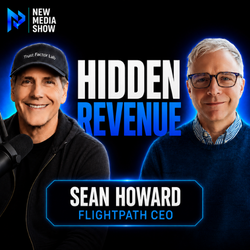
Hidden Revenue: What Media Publishers Are Leaving Behind | Sean Howard, Flightpath #686

Podcast media creator publishers may already have more revenue opportunity than they realize. The challenge is not always finding more listeners. It can be understanding what inventory is actually available to sell, what to sell, whether campaigns will deliver, and where revenue is being lost.

New Media Show with Podcast Hall of Famer Rob Greenlee and Guest: Sean Howard, CEO and co-founder of Flightpath.fmIn this episode #686 of the New Media Show, Rob Greenlee talks with Sean Howard, CEO and co-founder of Flightpath.fm, about the growing complexity behind new media podcast advertising and why better forecasting, campaign management, publisher data, and revenue optimization are becoming more important.

Sean explains how Flightpath grew out of a problem he experienced from both sides of the business. As an ad buyer, he found that publishers often did not know how much inventory they really had available. As a publisher, he saw the same problem from the other side: uncertainty about whether sold campaigns would actually deliver. Flightpath was built to bring those pieces together through traffic management, prediction, pacing, and cross-platform revenue visibility.

The conversation also gets into dynamic ad insertion and the value of the podcast back catalog. Sean argues that publishers relying too heavily on baked-in ads may be leaving significant revenue on the table because listeners keep consuming older episodes long after release.

Rob and Sean also discuss a larger issue facing content creator publishers today: platform dependence.

As podcast companies expand across multiple hosting platforms, YouTube, Spotify, video, HLS, and other distribution systems, publishers need better access to their own data and a clearer understanding of the business risk that comes with relying too heavily on any one platform.

The bigger question is whether the next stage of media and podcast revenue growth may come not only from finding more audience, but from better understanding and monetizing the audience publishers already have.

Discussion Highlights
– Hidden revenue in existing podcast inventory
– Why forecasting and campaign delivery remain difficult
– Dynamic ad insertion and back-catalog monetization
– Frequency capping, pacing, and ad performance
– Publisher ownership and access to data
– Platform risk and using multiple hosting platforms
– YouTube, Spotify, HLS, and video monetization
– AI and revenue optimization
– Flightpath’s role as a publisher intelligence and traffic management layer
– Why better data can help sales and operations make better decisions

Key Topic Timestamps:
00:00 Hidden revenue opportunities publishers may already have
01:00 Sean Howard and what Flightpath does
03:00 Why Flightpath was built around forecasting and campaign delivery
05:00 Fragmented platforms and the growing complexity of monetization
07:30 HLS, open standards, and the return of video podcasting
11:00 Audio and video advertising collide
12:30 Using publisher data to identify campaign and platform problems
15:00 Why publishers need access to their own data
17:00 Dynamic ad insertion and the untapped value of the back catalog
19:00 Spotify, YouTube, and changing control over ad inventory
21:00 Choosing a hosting platform is becoming a business risk decision
23:00 Why publishers may need to work across multiple platforms
26:00 Measuring hosting platform performance and revenue impact
27:30 Publisher autonomy and Flightpath’s platform strategy review
31:00 Forecasting, pacing, and Flightpath’s Revenue Optimizer
35:30 Where AI fits into forecasting and sales recommendations
38:00 Podcast platforms evolving into intelligence and decision systems
39:00 Using publisher data with AI and LLMs
43:00 Advertising, subscriptions, Spotify, and YouTube
44:00 Apple video, Spotify, and the HLS opportunity
46:00 Podcasting becomes a more professional media business
48:00 Why publishers need an independent intelligence layer
50:00 Who Flightpath is built for
53:00 Flightpath onboarding and supported platform integrations
55:00 Closing thoughts and where to learn more

Guest
Sean Howard
CEO and Co-Founder, Flightpath
https://flightpath.fm
https://www.linkedin.com/in/seanhoward

Host
Rob Greenlee

Listen and Watch

AI Disclosure

AI tools helped organize and edit this episode and create the above show notes from the completed Episode #686 transcript. The conversation, perspectives, editorial direction, and final editing were performed, and responsibility for the episode remains human-led. The New Media Show is human-hosted.

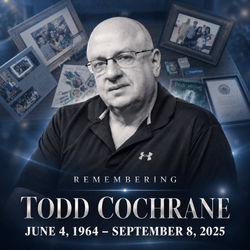
Remembering Todd Cochrane, One Year Later

One year ago today, on September 8, 2025, we lost Todd Cochrane.

Todd Cochrane RIP 2025Todd was my longtime co-host on the New Media Show, a podcast builder from the medium’s earliest days, and one of its strongest advocates for independent creators, open RSS, ownership, and direct connection with audiences.
Looking back on these conversations, what stands out most is how consistently Todd fought for what he believed mattered. He never forgot why podcasting was different in the first place: it removed barriers, gave creators more control, and made it possible to build real communities without asking gatekeepers for permission.

He also understood that none of it came easy. Todd often talked about “sweat equity,” doing the work, building something from the ground up, and earning an audience’s trust over time. That was who he was.

What makes this video especially difficult to watch is the ending. In what became his final New Media Show appearance, Todd signed off the way he always did, expecting there would be another episode:

“We’ll see you next time.”

I wish there had been a next time.

Todd’s voice, his ideas, and the impact he had on podcasting are still very much part of the conversation.

Remembering my friend and New Media Show co-host Todd Cochrane today.

June 4, 1964 – September 8, 2025

More remembrances of Todd Cochrane:

New Media Show: Remembering Todd Cochrane, Podcast Hall of Famer and Blubrry CEO

A special New Media Show episode with Adam Curry, Mike Dell, Rob Walch, and me remembering Todd’s life, personality, career, advocacy for independent podcasting, and his impact on the medium.

New Media Show remembrance
https://newmediashow.com/2025/09/

Podnews: Obituary: Todd Cochrane

James Cridland and I worked together on this obituary covering Todd’s life, Navy career, Geek News Central, Blubrry, open RSS advocacy, the Podcast Awards, New Media Show, and his wider impact on podcasting.

Read the Podnews obituary: 
https://podnews.net/article/todd-cochrane-obituary

Blubrry Podcasting: Blubrry Founder Todd Cochrane: In Memoriam

The company Todd founded remembered him as the heart of the Blubrry community and said it is committed to continuing his mission of supporting podcasters and independent creators.

Read Blubrry’s remembrance
https://blubrry.com/podcast-insider/2025/09/09/blubrry-founder-todd-cochrane-in-memoriam/

Geek News Central: Geek News Central Mourns the Loss of Todd Cochrane

Todd’s longtime show and publication remembered its founder, host, and driving force, as well as his impact on technology, podcasting, and the people around him.

Read the Geek News Central remembrance
https://geeknewscentral.com/2025/09/09/geek-news-central-mourns-the-loss-of-todd-cochrane/

Podcast Movement: In Memory of Todd Cochrane

Dan Franks reflected on Todd’s early support of Podcast Movement, his willingness to challenge the industry, and his commitment to independent podcasters.

Read the Podcast Movement tribute: 
https://weekly.podcastmovement.com/p/in-memory-of-todd-cochrane

Sounds Profitable: Remembering Todd Cochrane

Tom Webster shared a personal remembrance of Todd, including how Geek News Central was the first podcast he listened to nearly two decades earlier and how Todd’s belief in creators shaped both his work and his business.

Read Tom Webster’s remembrance: 
https://soundsprofitable.com/article/remembering-todd-cochrane/

Podnews Weekly Review: Remembering Todd Cochrane

James Cridland and Sam Sethi looked back on Todd’s career and included material from an earlier conversation with him about how he began podcasting in 2004 and what the medium meant to him.

Listen to the Podnews Weekly Review remembrance: 
https://weekly.podnews.net/1538779/episodes/17833228-remembering-todd-cochrane-and-apple-testing-new-chapters

PodBiz: When Independent Voices Shape an Industry: Remembering Todd Cochrane

Recorded before Todd’s passing, this conversation captures him in his own words as he discusses monetization, independent creators, audience trust, and why serving listeners has to come before chasing revenue.

Listen to the PodBiz episode
https://shows.acast.com/podbiz/episodes/remembering-todd-cochrane

podCast411: Todd Cochrane Interview from March 2005 Remastered

Rob Walch remastered his original March 2005 interview with Todd, offering a rare chance to hear Todd near the very beginning of the podcasting era.

Listen to the remastered 2005 interview
https://www.iheart.com/podcast/263-podcast411-learn-about-pod-27564388/episode/411-item-0022b-todd-cochrane-294330497/

podCast411: Memorial to Todd Cochrane on New Media Show

Rob Walch also shared the New Media Show memorial conversation with his podCast411 audience.

Listen to the podCast411 memorial feed drop
https://www.iheart.com/podcast/263-podcast411-learn-about-pod-27564388/episode/memorial-to-todd-cochrane-on-new-294330496/

Podcaster News: Remembering Site Founder Todd Cochrane

The site Todd founded remembered his drive, fearlessness, generosity, and desire to help other people succeed.

Todd Robert Cochrane obituary

Todd’s family obituary provides the personal record of his life, including his Michigan roots, 22 years of Navy service, family, technology interests, and the people he left behind.

Read Todd’s obituary: 
https://www.tributearchive.com/obituaries/45326462/todd-robert-cochrane

The New Media Show continues today with Todd very much a part of its foundation. The conversations have changed, the industry continues to evolve, and there are still plenty of things I know Todd and I would be debating.

I still miss having him on the other side of that conversation.


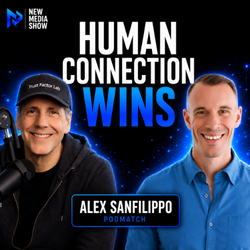
Human Audience Growth in the AI Era | Alex Sanfilippo #685

As AI makes it easier to create more content, human relationships may become more valuable, not less. 

New Media Show with Podcast Hall of Famer Rob Greenlee and Guest: Alex Sanfilippo is the founder of PodMatch and host of Podcasting Made Simple.In Episode #685 of the New Media Show, host and Podcast Hall of Famer Rob Greenlee talks with Alex Sanfilippo, founder of PodMatch and host of Podcasting Made Simple, about why relationships between hosts, guests, audiences, collaborators, and communities are becoming an increasingly important part of podcast growth.

The conversation explores podcast guesting, better host-guest matching, AI-assisted workflows, audio and video podcasting, RSS and HLS, creator-owned communities, and why direct audience relationships matter as large platforms gain more control over discovery and monetization.

Human Connection Wins

Alex built PodMatch around a simple problem: podcast hosts could find guests, but finding the “right guest” and managing all the administrative work surrounding an interview took an enormous amount of time.

The goal is to automate the work around the conversation without automating the human connection itself.

Rob and Alex discuss why great podcast conversations create relationships that can continue long after an episode is published.

Better Guests, Better Conversations

A strong podcast guest should arrive ready to lead with value, not simply promote a book, company, or product.

Rob and Alex discuss why:

– Every interview should feel different
– Guests should bring something new to each conversation
– Hosts need to listen rather than simply read questions
– Generic AI-generated pitches are easy to recognize
– Guest and show alignment matters more than volume
– Meaningful conversations are more likely to be shared

Alex also explains how PodMatch is using AI to improve host-guest alignment while reducing research and administrative work.

Audio, Video and the Changing Podcast

The conversation expands into the growing convergence between podcasting and YouTube.

Alex remains audio and RSS-focused but believes podcasting and YouTube are increasingly influencing each other. Podcasting brings depth and long-form conversation while YouTube brings visual discovery and engagement.

Rob and Alex also discuss the HLS video format, alternative enclosures, separate audio and video feeds, and why the current publishing ecosystem can still feel unnecessarily complicated for creators.

Build Relationships You Own

As major platforms change algorithms, monetization rules, and distribution policies, creators have another reason to develop direct relationships with their audiences.

Newsletters, private communities, memberships, events, collaborations, and other owned audience pathways can turn large platforms into discovery and recruiting channels rather than the entire creator business.

Alex sees this community layer becoming an increasingly important part of PodMatch.

Discussion Highlights

– Why human connection becomes more valuable as content expands
– How PodMatch matches podcast hosts and guests
– Solo, co-hosted, and interview podcast formats
– Podcasting versus YouTube content strategies
– RSS, HLS, audio and video podcast distribution
– What defines a podcast in 2026?
– Why guests should lead with value
– Creating unique conversations instead of repeating talking points
– Why generic AI podcast pitches fail
– Using AI to improve guest-host alignment
– Podcast collaborations, review swaps, and podrolls
– Building creator-owned communities
– Turning platforms into audience acquisition channels
– Why trusted relationships may be the creator’s strongest long-term asset

Chapter Markers

00:00 When content becomes unlimited, human connection becomes scarce
01:45 Introducing Alex Sanfilippo and PodMatch
03:25 Why podcast conversations matter
07:10 Guests, co-hosts, and solo podcast formats
13:05 Podcasting meets YouTube
17:00 Finding the platform where your audience lives
20:25 Audio, video, RSS, and HLS complexity
27:25 What is a podcast now?
30:05 Why podcast guests need to lead with value
33:00 Every interview should be different
35:20 Listening creates better conversations
38:15 Why unique interviews get shared
41:15 The problem with AI-generated podcast pitches
44:20 Finding real guest-show alignment
48:45 Why Alex has become more selective about guesting
50:40 Using AI for PodMatch alignment
54:35 Podcast collaborations, reviews, and podrolls
57:15 Podcast relationships become communities
58:45 Building audiences beyond rented platforms
01:03:00 Creating relationships with your true fans
01:05:15 Community and the future of PodMatch
01:06:20 Where to connect with Alex
01:07:00 Closing thoughts

About Alex Sanfilippo

Alex Sanfilippo is the founder of PodMatch, a platform that connects podcast hosts and guests while streamlining the administrative work around podcast interviews.

He also hosts Podcasting Made Simple, where he helps independent podcast hosts and guests grow their influence, audiences, and businesses.

Guest Links

About the Host

Rob Greenlee is a 2017 Podcast Hall of Fame inductee, Chair of the Podcast Hall of Fame, Founder of Trust Factor Lab, and longtime new-media executive, creator, strategist, and industry leader.

Listen and Watch

AI Disclosure

AI tools helped organize and edit this episode and create the above show notes from the completed Episode #685 transcript. The conversation, perspectives, editorial direction, and final editing and responsibility for the episode remain human-led. The New Media Show is human-hosted.

Own Your Identity: Who Controls Your Voice, and Likeness? | Anne Kavanagh, Royall.ai #684

New Media Show with Podcast Hall of Famer Rob Greenlee and Guest: Anne Kavanagh, co-founder of Royall.ai, a company working on verified identity, authorization, and licensing pathways for a person’s face, voice, name, and likeness.   AI can now reproduce a person’s face, voice, movement, and likeness with increasing realism.
The bigger question is becoming: Who gets to control that identity, authorize its use, and potentially get paid when it has commercial value?

In Episode #684 of the New Media Show,  Host Rob Greenlee talks with Anne Kavanagh, co-founder of Royall.ai, about building a new permission and licensing layer around human identity.

The conversation is not about stopping or being anti-AI. It is about establishing something that has largely been missing: proof and authorization before use.

Your Identity Becomes an Asset You Control

Royall.ai is developing what Anne describes as a biometric vault where people can register elements of their identity, including voice, face, likeness, and body motion.

Those assets can be fingerprinted and watermarked, creating the foundation for detecting use, approving or rejecting it, and potentially licensing it commercially.

That changes the discussion from simply asking whether AI can clone someone to asking whether the person actually gave permission.

A creator could potentially say:

  • Use my voice for this campaign, but only for six months.
  • Allow my likeness to be used to train this model, but pay me.
  • Do not use my identity for this purpose at all.
  • The central principle is simple: You own you.

Protection and Opportunity

The same technology designed to identify unauthorized use could also create legitimate new markets for human identity.

Anne describes a future where AI companies, studios, agencies, platforms, and brands could license verified human data rather than simply collecting material from the public internet.

Creators could choose whether their voice, face, movement, or content can be used for AI training and receive compensation when they opt in.

This becomes especially important as synthetic media becomes indistinguishable from human media. Rob also raises another possibility: as AI-generated content becomes abundant, verified or certified human-created content may itself become more valuable.

Podcast Archives Create Another Rights Problem

The discussion gets particularly relevant to podcasting. A podcast owner may control thousands of hours of archived conversations, but that does not necessarily mean the owner has the right to license every guest’s voice for AI training.

Rob explains that the New Media Show archive has previously attracted interest for conversational AI training, but licensing complete conversations would require permission from the guests whose voices appear in them.

Royall.ai is exploring infrastructure that could help identify those participants, request consent, manage permissions, and create licensing transactions across large content libraries.

That could become a significant issue as decades of podcast, video, music, and creator archives become valuable training material.

Discussion Highlights
– Who should control your voice, face, and digital likeness
– Creating a biometric identity vault
– Consent before AI use
– Detecting unauthorized likeness and voice usage
– Licensing human identity for AI training
– Getting creators paid for authorized use
– Deepfakes, scams, and identity theft
– Why trust is critical to biometric infrastructure
– AI disclosure versus AI-assisted creation
– The rise of verified human-created media
– Creator contracts and synthetic likeness rights
– Licensing podcast archives for AI training
– Why guest consent matters
– Royall.ai as an identity and permission API layer

Chapter Timestamp Markers

00:00 Who controls your likeness and voice identity?
03:00 Introducing Anne Kavanagh and Royall.ai
07:00 How the idea behind Royall.ai developed
09:00 Verified identity, authorization and licensing
10:00 Creating a biometric vault for voice, face and motion
18:00 Detection, reporting and takedown tools
20:00 Opting into AI training and getting paid
24:00 Building a training-grade voice model
28:00 Identity protection becomes an economic opportunity
34:00 Why this is a human issue, not just a creator issue
38:00 Deepfakes, students, scams and identity theft
40:00 The trust challenge of storing biometric identity
43:00 Building a registrar for human identity and likeness
45:00 Royall.ai as part of the technology stack
48:00 The principle: You own you
53:00 AI tools, disclosure and audience trust
59:00 Could certified human content become premium?
01:02:00 Synthetic podcast hosts and transparency
01:04:00 Creator contracts and consent for AI training
01:05:00 Licensing podcast archives and guest voices
01:08:00 Who controls your existing content libraries?
01:11:00 How Royall.ai early access works
01:14:00 Public images, copyright and identity ownership

Anne Kavanagh Guest Links

Royall.ai is currently onboarding users through an early-access process, with registration, fingerprinting, watermarking, detection capabilities, and enterprise/API integrations discussed toward the end of the episode.

Royall.ai
https://royall.ai

Host, Rob Greenlee and Show Links

New Media Show
https://newmediashow.com

New Media Show on YouTube
https://youtube.com/@TheNewMediaShow

Rob Greenlee
https://robgreenlee.com

Rob Greenlee on LinkedIn
https://www.linkedin.com/in/robgreenlee

Podcast Hall of Fame
https://podcasthall.com

AI Disclosure

AI tools helped organize and edit the episode to remove filler words; this description was created from the completed full transcript of episode #684. The recorded conversation, human performances, perspectives, editorial direction, and final responsibility for the episode remain with Rob Greenlee and Anne Kavanagh. The New Media Show is human-hosted.

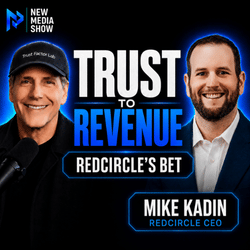
Trust, AI and the Future of Podcast Advertising | Mike Kadin, RedCircle #683

New Media Show with Podcast Hall of Famer Rob Greenlee and Guest Mike Kadin, CEO/co-founder of RedCircle.comPodcasting has one advantage that much of digital media struggles to maintain: trust.

In Episode #683 of the New Media Show, Rob Greenlee talks with Mike Kadin, CEO and co-founder of RedCircle.  What does that trust mean for podcast advertising as AI, video, HLS, YouTube, Spotify, and changing audience behavior reshape the business?

Long-form shows create a different relationship between creators and audiences than short-form social content. That relationship has always been one of the reasons host-read podcast advertising can work so well.

But what happens when AI can recreate the host’s voice?

Mike makes an important distinction. The value of a host-read ad is not simply hearing a familiar voice. It comes from the host’s language, personality, experience, humor, and actual judgment about the product. RedCircle does not use AI-generated versions of creators to perform host-read advertising.

Mike believes cloning the host’s voice without the actual human endorsement could undermine the very trust that makes the advertising valuable.

Authentic Host Reads Still Matter

Rob and Mike talk about the difference between reading advertising copy and genuinely recommending something a creator has used.

RedCircle has seen similar shows, with similar audience sizes, run by the same advertiser and using the same talking points, produce very different results. One of the biggest differences can be the quality and believability of the host read.

That also puts responsibility on creators to work with products they can credibly talk about.

Mike explains that RedCircle will sometimes hear from a creator who tried a sponsor’s product and did not like it.

Rather than force an endorsement, the company can take that feedback back to the advertiser and cancel the spot. That kind of process helps protect the relationship between the creator and audience.

Using AI to Find Better Brand Matches

Mike also talks about a newer RedCircle capability called Show IQ.

Over the years of running campaigns, RedCircle has accumulated information on its creators’ interests and brand affinities, as well as historical campaign performance. Show IQ uses that information to help identify creators who may be a natural fit for a particular advertiser.

This is an example of AI being used behind the scenes to improve the match rather than replacing the human doing the endorsement. The goal is to put advertisers with creators who can actually speak credibly about their products.

Spotify, YouTube and Control of Podcast Monetization

The conversation shifts to the growing influence of large consumption platforms. Spotify is experimenting with ways for listeners to move past advertising more easily. YouTube has already offered similar jump-ahead behavior around portions of videos that viewers commonly skip.

Mike does not see this as some unexpected attack on podcasting. Spotify and YouTube have built massive distribution platforms and naturally want to control more of the economics that happen inside them.

For creators, diversification becomes increasingly important.

A creator can use YouTube, Spotify, Apple Podcasts, and other platforms for distribution, but should also keep building direct relationships through websites, newsletters, subscriptions, and communities. No single distribution platform can be expected to always put the creator’s interests first.

RedCircle Is Moving Into Video

RedCircle has also started expanding beyond its traditional audio focus. Creators can now upload video through RedCircle and send it to YouTube, an expansion of its earlier audio-to-YouTube tools.

Mike says YouTube was the obvious first priority because that is where the largest existing video audience is today. RedCircle is also watching Spotify video, Apple Podcasts video, and HLS as podcasting becomes increasingly multi-format. The advertising systems will eventually need to evolve along with the content.

HLS Creates New Advertising Questions

A significant part of the conversation focuses on HLS and Apple’s new video-podcast approach in this episode.

Podcast advertising has traditionally been built around audio downloads. The video introduces a much more complex environment.

An Apple Podcasts episode may still automatically download its audio before the listener ever presses play.

If that listener later watches the video version, the advertising decision may already have been made. That makes traditional real-time programmatic video advertising harder to apply to podcast video.

For now, audio advertising may become a common advertising format, whether someone is listening or watching. That works technically, but it is not necessarily the best video experience.

Rob and Mike discuss the need for a new type of podcast video advertising that works whether someone hears the ad, watches it, or moves between both experiences.

Audio and Video Are Converging, But Not Cleanly

Rob raises a question he is dealing with directly on the New Media Show. Should a show have one combined audio-video experience, or should creators continue producing separate audio versions?

The New Media Show has distributed separate audio and video feeds for years. HLS makes it easier to move between listening and viewing, but that convergence can also lead to compromises.

Great video production does not automatically guarantee the best audio experience. The reverse is also true. Mike agrees there is a reasonable argument for preserving more flexibility between the two formats.

Measurement Is Getting Harder

Podcast measurement was already complicated.

Now creators may have traditional podcast downloads, Spotify streams, YouTube views, Apple video consumption, social views, and various advertising impressions.

Those numbers do not all mean the same thing. That creates an operational problem for creators trying to sell advertising and for brands trying to understand what they purchased. Mike believes technology needs to simplify this increasingly fragmented environment.

Mike compares it to the music industry, where tools were developed to distribute music and aggregate results across many different services. Creator media increasingly needs the same kind of cross-platform infrastructure.

What Is a Podcast Now? The episode also returns to a question the New Media Show has discussed for years.

What exactly is a podcast? Mike admits he has two answers.

As a longtime software engineer and RSS believer,  Mike still thinks of a podcast as episodic media distributed through RSS.

As the CEO of a podcast technology and advertising company, he sees younger people entering the business who do not know what RSS is and think of a podcast as the kind of long-form conversational content they see on YouTube.

At some point, audience behavior begins defining the medium.

Rob and Mike also discuss industry efforts such as the AMP work around definitions and measurement.

Mike supports efforts to build standards but says they only become truly meaningful if the major platforms where people actually consume podcasts implement them.

Where Podcasting Goes Next

Mike believes the industry has to follow audience behavior. Creators are becoming multi-channel because audiences already are.

Audio, video, YouTube, Spotify, Apple Podcasts, RSS apps, and social platforms are increasingly parts of the same creator-media business. The opportunity is to build better tools that allow creators to distribute, monetize, and measure it all without having to manage the complexity themselves.

HLS is one part of that transition.

The larger change is podcasting becoming a much broader medium for audio and video creators while trying to preserve the trust that made it valuable in the first place.

Discussion Highlights:

– Why long-form podcasting creates deeper audience trust
– Why authentic host reads still perform
– AI-generated advertising and creator voice cloning
– Why RedCircle does not use synthetic host reads
– RedCircle Show IQ and better creator-brand matching
– Dynamic versus baked-in podcast advertising
– Spotify and YouTube gaining more monetization control
– Why creators need direct audience relationships
– RedCircle’s move into video
– Why YouTube was its first video priority
– HLS and podcast video advertising
– Audio versus video ad creative
– Separate audio and video podcast experiences
– Cross-platform measurement problems
– Alternate enclosures and adoption
– What defines a podcast now
– The need for meaningful industry standards
– The future of multi-channel podcast monetization

Chapter Timestamp Markers

00:00 Podcasting, trust and long-form media
01:00 Introducing Mike Kadin of RedCircle
02:00 Why trust matters in podcast advertising
03:20 AI-generated ads and audience trust
06:10 Why RedCircle avoids cloned host reads
09:00 Authentic creator endorsements
11:00 Why some host reads outperform others
12:20 RedCircle Show IQ
14:00 The future of host-read advertising
15:30 Dynamic versus baked-in ads
17:20 Spotify and ad skipping
21:00 YouTube and platform control
22:20 Creators need direct audience relationships
24:00 RedCircle moves further into video
26:30 HLS and podcast video advertising
31:00 Opportunities for video host-read advertising
33:00 Ads that work in audio and video
36:30 Separate audio and video feeds
40:00 The fragmented consumption experience
42:00 Podcast measurement gets more complicated
44:30 HLS and alternate enclosures
47:20 What is a podcast now?
52:00 Standards and the major platforms
54:00 Measuring advertising by performance
56:00 The multi-channel future of podcasting
58:00 Closing thoughts

Mike Kadin Guest Links

RedCircle: https://redcircle.com

Host and Show Links

New Media Show
https://newmediashow.com

New Media Show on YouTube
https://youtube.com/@TheNewMediaShow

Rob Greenlee
https://robgreenlee.com

Rob Greenlee on LinkedIn
https://www.linkedin.com/in/robgreenlee

Podcast Hall of Fame
https://podcasthall.com

AI Disclosure

AI tools were used to assist with organizing and editing to remove filler words; this episode description was created from the completed full transcript of episode #683. The recorded conversation, human performances, perspectives, editorial direction, and final responsibility for the episode remain with Rob Greenlee and Mike Kadin. The New Media Show is human-hosted.