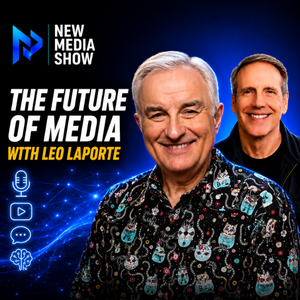
The Future of Media | Leo Laporte, TWiT.tv #672

In Episode 672 of the New Media Show, host 2017 Podcast Hall of Famer Rob Greenlee welcomes Leo Laporte, founder and owner of the TWiT Podcast Network, longtime technology broadcaster, and 2015 Podcast Hall of Famer
He launched TWiT in 2005 and built one of the earliest independent technology media networks around a simple idea: make strong shows, distribute them everywhere the audience wants to watch or listen, and build a real relationship with the people who return every week.

Leo has spent decades at the center of the shift from broadcast radio and cable television into online shows, podcasts, livestreams, video, and creator-led media. 

This conversation looks at where that model is heading now.

The word “podcast” helped define an era of downloadable audio, RSS feeds, and iPods. Today, audiences find shows through YouTube, Apple Podcasts, Spotify, Netflix, social platforms, livestreams, clips, newsletters, and communities.

Most viewers or listeners do not care how a show is technically delivered. They care whether it is easy to find, worth their attention, and made by people they trust.

Rob and Leo discuss why the technical barrier to starting a show has fallen so far, while the challenge of creating meaningful content has never gone away. Anyone can publish.

Building a show that earns repeat attention takes perspective, consistency, subject knowledge, and a genuine relationship with an audience.

Leo reflects on TWiT’s early video strategy, its experiments with live 24/7 programming, and the importance of creating a sense of place around a media brand.

Video can deepen audience connection, while audio remains one of the most personal forms of media because it travels with listeners through daily life.

The discussion also explores the growing complexity of distribution and measurement. Audio and video are increasingly becoming one media experience, yet advertisers still face fragmented metrics across RSS, YouTube, streaming platforms, and social video.

Rob and Leo talk about Apple HLS video, the gap between download metrics and actual consumption, the limitations of existing IAB measurement standards, and why advertiser confidence still often comes down to audience fit and trusted host-read relationships.

A strong audience relationship has more long-term value than a number on a dashboard that may not fully reflect who watched, listened, responded, or bought.

Leo also shares his view that AI is a major structural technology transition. TWiT has expanded its coverage through Intelligent Machines, looking at AI, robotics, and the impact these tools will have on work, media, and daily life.

AI can help creators research, edit, generate visuals, improve production workflows, translate content, and extend the usefulness of existing media. It can also generate massive volumes of generic content, clone voices, and make it harder for audiences to know what is real.

Rob and Leo discuss whether clearly identified and certified human-led media may become more valuable as synthetic content becomes harder to distinguish from authentic work. They agree that human perspective, lived experience, spontaneity, and community will continue to matter deeply in a media environment crowded with automated output.

The episode closes with a look at the next generation of media habits. Leo points to the rise of short-form scrolling, social video, and new creator business models, while also making the case for long-form conversations and communities that bring people together instead of pushing them further apart.

For creators and media companies, the path forward is still clear: build work that people value, meet the audience where they are, stay flexible as platforms change, and create relationships strong enough to survive the next technology shift.

Topic Chapter Time Stamp Markers:

00:00 — Welcome to The New Media Show Episode 672
Rob Greenlee introduces Leo Laporte and sets up the episode around online new media, podcasting, video, AI, and where media is heading next.

02:15 — Leo Laporte Joins the Conversation
Leo reflects on how long he and Rob have been part of the early era of podcasting and online media.

02:45 — Is It Still New Media?
Rob and Leo discuss whether “new media” still works as a term, and why podcasting may now be part of a much larger media category.

03:30 — Why Leo Wanted to Call Podcasts “Netcasts”
Leo explains why he resisted the term “podcast” early on and why he still thinks creators are really making shows.

04:35 — Podcasting Beyond the Download
The conversation moves into YouTube, Netflix, Spotify, RSS, streaming, and why the audience cares more about access than the delivery format.

05:25 — Be Everywhere the Audience Wants You
Leo explains one of TWiT’s core decisions: distribute content wherever listeners and viewers want to consume it.

06:10 — Discovery Is the New Challenge
Podcasting is easier to access than ever, but harder to discover because audiences now have millions of choices.

07:35 — Why Starting Is Easy but Building a Show Is Hard
Leo explains that technical barriers have fallen, but the real challenge remains content, authenticity, and audience connection.

09:20 — Talent, Audience, and the Return of Media Gatekeeping
Rob and Leo discuss whether attention is consolidating again around fewer large creators and channels.

10:25 — Audience Size vs Real Business Value
Leo separates building an audience from building a media business and explains why YouTube monetization still requires scale.

11:05 — Radio, Podcasting, and the Early TWiT Model
Leo talks about his radio background, his first podcast from 2004, and how broadcasting and podcasting share the same core idea.

12:05 — The Brick House Studio and Legitimacy
Leo explains why TWiT built a large studio: to show advertisers and audiences that online media could be a serious media business.

13:05 — Video Was Always Part of the Plan
Rob and Leo talk about how TWiT was doing video years before the current “video podcasting” push.

13:40 — Audio Intimacy vs Video Presence
Leo explains why radio creates intimacy, while video adds place, presence, and a different kind of audience relationship.

16:05 — TWiT as a Lean-Back Media Network
Leo describes his early vision for TWiT as a low-cost version of CNN or CNBC for technology coverage.

17:00 — 24/7 Streaming and Live Community
The conversation covers TWiT’s 24/7 stream, live programming, behind-the-scenes feel, and why raw authenticity helped the brand.

18:40 — Why Technology Was the Right Beat
Leo explains why covering technology kept TWiT relevant through major shifts from the iPhone to AI.

20:35 — AI as the Next Major Technology Shift
Leo compares AI to structural technology changes and explains why he sees it as a major long-term shift.

22:20 — From This Week in Google to Intelligent Machines
Leo discusses rebranding a TWiT show around AI and robotics as the center of technology coverage moved.

23:15 — Can AI Create Real Media?
Rob asks Leo about AI-generated content, and Leo explains why he still believes humans will remain central to media creation.

24:20 — AI Tools, Voice Cloning, and Advertising
Leo talks about using AI tools, ElevenLabs voice cloning, and the potential for AI-generated ad reads.

25:25 — Why Human Spontaneity Still Matters
Rob and Leo discuss whether AI clones can capture the same timing, originality, and human presence as real creators.

26:35 — Zune, Apple, Siri, and AI Adoption
A lighter segment on Zune leads into Apple’s AI plans and how mainstream users may begin to understand AI’s practical value.

27:45 — AI Backlash, Jobs, and Human Value
Rob and Leo discuss AI anxiety, job disruption, retraining, and why people need to understand where their human value lies.

29:30 — Will the Word Podcast Survive?
Rob asks whether “podcast” will remain the right term as audiences define the medium more than creators or platforms do.

30:40 — Shows, Creators, and Human Creation
Leo argues that “show” may be the better word and reflects on why humans are naturally driven to create.

33:05 — Apple HLS and the Audio-Video Merge
Rob and Leo discuss Apple HLS, streaming formats, video RSS, audio RSS, and the shift toward combined audio-video experiences.

37:05 — Measurement Across Audio, Video, and Platforms
The conversation turns to the challenge of consistent measurement across RSS, YouTube, Apple, Spotify, and other platforms.

38:20 — Host-Read Ads, Video Ads, and Dynamic Insertion
Leo explains how TWiT handles baked-in host reads, dynamic ad insertion, and the coming shift toward video ad insertion.

39:10 — The Problem with Podcast Metrics
Leo explains why measuring podcast consumption remains messy, especially across corporate networks, mobile listening, and YouTube.

41:10 — Why Attribution Still Falls Short
Rob and Leo discuss why promo codes, attribution links, and dashboards do not fully capture real audience behavior.

43:15 — Trust as the Real Advertising Asset
Leo explains why TWiT’s value to advertisers comes from trusted hosts, engaged audiences, and long-term sponsor relationships.

45:00 — Podcasting 2.0 and Shared Economic Models
Rob introduces the idea of shared value between advertisers, apps, creators, and listeners, and Leo reacts to the concept.

46:15 — Oxford Road, Dan Granger, and New Metrics
Rob brings up Dan Granger’s work around new podcast measurement standards and the 30-second vs 60-second listener discussion.

47:35 — Why Creator-Side Metrics Matter
Leo explains why he is skeptical of advertiser-driven measurement systems and why inflated podcast numbers damaged trust.

49:15 — Subscriptions, Membership, and Reducing Ad Dependence
Leo explains why audience-supported media would be ideal and how TWiT’s paid club fits into the business model.

50:20 — The Art of the Host-Read Ad
Rob and Leo discuss why Leo’s long-form host reads worked, including the value of making ads useful and content-like.

52:45 — Where Media Consumption Is Heading
Rob asks Leo what may come next in media, and Leo points to short-form scrolling, TikTok, Instagram, and changing audience behavior.

54:00 — Leo’s Son, TikTok, and the Next Generation of Media
Leo shares how his son built a major food audience through short-form video and turned it into a restaurant and cookbook business.

55:35 — Long-Form Still Has a Future
Leo argues that long-form shows can still matter if they create value, community, and real connection.

56:45 — Community as the Core of Media
Leo explains why connection and community remain the most important part of media, no matter how platforms change.

57:30 — The Risk of Doom Scrolling
Rob and Leo discuss short-form addiction, dopamine loops, and how constant scrolling can disconnect people from real community.

58:35 — AI Slop and Synthetic Video
The discussion moves to AI-generated video content, fantasy media, and the question of whether audiences will tire of low-quality synthetic output.

59:35 — Human Clones, AI Presence, and Authenticity
Rob asks whether AI versions of creators could extend their presence, and Leo reflects on voice clones, soul, and human perspective.

1:00:35 — Human-Made Media May Become More Important
Rob suggests that labeling human-made content may become more valuable as AI content grows more convincing.

1:01:20 — Remembering Todd Cochrane and Podcast Hall of Fame
Rob and Leo reflect on Todd Cochrane, the Podcast Hall of Fame, and the early podcasting community.

1:03:10 — The Hall of Fame, Dave Winer, and Joe Rogan
Leo and Rob talk about the Podcast Hall of Fame, Dave Winer, Joe Rogan, and recognizing major contributors to podcasting.

1:04:45 — Closing Thoughts and Where to Find the Show
Rob thanks Leo and closes the episode with where to find past episodes and future New Media Show content.

Guest Links: Leo Laporte, Founder and Owner, TWiT Podcast Network

TWiT Podcast Network: https://twit.tv/
Leo Laporte Website: https://leo.fm/
Leo Laporte on LinkedIn: https://www.linkedin.com/in/leo-laporte-8aa224309/
Leo Laporte on YouTube: https://www.youtube.com/@LeoLaporte
Intelligent Machines: https://twit.tv/shows/intelligent-machines
This Week in Tech: https://twit.tv/shows/this-week-in-tech

Rob Greenlee and New Media Show Links

Rob Greenlee Website: https://robgreenlee.com/
New Media Show: https://newmediashow.com/
New Media Show Audio on Apple Podcasts: https://podcasts.apple.com/us/podcast/new-media-show-audio/id392545649
New Media Show on YouTube: https://youtube.com/@TheNewMediaShow
Rob Greenlee on YouTube: https://youtube.com/@RobGreenlee
Podcast Hall of Fame: https://podcasthall.com/

AI Disclosure Note:

I used AI tools to help organize and edit this episode, description, and generate show notes from the episode transcript. The views, clarifications, responsibility, and industry perspective are mine and my guest’s. This article reflects my editorial direction and the substance of the conversation.

Can Human Creators Still Win in an AI-Flooded Media World? | Rob Walch #669

New Media Show with Rob Greenlee #669 with Guest Rob Walch, VP, Podcaster Relations at Captivate.comIn episode 669 of the New Media Show, host Rob Greenlee talks with Rob Walch, VP of Podcaster Relations at Captivate and DAX.
Podcast Hall of Famers Rob Walch and Rob Greenlee discuss one of the biggest pressure points facing creators today: Can human creators grow, monetize, and maintain audience trust as platforms fill with AI-generated podcasts, synthetic video, cloned voices, and automated content channels?

I apologize for the rough audio in this episode. The audio was choppy in the virtual recording, and I did the best I could to improve it.

The conversation begins with a bigger question: Where is the line between useful AI tools and low-effort, fully automated content that weakens trust, damages advertising ROI, and makes it harder for original creators to be discovered and rewarded?

AI can help creators research, edit, translate, caption, clip, and distribute their work more efficiently. But the human perspective, real creative judgment, authentic voice, and trusted audience relationship must remain at the center of the content experience.

Rob Walch shares updates on Captivate, DAX, and the evolving podcast monetization landscape before diving into the rise of mass-produced AI content and the growing use of the term “AI slop.”

Rob Greenlee and Rob Walch discuss why not every use of AI belongs in the same category, why transparency and disclosure matter, and how creators can use AI responsibly without losing the human value that makes their work worth following.

They also explore YouTube’s evolving AI-labeling approach, the future of human-generated content, platform responsibility, advertising risks, Apple HLS video, YouTube’s new focus on audio listening, video-versus-audio strategy, and how AI tools may help independent creators manage a rapidly expanding distribution workload.

The larger takeaway is that creators do not need to choose between being human and using AI. The opportunity is to use AI as a creative and operational assistant while keeping human thinking, trust, judgment, relationships, and original perspective at the core of the work.

00:00 Welcome to New Media Show #669
01:30 Introducing Rob Walch and His New Role at Captivate
02:30 Captivate Marketplace and Creator Monetization
05:00 What DAX and Global Bring to Podcast Advertising
08:30 What Does “AI Slop” Actually Mean?
11:00 How Mass AI Content Could Hurt Ad ROI and CPMs
13:30 The Scale of AI-Generated Podcast Uploads
16:00 Why AI Use Is Not One-Size-Fits-All
18:00 Bad Human Content vs. Bad AI Content
20:00 Platform Responsibility, Spam, and Fraud
22:00 YouTube AI Labeling and Creator Disclosure
25:00 AI Watermarks, Trust, and Human-Generated Content
28:00 Will Advertisers Prefer Human-Hosted Shows?
30:00 When Creators Should Disclose AI Use
33:00 AI Tools for Research, Editing, Audio Cleanup, and Workflows
36:00 Human Creativity Still Matters
39:00 Platform Discovery, Algorithms, and Audience Signals
44:00 Audio, Video, and YouTube’s Growing Interest in Listening
49:00 Apple HLS Video and the Podcast Monetization Challenge
54:00 Video Production, Baked-In Ads, and Creator Complexity
57:00 Why New Creators Can Still Start Audio-First
01:00:00 AI-Powered Clips, Repurposing, and Distribution
01:03:00 Monetization Risks and Alternatives Beyond Advertising
01:07:00 Podcast Standards, Video Metrics, and IAB Definitions
01:11:00 The Future of Audio, Video, AI, and Trusted Human Creators
01:19:00 Closing Thoughts and Where to Find Rob Walch

Guest and Host Links

Guest: Rob Walch
VP of Podcaster Relations, Captivate and DAX
Captivate: https://Captivate.fm
Global DAX: https://Global.com
Podcast411: https://Podcast411.com

Host: Rob Greenlee
New Media Show: https://NewMediaShow.com
Rob Greenlee: https://RobGreenlee.com
Trust Factor Lab: https://TrustFactorLab.com
Podcast Hall of Fame: https://PodcastHall.com
Rob Greenlee on LinkedIn: https://linkedin.com/in/robgreenlee
Rob Greenlee Booking: https://calendly.com/robgreenlee

About the Host/Author:
Rob Greenlee is a 2017 Podcast Hall of Fame inductee and Chair, a global new-media leader who bridges podcasting’s human roots and its AI-driven future. As founder of Trust Factor Lab and host of the New Media Show and Spoken Human, Rob helps creators start, grow, monetize, and future-proof their content. He has held leadership roles at Microsoft, Spreaker, Libsyn, StreamYard, Podbean, and PodcastOne, and serves as Chairperson of the Podcast Hall of Fame.

Personal / AI Disclosure Note:
I used AI tools to help organize and edit this episode description and generate show notes from the episode transcript. The views, clarifications, responsibility, and industry perspective are mine and my guest’s. I have been working in podcasting, digital media, and platform adoption for more than two decades, and this article reflects my own position and editorial direction.