Podcasting Is Not Broken. It Is Becoming Something Bigger

New Media Show with Rob Greenlee - NewMediaShow.comBy Rob Greenlee

I do not believe podcasting is broken.

I also do not believe podcasting is outdated.

But I understand why some people are starting to say that. The medium is changing so fast right now that it can feel like the old definitions no longer fit what audiences and creators are actually doing.

That does not mean podcasting is dying. It means podcasting has reached a major inflection point.

For audiences, podcasts have become one of the main media habits in everyday life. People listen while driving, walking, working, exercising, relaxing, and doing all the things that make audio such a powerful companion medium. That part has not gone away. Audio remains deeply personal, flexible, and trusted.

But for many creators, the word “podcaster” no longer fully describes what they are building.

They are making shows.

They are producing conversations, video episodes, clips, livestreams, newsletters, communities, events, and social content. The podcast is still part of the system, but it is no longer always the whole identity.

That is the big shift.

The traditional definition of a podcast as an audio-first, RSS-distributed show remains important. It is the foundation of the medium. It gave podcasting its openness, portability, and independence. But that definition is increasingly becoming one part of a larger video-first creator strategy.

This is where some tension comes in.

Audio-first creators will continue to have large audiences. Many of the most trusted and successful shows will remain primarily audio-driven. There will always be room for audio-first storytelling, interviews, news, education, comedy, and commentary. Audio is not going away.

But audio-first alone may no longer be the path to the largest possible audience.

Discovery has shifted. Audience behavior has shifted. Monetization has shifted. Younger audiences often discover shows through video clips, YouTube, TikTok, Instagram, Spotify, Apple Podcasts, and other social platforms before they ever subscribe to an RSS feed or follow a show in a traditional podcast app.

For many people, the first experience of a “podcast” is now a video moment.

That does not make it less of a podcast. It means the audience definition has expanded beyond the industry definition.

This is why I keep saying we are moving from “podcasts” into a broader “shows” era.

The show is the core intellectual property. The show is the brand. The show is the relationship with the audience. Audio, video, clips, newsletters, and community are all distribution expressions of that show.

That shift has real consequences for the entire industry.

Hosting companies have to think beyond audio file delivery. Apps have to think beyond audio playback. Ad platforms have to think beyond downloads. Measurement companies have to think beyond separate audio and video reports. Creators have to think beyond a single format and a single feed.

This is especially true as HLS video streaming begins to scale inside podcasting.

The Apple Podcasts shift toward HLS video streaming is a major signal. Video podcasting is no longer just about uploading a large MP4 file or posting a version on YouTube. It is moving toward modern streaming infrastructure, adaptive playback, dynamic ad possibilities, and more seamless switching between listening and viewing.

That means some of what we have historically called audio-only consumption may increasingly be delivered through video-enabled HLS streaming systems. A person may listen to the audio from a video podcast stream. They may start with video, switch to audio, or never look at the screen at all. The content experience becomes more fluid.

That creates a major measurement challenge.

The industry cannot keep treating audio and video metrics as if they live in separate worlds. Creators need to know the show’s total reach and value, not just the performance of a single format in a single app.

Downloads, streams, plays, views, watch time, listen time, completion, retention, subscribers, followers, and engagement all need to be consolidated into a single framework.

Right now, too much of the industry is still measuring yesterday’s format while the audience is already consuming tomorrow’s show.

This is not just a technical issue. It is a business issue.

If a creator has 50,000 audio downloads, 100,000 YouTube views, 25,000 Spotify video plays, 15,000 Apple video streams, and millions of short-form impressions, what is the actual size and value of that show?

The old answer was to separate all of that into different buckets.

The new answer has to be more unified.

Brands and sponsors want to understand total audience impact. Creators want to understand where trust, attention, and revenue are being created. Platforms want to prove value. Hosting companies want to stay relevant. Measurement providers want to remain credible.

That requires merged and consolidated metrics.

Podcasting has always struggled with measurement consistency, even in the audio-only era. Now video makes that challenge more complicated, but also more urgent.

The industry needs a better way to measure shows across formats, not just files across feeds.

This does not mean we abandon RSS. It does not mean we abandon audio. It does not mean every creator has to become a YouTuber or video personality.

It means podcasting has to evolve its infrastructure, language, and business model to align with what audiences are already doing.

The audience does not care whether the industry calls something a podcast, a video podcast, a show, a stream, or creator media.

They ONLY care whether it is useful, entertaining, trustworthy, and available where they already spend time.

That is the part we should pay attention to.

Podcasting is expanding.

It is expanding into video. It is expanding into streaming. It is expanding into social/YouTube discovery. It is expanding into creator-led media brands. It is expanding into AI-assisted and generated production and distribution. It is expanding into a world where the show matters more than the format.

The danger is not that podcasting is outdated.

The danger is that the industry keeps defending an old definition while the audience has already moved into a broader one.

The future of podcasting will still include audio-first shows, RSS feeds, open distribution, and traditional podcast apps. Those pieces still matter. But the growth edge of the medium is moving toward video-enabled, multi-format, cross-platform show experiences.

The inflection point.

– The creators who understand this will not stop being podcasters. They will become stronger show builders.

– The companies that understand this will not abandon podcasting. They will build the infrastructure for the next version.

– And the industry that understands this will stop asking whether podcasting is broken and start asking a better question:

– How do we preserve what made podcasting powerful while building the modern show-based media ecosystem it is clearly becoming?

About the Author

Rob Greenlee is a 2017 Podcast Hall of Fame inductee and Chair, a global new media leader who bridges podcasting’s human roots with its AI-driven future. As founder of Trust Factor Lab and host of the “New Media Show” and “Spoken Human”, Rob helps creators start, grow, monetize, and future-proof their content. He’s held leadership roles at Microsoft, Spreaker, Libsyn, StreamYard, and PodcastOne, and serves as Chairperson of the Podcast Hall of Fame. Learn more at RobGreenlee.com and join the Trust Factor Lab Creator/Podcast Services.

Personal note: I used AI tools to help organize this article and hand-edited it; the views, clarifications, responsibility, and industry perspective are mine. I have been working in podcasting and platform adoption for more than two decades, and this article reflects my own position. The original word choice was mine, and so is the clarification.
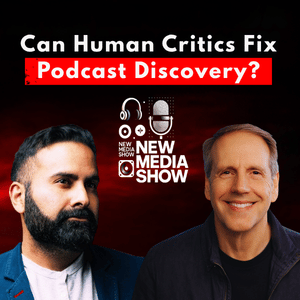
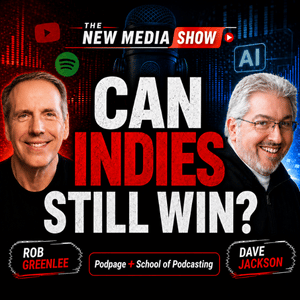
 

Can Indie Podcasters and Media Creators Still Win? | Dave Jackson #661

On Episode 661 of The New Media Show, host Rob Greenlee, 2017 Podcast Hall of Fame inductee, Chairperson of the Podcast Hall of Fame, and longtime new media executive, is joined by Dave Jackson, 2018 Podcast Hall of Fame inductee, founder of School of Podcasting, and Head of Podcasting at Podpage.com, for a deep conversation about whether independent podcasters and media creators can still win in today’s rapidly changing creator economy.

This episode centers on a question many creators are quietly asking right now:

Can indie podcasters still grow, monetize, and build trust in a market being reshaped by video, AI, platform control, and professionalized media production?

Rob and Dave discuss the recent combination of Podpage and School of Podcasting, why podcast education matters more than ever, and how websites, email lists, communities, video, RSS, and AI-assisted workflows are becoming essential parts of a creator’s survival strategy. Dave joined Podpage as Head of Podcasting in 2024, and School of Podcasting has been helping creators launch, grow, and monetize podcasts since 2005. 

The conversation also moves into some of the biggest issues facing podcasting and new media in 2026, including AI-generated shows, human voice and video cloning, creator burnout, YouTube’s influence on podcast identity, Apple’s HLS video podcast direction, and why human trust may become the most valuable asset creators have left.

Rob and Dave bring decades of experience to this discussion.

Both have seen podcasting shift through multiple technology waves, from the early RSS era to platform consolidation, video podcasting, AI tools, and the rise of creator-led media. That history makes this episode a practical and honest look at what indie creators need to do now to stay relevant, trusted, and discoverable.

What does this episode cover?

Can independent podcasters still succeed in a noisier, more competitive market?

What does “winning” even mean now: downloads, money, trust, community, authority, or sustainability?

Why the Podpage and School of Podcasting connection matters for podcast education and creator websites

Why podcasters need a home base beyond social platforms and YouTube

How AI is changing show notes, images, writing, research, production, and creator workflows

Why AI-generated content should not all be treated as spam, but fraud and abuse must be addressed

How human storytelling, lived experience, and trust help creators stand apart from AI content

Why video is becoming harder to ignore, but audio-only creators should not panic

How YouTube has changed public perception of what a podcast is

What Apple’s HLS video direction could mean for audio, video, RSS, and creator workflows

Why websites, email lists, communities, and audience ownership still matter

How indie creators can avoid burnout while adapting to new media expectations

Key Takeaways:

Indie podcasters can still win, but the definition of winning has changed.

Creators need more than a microphone and a media host. They need clarity, a trusted point of view, a website, a distribution plan, and a realistic path to audience growth.

AI is not going away. The smartest creators will learn how to use it without losing their human voice.

Video will continue reshaping podcasting, but not every creator has to become a full-scale video studio overnight.

Human-created content still has a powerful advantage when it is rooted in story, experience, transparency, and trust.

Websites are becoming more important again because creators need a stable home base that is not controlled by a single platform.

Podcast education matters because the barrier to starting is low, but the barrier to standing out is much higher.

Guest

Dave Jackson
Founder, School of Podcasting
Head of Podcasting, Podpage.com
2018 Podcast Hall of Fame inductee
Author of Profit From Your Podcast

Dave Jackson has been helping creators launch and improve podcasts since 2005 through the School of Podcasting. He is also Head of Podcasting at Podpage, where he supports podcasters using websites as a central hub for discovery, audience ownership, and long-term growth. (The School of Podcasting)

Guest links:
School of Podcasting: https://www.schoolofpodcasting.com/
Podpage: https://www.podpage.com/
Dave Jackson: https://davidjackson.org/
Podcast Consultant: https://www.podcastconsultant.com/

Host

Rob Greenlee
Host, The New Media Show
Podcast Hall of Fame inductee
Chairperson, Podcast Hall of Fame
Founder, Trust Factor Lab and Adore Network
Co-Founder, Passion Struck Network

Host and show links:
New Media Show: https://newmediashow.com/
Rob Greenlee: https://robgreenlee.com/
Podcast Hall of Fame: https://podcasthall.com/
Adore Network: https://adorenetwork.com/
Trust Factor Lab: https://trustfactorlab.com/
Passion Struck Network: https://passionstrucknetwork.com/
Rob on LinkedIn: https://www.linkedin.com/in/robgreenlee/

Bottom Line in this Episode:

This episode answers a major creator economy question for 2026: Can indie podcasters and independent media creators still compete as podcasting becomes more professional, more video-driven, and more influenced by AI?

Rob Greenlee and Dave Jackson explain why the answer is yes, but only if creators evolve. The winning indie creator now needs a clear purpose, a strong human voice, trusted expertise, a discoverable website, owned audience channels, thoughtful use of AI, and a strategy that works across audio, video, search, social, and community.

The episode is especially useful for podcasters, YouTube creators, podcast consultants, media educators, creator economy leaders, podcast hosting companies, AI media startups, and independent showrunners trying to understand the next phase of podcasting and new media.

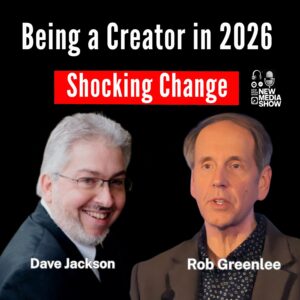
Shocking Change: Video, AI, and RSS Podcasting | Dave Jackson #646

In this new episode from a LIVE Jan 7th, 2026 New Media Show, Host RobGreenlee.com is joined by Dave Jackson (School of Podcasting and co-host of Ask the Podcast Coach) to unpack why the current shift toward video and AI feels like an earthquake inside podcasting, while the YouTube creator world treats it like a normal day.

We dig into how creators are now forced to play two games at once: the RSS subscription game and the algorithm discovery game especially for video, and why the definition debates did not matter as much as audience behavior.

Rob and Dave also get practical about what breaks and what endures, including growing frustration with heavy ad loads and pre-roll stacking, the realities of programmatic monetization, and why the first thing a listener should hear is you.

We cover where video delivery and monetization are heading (including HLS and video ad insertion), why “watch something” still defaults to YouTube for most people, and what Apple Podcasts would need to change if it ever wanted to truly reprioritize RSS-based video podcasting again.

Plus, a look at what live content signals in an AI-accelerated era, including the idea of live as proof of life and real-time audience feedback.

Rob also shares reminders about Podfest Expo (Jan 14–18 in Orlando) and the upcoming 2026 Podcast Hall of Fame activity on Jan 16th, 2026 (PodcastHall.com).

Topics Covered:

Video becoming default across platforms
AI accelerating the creator loop and increasing pressure to optimize for algorithms
RSS portability, ownership, and the growing discovery gap
Programmatic ads, pre-roll backlash, and audience ad tolerance
HLS, video ad insertion, and why the ad infrastructure is pushing streaming delivery
Apple Podcasts video discoverability problems and what would need to change
Netflix exclusivity lessons after the Spotify era of exclusives
Live as proof of life in a world flooding with synthetic content

Hosts Links

New Media Show: https://newmediashow.com/
Rob Greenlee: https://robgreenlee.com/
Rob on YouTube: https://www.youtube.com/@RobGreenlee
Rob on LinkedIn: https://www.linkedin.com/in/robgreenlee
Rob on Instagram: https://www.instagram.com/robwgreenlee/
Podcast Hall of Fame: https://podcasthall.com/
Podfest Expo: https://podfestexpo.com/

Dave Jackson, School of Podcasting: https://schoolofpodcasting.com/
Ask the Podcast Coach (Live Saturdays): https://askthepodcastcoach.com/


What’s a Podcast Era Is Over – Welcome Liquid Content Era #645

New Media Show with Rob Greenlee and Cliff Ravenscraft #645This week (December 17th, 2025) on episode #645 of The New Media Show with Rob Greenlee host is joined by longtime podcasting pioneer and returning guest co-host Cliff Ravenscraft, the Podcast Answer Man, for a wide-ranging and timely conversation about where podcasting has been and where it’s heading next.

The episode opens with a reflection on the long-running industry debate around the definition of a podcast and why that question has resurfaced so often over the last few years. Rob and Cliff explore how audience behavior has quietly moved ahead of industry debates, shifting consumption toward a mix of audio, video, livestreams, and platforms like YouTube, often without waiting for permission or consensus.

Cliff shares the full story behind his return to the Podcast Answer Man brand after stepping away years ago, including why he left, what he focused on during his time away, and what changes in the podcasting and creator landscape made this the right moment to come back. He reflects on two decades in podcasting, helping tens of thousands of creators launch shows, and why many creators today feel overwhelmed by conflicting advice around video, algorithms, and monetization.

Rob introduces the concept of podcasting’s evolving eras, beginning with the often-forgotten “Zero Era” where audio and video podcasting coexisted early on, followed by the MeUndies era, the experimentation and acquisition boom, and the more recent identity-crisis phase defined by the question “What is a podcast?”

Together, Rob and Cliff discuss why the industry may now be entering what’s being called the Liquid Content Era, where shows are no longer confined to a single format and content flows across feeds, platforms, and experiences.

The conversation digs into the tension between creator intent and audience convenience, the role of RSS in a changing ecosystem, and the risks of letting algorithms dictate creative decisions.

Cliff offers a counterbalance to the pressure many creators feel to be everywhere at once, emphasizing that audio-only podcasting can still succeed when aligned with clear goals, sustainable workflows, and meaningful audience relationships.

The episode also explores production quality, evolving audio standards, video integration challenges, international podcast growth, and why podcasting remains a powerful global medium despite constant claims that it’s “over” or “dead.”

This episode is both a reality check and a recalibration, encouraging creators to stop defending definitions, focus on serving audiences, and choose formats intentionally rather than reactively.

Join the conversation in comments, and be part of the discussion about what podcasting really means now and what it can become next.

Rob Greenlee
Rob Greenlee Website
https://RobGreenlee.com
New Media Show for Audio and Video RSS feeds
https://NewMediaShow.com
Adore Podcast Network
https://AdoreNetwork.com
Adore Creator Community on Skool
https://Skool.com/AdoreNetwork
Podcast Hall of Fame
https://PodcastHall.com
https://YouTube.com/@OfficialPodcastHallofFame
The Pro Creator Playbook with Rob Greenlee
Audio podcast
https://www.adorenetwork.com/show/pro-creator-playbook-audio/
Video show
https://www.adorenetwork.com/show/pro-creator-playbook-video/
Spoken Life Show
https://www.adorenetwork.com/show/spoken-life-show/
Spoken Human show on YouTube
https://YouTube.com/@spokenhuman
Rob Greenlee YouTube channel
https://YouTube.com/@RobGreenlee

Cliff Ravenscraft
https://CliffRavenscraft.com
https://PodcastAnswerMan.com