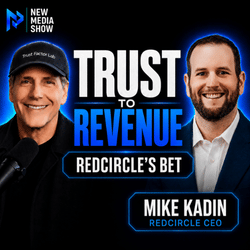
Trust, AI and the Future of Podcast Advertising | Mike Kadin, RedCircle #683

New Media Show with Podcast Hall of Famer Rob Greenlee and Guest Mike Kadin, CEO/co-founder of RedCircle.comPodcasting has one advantage that much of digital media struggles to maintain: trust.
In Episode #683 of the New Media Show, Rob Greenlee talks with Mike Kadin, CEO and co-founder of RedCircle.  What does that trust mean for podcast advertising as AI, video, HLS, YouTube, Spotify, and changing audience behavior reshape the business?

Long-form shows create a different relationship between creators and audiences than short-form social content. That relationship has always been one of the reasons host-read podcast advertising can work so well.

But what happens when AI can recreate the host’s voice?

Mike makes an important distinction. The value of a host-read ad is not simply hearing a familiar voice. It comes from the host’s language, personality, experience, humor, and actual judgment about the product. RedCircle does not use AI-generated versions of creators to perform host-read advertising.

Mike believes cloning the host’s voice without the actual human endorsement could undermine the very trust that makes the advertising valuable.

Authentic Host Reads Still Matter

Rob and Mike talk about the difference between reading advertising copy and genuinely recommending something a creator has used.

RedCircle has seen similar shows, with similar audience sizes, run by the same advertiser and using the same talking points, produce very different results. One of the biggest differences can be the quality and believability of the host read.

That also puts responsibility on creators to work with products they can credibly talk about.

Mike explains that RedCircle will sometimes hear from a creator who tried a sponsor’s product and did not like it.

Rather than force an endorsement, the company can take that feedback back to the advertiser and cancel the spot. That kind of process helps protect the relationship between the creator and audience.

Using AI to Find Better Brand Matches

Mike also talks about a newer RedCircle capability called Show IQ.

Over the years of running campaigns, RedCircle has accumulated information on its creators’ interests and brand affinities, as well as historical campaign performance. Show IQ uses that information to help identify creators who may be a natural fit for a particular advertiser.

This is an example of AI being used behind the scenes to improve the match rather than replacing the human doing the endorsement. The goal is to put advertisers with creators who can actually speak credibly about their products.

Spotify, YouTube and Control of Podcast Monetization

The conversation shifts to the growing influence of large consumption platforms. Spotify is experimenting with ways for listeners to move past advertising more easily. YouTube has already offered similar jump-ahead behavior around portions of videos that viewers commonly skip.

Mike does not see this as some unexpected attack on podcasting. Spotify and YouTube have built massive distribution platforms and naturally want to control more of the economics that happen inside them.

For creators, diversification becomes increasingly important.

A creator can use YouTube, Spotify, Apple Podcasts, and other platforms for distribution, but should also keep building direct relationships through websites, newsletters, subscriptions, and communities. No single distribution platform can be expected to always put the creator’s interests first.

RedCircle Is Moving Into Video

RedCircle has also started expanding beyond its traditional audio focus. Creators can now upload video through RedCircle and send it to YouTube, an expansion of its earlier audio-to-YouTube tools.

Mike says YouTube was the obvious first priority because that is where the largest existing video audience is today. RedCircle is also watching Spotify video, Apple Podcasts video, and HLS as podcasting becomes increasingly multi-format. The advertising systems will eventually need to evolve along with the content.

HLS Creates New Advertising Questions

A significant part of the conversation focuses on HLS and Apple’s new video-podcast approach in this episode.

Podcast advertising has traditionally been built around audio downloads. The video introduces a much more complex environment.

An Apple Podcasts episode may still automatically download its audio before the listener ever presses play.

If that listener later watches the video version, the advertising decision may already have been made. That makes traditional real-time programmatic video advertising harder to apply to podcast video.

For now, audio advertising may become a common advertising format, whether someone is listening or watching. That works technically, but it is not necessarily the best video experience.

Rob and Mike discuss the need for a new type of podcast video advertising that works whether someone hears the ad, watches it, or moves between both experiences.

Audio and Video Are Converging, But Not Cleanly

Rob raises a question he is dealing with directly on the New Media Show. Should a show have one combined audio-video experience, or should creators continue producing separate audio versions?

The New Media Show has distributed separate audio and video feeds for years. HLS makes it easier to move between listening and viewing, but that convergence can also lead to compromises.

Great video production does not automatically guarantee the best audio experience. The reverse is also true. Mike agrees there is a reasonable argument for preserving more flexibility between the two formats.

Measurement Is Getting Harder

Podcast measurement was already complicated.

Now creators may have traditional podcast downloads, Spotify streams, YouTube views, Apple video consumption, social views, and various advertising impressions.

Those numbers do not all mean the same thing. That creates an operational problem for creators trying to sell advertising and for brands trying to understand what they purchased. Mike believes technology needs to simplify this increasingly fragmented environment.

Mike compares it to the music industry, where tools were developed to distribute music and aggregate results across many different services. Creator media increasingly needs the same kind of cross-platform infrastructure.

What Is a Podcast Now? The episode also returns to a question the New Media Show has discussed for years.

What exactly is a podcast? Mike admits he has two answers.

As a longtime software engineer and RSS believer,  Mike still thinks of a podcast as episodic media distributed through RSS.

As the CEO of a podcast technology and advertising company, he sees younger people entering the business who do not know what RSS is and think of a podcast as the kind of long-form conversational content they see on YouTube.

At some point, audience behavior begins defining the medium.

Rob and Mike also discuss industry efforts such as the AMP work around definitions and measurement.

Mike supports efforts to build standards but says they only become truly meaningful if the major platforms where people actually consume podcasts implement them.

Where Podcasting Goes Next

Mike believes the industry has to follow audience behavior. Creators are becoming multi-channel because audiences already are.

Audio, video, YouTube, Spotify, Apple Podcasts, RSS apps, and social platforms are increasingly parts of the same creator-media business. The opportunity is to build better tools that allow creators to distribute, monetize, and measure it all without having to manage the complexity themselves.

HLS is one part of that transition.

The larger change is podcasting becoming a much broader medium for audio and video creators while trying to preserve the trust that made it valuable in the first place.

Discussion Highlights:

– Why long-form podcasting creates deeper audience trust
– Why authentic host reads still perform
– AI-generated advertising and creator voice cloning
– Why RedCircle does not use synthetic host reads
– RedCircle Show IQ and better creator-brand matching
– Dynamic versus baked-in podcast advertising
– Spotify and YouTube gaining more monetization control
– Why creators need direct audience relationships
– RedCircle’s move into video
– Why YouTube was its first video priority
– HLS and podcast video advertising
– Audio versus video ad creative
– Separate audio and video podcast experiences
– Cross-platform measurement problems
– Alternate enclosures and adoption
– What defines a podcast now
– The need for meaningful industry standards
– The future of multi-channel podcast monetization

Chapter Timestamp Markers

00:00 Podcasting, trust and long-form media
01:00 Introducing Mike Kadin of RedCircle
02:00 Why trust matters in podcast advertising
03:20 AI-generated ads and audience trust
06:10 Why RedCircle avoids cloned host reads
09:00 Authentic creator endorsements
11:00 Why some host reads outperform others
12:20 RedCircle Show IQ
14:00 The future of host-read advertising
15:30 Dynamic versus baked-in ads
17:20 Spotify and ad skipping
21:00 YouTube and platform control
22:20 Creators need direct audience relationships
24:00 RedCircle moves further into video
26:30 HLS and podcast video advertising
31:00 Opportunities for video host-read advertising
33:00 Ads that work in audio and video
36:30 Separate audio and video feeds
40:00 The fragmented consumption experience
42:00 Podcast measurement gets more complicated
44:30 HLS and alternate enclosures
47:20 What is a podcast now?
52:00 Standards and the major platforms
54:00 Measuring advertising by performance
56:00 The multi-channel future of podcasting
58:00 Closing thoughts

Mike Kadin Guest Links

RedCircle: https://redcircle.com

Host and Show Links

New Media Show
https://newmediashow.com

New Media Show on YouTube
https://youtube.com/@TheNewMediaShow

Rob Greenlee
https://robgreenlee.com

Rob Greenlee on LinkedIn
https://www.linkedin.com/in/robgreenlee

Podcast Hall of Fame
https://podcasthall.com

AI Disclosure

AI tools were used to assist with organizing and editing to remove filler words; this episode description was created from the completed full transcript of episode #683. The recorded conversation, human performances, perspectives, editorial direction, and final responsibility for the episode remain with Rob Greenlee and Mike Kadin. The New Media Show is human-hosted.

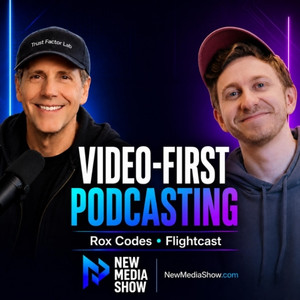
Video-First Podcasting Has Arrived | Rox Codes, Flightcast #674

New Media Show with  Podcast Hall of Fame Host Rob Greenlee Guest Rox Codes of Flightcast.comIn Episode 674 of the New Media Show, Podcast Hall of Fame Host Rob Greenlee welcomes Rox Codes, CEO and co-founder of Flightcast.com. 

For a deep conversation about video-first podcasting, YouTube growth, AI-powered analytics, creator tools, and where podcast publishing is heading next.

Rox Codes has spent years building tools for creators, including YouTube optimization, thumbnail and title creation, A/B testing, and creator growth systems.

Flightcast was co-founded with Steven Bartlett of The Diary of a CEO. Rox is building a platform centered on a core shift in the market: serious shows are no longer just audio-first with a bonus video version.

Many of the fastest-moving creators now think about YouTube first, then audio, clips, Spotify, Apple Podcasts, newsletters, social platforms, and every other surface where the audience may discover the show.

Has video-first podcasting fully arrived, and is it now equal to audio, or is it becoming even more important for growth?

Rox explains that Flightcast came from a very different starting point than traditional podcast hosting. Instead of beginning with RSS, downloads, and audio workflow, the platform was built from a YouTube creator mindset. 

YouTube has long been the clearest growth platform for creators because it combines publishing, discovery, audience development, monetization, and measurable performance into a single system. Podcasting, by contrast, has often separated those pieces across hosting platforms, apps, ad systems, analytics dashboards, and RSS-based distribution.

The episode explores why this matters now. A modern show can become a long-form YouTube episode, an audio podcast, Spotify video, Apple video, short-form clips, newsletter content, social posts, community discussion, and brand inventory. Rox describes podcasts as a powerful format because a single strong two-hour conversation can yield many different media assets across multiple platforms.

That creates opportunity, but it also creates complexity.

They discuss Apple’s HLS video support, Spotify video, YouTube, RSS, 4K video, thumbnails in feeds, Netflix, Roku, FAST channels, Prime Video, and the growing need for creators to publish into more places without needing to understand every technical layer underneath.

Rox argues that creators should not have to care about acronyms like HLS, VAST, RSS, or 301 redirects unless the technology directly affects their business. The software should handle the complexity so creators can focus on the show, the audience, and the growth strategy.

A major theme of the episode is that video success is not just about uploading an MP4 file. Rox makes a strong case that the real shift is in mindset. On YouTube, titles, thumbnails, intros, pacing, retention, curiosity gaps, promise, progress, payoff, packaging, and audience behavior all matter. Podcasting has historically treated episode art and titles as secondary. YouTube treats them as the front door to the content.

Rob and Rox spend significant time on thumbnails and titles, including why creators need to understand the psychology behind a click without reducing the work to empty clickbait.

Rox explains that a thumbnail should create a question the viewer wants answered, while the episode itself must deliver enough value to earn attention and retention. The best creators do not copy blindly. They study what works, understand why it works, and apply that structure in their own voice, to their audience, and through their creative point of view.

The conversation also moves into AI.

Rox does not describe Flightcast as an AI-first platform, but AI is an important layer inside the system. He sees major value in AI analytics, back-catalog analysis, clip testing, title suggestions, descriptions, chapters, transcripts, and pattern recognition. His larger ambition is to bake more of the YouTube strategist and producer mindset directly into the software so creators can see what is working, what is not working, and where new growth opportunities may exist.

Rob and Rox also discuss monetization. As video moves deeper into podcast platforms, host-read ads, dynamic ad insertion, video ad formats, brand partnerships, affiliate models, and creator-controlled advertising may begin to converge. Rox explains Flightcast’s ability to support programmatic, dynamic sponsorships and bring-your-own-programmatic monetization, while keeping the platform focused on growth and creator support rather than solely on ad sales.

The episode closes with a look at the future of podcast hosting itself.

Rox argues that basic hosting has become a commodity. The next layer is growth, analytics, experimentation, distribution, monetization support, and creator intelligence. In a world where AI can make software easier to build and copy, the real advantage may come from insight, speed, taste, data interpretation, and the ability to help serious creators make better decisions faster.

For creators, publishers, networks, and podcast platforms, Episode 674 is a clear look at the next stage of podcasting: video-first, data-aware, AI-supported, YouTube-influenced, and increasingly built around shows that can travel everywhere.

Chapter Topic Time Stamp Markers:

00:00 Welcome to The New Media Show Episode 674
00:19 Has video-first podcasting arrived?
01:21 Introducing Rox Codes and Flightcast
02:32 Building tools for YouTubers before podcasting
03:18 Why podcast hosting needed a YouTube-first mindset
04:13 Building the Flightcast playbook around video-first shows
05:31 Bringing the Diary of a CEO playbook into software
06:54 Can a platform support data-driven production?
08:27 AI, automation, and the future of show creation
09:13 LLMs and AI tools in creator workflows
10:23 AI as a podcast data consultant
11:19 Publishing, analytics, and experimentation
13:41 Could Flightcast become a creator operating system?
14:17 Podcasts as long-form source material for every platform
16:39 Is YouTube success the strongest growth signal?
17:19 Growth, retention, and why YouTube has the advantage
19:44 Going from YouTube to audio vs audio to video
20:49 Who Flightcast is built for
21:28 Apple HLS, Spotify video, and platform complexity
22:21 Can Apple or Spotify compete with YouTube video?
23:43 Video as human connection
24:24 Apple Podcasts video and the return of native video distribution
25:51 Netflix, podcasts, and low-cost creator TV
27:22 Why creator video can work across phone, laptop, car, and TV
28:20 Apple TV, 4K, and the quality question
29:16 Why creators should not need to understand HLS or RSS
31:55 The podcast industry still has too much technical friction
33:46 Alternate enclosure, iHeart, HLS, and RSS thumbnails
34:27 Why episode artwork and thumbnails now matter more
35:10 The thumbnail and title are the packaging
37:14 AI thumbnail scoring and creative judgment
38:08 Thumbnail psychology and curiosity gaps
38:52 Retention editing, strong intros, and promise-progress-payoff
40:10 Why better videos can multiply results
41:19 The real workload behind YouTube-quality video
42:37 Legacy media skills vs YouTube creator skills
44:50 Faster testing cycles changed creator media
45:32 Why video can be ten times harder when done right
45:53 How AI can bake strategy into software
47:00 Where Flightcast differs from early-stage creator tools
47:32 YouTube algorithm changes and podcaster anxiety
49:19 HLS, video ads, and creator-controlled ad insertion
50:22 Dynamic ads across YouTube and podcast platforms
51:33 Platform trust and monetization value
52:01 YouTube brand connections and affiliate models
53:18 Right brand, right creator, right price
54:35 360 campaigns, affiliates, and creator investments
57:17 Organic product mentions and brand relationships
58:14 What podcast hosting becomes next
58:46 Hosting as a commodity and growth as the real business
59:37 APIs, AI coding, and software moats
1:00:30 Where is the moat in creator software?
1:01:07 Staying ahead through insight and experimentation
1:03:32 Advanced analytics as the future advantage
1:04:41 Every creator has a different data pattern
1:05:14 MrBeastification, AI, and creator sameness
1:06:10 Outlier analysis and creative inspiration
1:07:15 Why outlier theory works when used correctly
1:08:44 Packaging the topic before recording
1:09:32 Does this conflict with podcasting culture?
1:11:01 Why data-driven formats do not have to kill creativity
1:12:23 Ryan Trahan and creative twists on proven formats
1:14:17 Packaging as the price of audience attention
1:15:04 Craft, creativity, and changing the playbook
1:16:51 Podcasting’s radio roots and YouTube’s different rules
1:17:27 Flightcast demo: stop guessing what content works
1:18:00 Publishing video everywhere with unified analytics
1:18:51 Measurement standards and the 30-second vs 60-second debate
1:20:21 AI analytics, clips, and test channels
1:21:35 YouTube API limits and thumbnail A/B testing
1:22:51 Flightcast monetization and bring-your-own programmatic
1:23:55 Transcripts, AI titles, descriptions, and chapters
1:24:21 Flightcast pricing and plans
1:25:41 HLS across all plans and video storage differences
1:26:32 Future pricing credits for more clips
1:26:48 Closing thoughts and where to find the episode

Guest Links: Rox Codes, CEO and Co-Founder, Flightcast

Flightcast: https://flightcast.com
Rox Codes Website: https://roxcodes.com
Rox Codes on LinkedIn: https://www.linkedin.com/in/roxcodes
Rox Codes on X: https://x.com/RoxCodes
Rox Codes on YouTube: https://www.youtube.com/channel/UChg53qPBdY1FF8gjOlB9zkg

Rob Greenlee and New Media Show Links

Rob Greenlee Website: https://robgreenlee.com
New Media Show: https://newmediashow.com
New Media Show Audio on Apple Podcasts: https://podcasts.apple.com/us/podcast/new-media-show-audio/id392545649
New Media Show on YouTube: https://youtube.com/@TheNewMediaShow
Rob Greenlee on YouTube: https://youtube.com/@RobGreenlee
Podcast Hall of Fame: https://podcasthall.com

Personal / AI Disclosure Note:

I used AI tools to help organize and edit this episode description and generate show notes from the episode transcript. The views, clarifications, responsibility, and industry perspective are mine and my guest’s. This article reflects my editorial direction and the substance of the conversation.

Shocking Change: Video, AI, and RSS Podcasting | Dave Jackson #646

In this new episode from a LIVE Jan 7th, 2026 New Media Show, Host RobGreenlee.com is joined by Dave Jackson (School of Podcasting and co-host of Ask the Podcast Coach) to unpack why the current shift toward video and AI feels like an earthquake inside podcasting, while the YouTube creator world treats it like a normal day.

We dig into how creators are now forced to play two games at once: the RSS subscription game and the algorithm discovery game especially for video, and why the definition debates did not matter as much as audience behavior.

Rob and Dave also get practical about what breaks and what endures, including growing frustration with heavy ad loads and pre-roll stacking, the realities of programmatic monetization, and why the first thing a listener should hear is you.

We cover where video delivery and monetization are heading (including HLS and video ad insertion), why “watch something” still defaults to YouTube for most people, and what Apple Podcasts would need to change if it ever wanted to truly reprioritize RSS-based video podcasting again.

Plus, a look at what live content signals in an AI-accelerated era, including the idea of live as proof of life and real-time audience feedback.

Rob also shares reminders about Podfest Expo (Jan 14–18 in Orlando) and the upcoming 2026 Podcast Hall of Fame activity on Jan 16th, 2026 (PodcastHall.com).

Topics Covered:

Video becoming default across platforms
AI accelerating the creator loop and increasing pressure to optimize for algorithms
RSS portability, ownership, and the growing discovery gap
Programmatic ads, pre-roll backlash, and audience ad tolerance
HLS, video ad insertion, and why the ad infrastructure is pushing streaming delivery
Apple Podcasts video discoverability problems and what would need to change
Netflix exclusivity lessons after the Spotify era of exclusives
Live as proof of life in a world flooding with synthetic content

Hosts Links

New Media Show: https://newmediashow.com/
Rob Greenlee: https://robgreenlee.com/
Rob on YouTube: https://www.youtube.com/@RobGreenlee
Rob on LinkedIn: https://www.linkedin.com/in/robgreenlee
Rob on Instagram: https://www.instagram.com/robwgreenlee/
Podcast Hall of Fame: https://podcasthall.com/
Podfest Expo: https://podfestexpo.com/

Dave Jackson, School of Podcasting: https://schoolofpodcasting.com/
Ask the Podcast Coach (Live Saturdays): https://askthepodcastcoach.com/