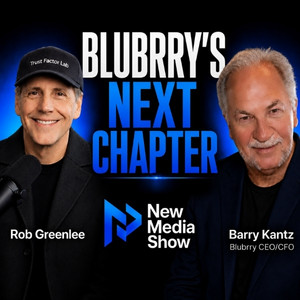
Blubrry’s Next Chapter | Barry Kantz, CEO/CFO #678

New Media Show with Podcast Hall of Famer Rob Greenlee and Guest Barry Kantz, CEO/CFO of Blubrry PodcastingIn Episode 678 of the New Media Show, host and Podcast Hall of Famer Rob Greenlee welcomes Barry Kantz, CEO and CFO of Blubrry Podcasting, for a candid conversation about Blubrry’s leadership transition, the legacy of (RIP) former CEO Todd Cochrane, independent podcasting, video, artificial intelligence, monetization, measurement, human support, and the changing podcast-hosting market.

For more than 20 years, Blubrry and its parent company, RawVoice, have helped build and support the open podcast ecosystem. The sudden passing of Blubrry founder and longtime New Media Show co-host Todd Cochrane forced the company, its team, and Todd’s family to navigate an unexpected personal and business transition.

Barry explains how Blubrry responded, how leadership responsibilities shifted, and how his management approach differs from Todd’s hard-charging entrepreneurial style. Barry is bringing a more data-driven and systems-focused approach while trusting Blubrry’s experienced remote team to carry the company forward.

The conversation also examines how podcasting itself is changing.

Audio remains central to the medium, but video has become part of how audiences define and experience podcasts. Rob and Barry discuss YouTube discovery, the overlap between watching and listening, short-form clips, RSS distribution, Apple’s HLS video support, alternative enclosures, Podcasting 2.0, and Blubrry’s Vid2Pod tool for turning YouTube videos into audio podcast episodes.

Barry also shares an update on Blubrry’s HLS video development and discusses the company’s new lower-priced starter plan introduced around the time of the recording.

Artificial intelligence is another major part of Blubrry’s next chapter.

Barry explains how he uses Claude as a daily assistant for analytics, automation, research, and company operations.

Barry sees AI as a way to make podcast creation and management easier, especially for creators who may not have extensive technical experience.

At the same time, Blubrry’s larger goal is to use technology to support human expression rather than replace the human connection that gives podcasting its value.

Rob and Barry discuss low-effort AI-generated content, synthetic media, voice cloning, the limitations of automated clipping tools, and the growing need to distinguish human-hosted shows from fully automated productions.

The discussion then moves into monetization and the opportunities still available to independent creators.

Barry argues that smaller shows can create meaningful business value when they serve a clearly defined audience and develop strong relationships with listeners. Creators do not necessarily need millions of downloads. A focused show with several hundred deeply engaged listeners can provide valuable access to a professional, geographic, or consumer community.

Barry also reflects on Blubrry’s early work with host-read advertising and Todd Cochrane’s long-running sponsorship relationship with GoDaddy as examples of how trust, consistency, niche relevance, and audience connection can create durable advertiser value.

Rob and Barry also examine the challenge of measuring audio and video under a common standard.

HLS video, progressive audio downloads, platform-controlled playback, and various delivery methods complicate the determination of what should count as a verified play. The discussion explores why common measurement matters to advertisers and why the industry may need different technical approaches for audio and video consumption.

The episode closes with a broader look at the increasingly competitive podcast-hosting market.

Hosting, storage, and delivery have become commodities. The competitive difference now comes from the tools, services, support, analytics, workflows, distribution options, and human expertise built around the infrastructure.

For Blubrry, that includes PowerPress, WordPress integration, video support, Vid2Pod, Podcasting 2.0 features, AI-assisted workflows, monetization options, analytics, and access to experienced human support.

Both reflect on the legacy Todd Cochrane helped create and provide a detailed look at how Blubrry plans to move forward in a media environment shaped by audio, video, AI, open distribution, creator ownership, and changing audience expectations.

Key Discussion Topics:

– Blubrry’s transition following Todd Cochrane’s passing
– Barry Kantz’s leadership and management approach
– How the Blubrry team responded to sudden change
– Todd’s influence on podcasting and the open ecosystem
– The evolving definition of a podcast
– Audience movement between watching and listening
– YouTube discovery and short-form video
– Blubrry’s Vid2Pod technology
– Apple HLS video support
– RSS, alternative enclosures, and Podcasting 2.0
– Blubrry’s lower-priced starter plan
– AI-assisted podcast production and operations
– Human-hosted media versus automated content
– Voice cloning, authenticity, and audience trust
– Monetization for independent and niche creators
– Host-read advertising and direct sponsorships
– Measuring audio and video consumption
– Podcast hosting as a commodity
– PowerPress and the continuing role of WordPress
– Human customer support as a competitive advantage
– The future of independent podcasting

Chapter Time Stamps:

00:00 Welcome to The New Media Show Episode 678
00:44 Blubrry’s role in the open podcast ecosystem
02:03 Introducing Barry Kantz, CEO and CFO of Blubrry Podcasting
03:31 The sudden loss of former co-founder/CEO of Blubrry, Todd Cochrane
05:22 How the Blubrry team responded
06:29 Barry’s leadership style compared with Todd’s
08:17 Bringing data and operational systems into the company
09:57 How Todd might view today’s podcast market
11:11 Video becomes part of podcasting
13:20 Blubrry’s Vid2Pod product
14:46 Barry’s transition from CFO to CEO
18:14 The opportunity for independent creators
20:00 Who now defines what a podcast is?
21:07 Audiences move between watching and listening
23:24 YouTube discovery and the importance of Shorts
24:55 The limitations of AI-generated clips
26:20 Blubrry’s Apple HLS video rollout
28:12 Blubrry introduces a lower-priced starter plan
29:08 Alternative enclosures and Podcasting 2.0
30:34 Barry’s use of Claude as an AI assistant
32:02 Supporting human creators while limiting AI slop
33:20 Voice cloning and the challenge of replicating humanity
36:18 Blubrry’s philosophy on podcast monetization
37:30 How niche shows can attract direct sponsors
39:27 Managing expectations for new podcasters
43:16 Measuring HLS video and audio downloads
46:45 New competition in podcast hosting
47:36 Why hosting has become a commodity
50:45 Product focus, acquisitions, and platform complexity
52:01 WordPress, PowerPress, and AI-assisted websites
55:00 Blubrry’s commitment to human customer support
57:31 Closing thoughts on Blubrry’s future

About the Guest:

Barry Kantz is CEO and CFO of Blubrry Podcasting and one of the original founders of its parent company, RawVoice.

Barry has produced podcasts since 2005 and has worked with Blubrry throughout its more than 20-year history. His responsibilities have included company finance, legal affairs, human resources, analytics, operations, and business leadership.

Following the passing of Blubrry founder Todd Cochrane, Barry stepped into the company’s primary leadership role. He is now guiding Blubrry through its next chapter as podcasting expands across audio, video, artificial intelligence, open RSS distribution, WordPress, and creator-led media.

Blubrry Podcasting
https://blubrry.com

Blubrry Leadership and Company Information
https://blubrry.com/about

Barry Kantz on LinkedIn
https://www.linkedin.com/in/kantzb

Blubrry Podcast Insider
https://blubrry.com/podcast-insider

About the Host:

Rob Greenlee is a 2017 Podcast Hall of Fame inductee, Chair of the Podcast Hall of Fame, and a longtime new-media executive, creator, strategist, and industry leader. He is the co-founder and current host of The New Media Show and the founder of Trust Factor Lab. Rob has worked across podcasting, radio, digital media, audio, video, creator platforms, partnerships, distribution, monetization, and emerging AI-assisted media for more than 26 years.

His previous leadership roles include Microsoft, PodcastOne, Spreaker, and Libsyn, where he helped shape the growth of podcasting, distribution platforms, creator partnerships, and digital audio.

Through The New Media Show, Rob explores how podcasting fits inside the larger new-media ecosystem, including video, livestreaming, artificial intelligence, platforms, audience ownership, intellectual property, advertising, trust, and sustainable creator businesses.

New Media Show
https://newmediashow.com

The New Media Show on YouTube
https://youtube.com/@TheNewMediaShow

New Media Show Audio on Apple Podcasts
https://podcasts.apple.com/us/podcast/new-media-show-audio/id392545649

Rob Greenlee
https://robgreenlee.com

Rob Greenlee on LinkedIn
https://www.linkedin.com/in/robgreenlee

Rob Greenlee on YouTube
https://youtube.com/@RobGreenlee

Podcast Hall of Fame
https://podcasthall.com

AI Disclosure:

AI tools were used to help organize and edit this episode description and create chapter markers from the completed episode transcript. The editorial direction, final review, industry perspective, and responsibility for the published content remain with Rob Greenlee. This description reflects the substance of the recorded conversation between Barry Kantz and Rob Greenlee.

Podcasting Is Not Broken. It Is Becoming Something Bigger

New Media Show with Rob Greenlee - NewMediaShow.comBy Rob Greenlee

I do not believe podcasting is broken.

I also do not believe podcasting is outdated.

But I understand why some people are starting to say that. The medium is changing so fast right now that it can feel like the old definitions no longer fit what audiences and creators are actually doing.

That does not mean podcasting is dying. It means podcasting has reached a major inflection point.

For audiences, podcasts have become one of the main media habits in everyday life. People listen while driving, walking, working, exercising, relaxing, and doing all the things that make audio such a powerful companion medium. That part has not gone away. Audio remains deeply personal, flexible, and trusted.

But for many creators, the word “podcaster” no longer fully describes what they are building.

They are making shows.

They are producing conversations, video episodes, clips, livestreams, newsletters, communities, events, and social content. The podcast is still part of the system, but it is no longer always the whole identity.

That is the big shift.

The traditional definition of a podcast as an audio-first, RSS-distributed show remains important. It is the foundation of the medium. It gave podcasting its openness, portability, and independence. But that definition is increasingly becoming one part of a larger video-first creator strategy.

This is where some tension comes in.

Audio-first creators will continue to have large audiences. Many of the most trusted and successful shows will remain primarily audio-driven. There will always be room for audio-first storytelling, interviews, news, education, comedy, and commentary. Audio is not going away.

But audio-first alone may no longer be the path to the largest possible audience.

Discovery has shifted. Audience behavior has shifted. Monetization has shifted. Younger audiences often discover shows through video clips, YouTube, TikTok, Instagram, Spotify, Apple Podcasts, and other social platforms before they ever subscribe to an RSS feed or follow a show in a traditional podcast app.

For many people, the first experience of a “podcast” is now a video moment.

That does not make it less of a podcast. It means the audience definition has expanded beyond the industry definition.

This is why I keep saying we are moving from “podcasts” into a broader “shows” era.

The show is the core intellectual property. The show is the brand. The show is the relationship with the audience. Audio, video, clips, newsletters, and community are all distribution expressions of that show.

That shift has real consequences for the entire industry.

Hosting companies have to think beyond audio file delivery. Apps have to think beyond audio playback. Ad platforms have to think beyond downloads. Measurement companies have to think beyond separate audio and video reports. Creators have to think beyond a single format and a single feed.

This is especially true as HLS video streaming begins to scale inside podcasting.

The Apple Podcasts shift toward HLS video streaming is a major signal. Video podcasting is no longer just about uploading a large MP4 file or posting a version on YouTube. It is moving toward modern streaming infrastructure, adaptive playback, dynamic ad possibilities, and more seamless switching between listening and viewing.

That means some of what we have historically called audio-only consumption may increasingly be delivered through video-enabled HLS streaming systems. A person may listen to the audio from a video podcast stream. They may start with video, switch to audio, or never look at the screen at all. The content experience becomes more fluid.

That creates a major measurement challenge.

The industry cannot keep treating audio and video metrics as if they live in separate worlds. Creators need to know the show’s total reach and value, not just the performance of a single format in a single app.

Downloads, streams, plays, views, watch time, listen time, completion, retention, subscribers, followers, and engagement all need to be consolidated into a single framework.

Right now, too much of the industry is still measuring yesterday’s format while the audience is already consuming tomorrow’s show.

This is not just a technical issue. It is a business issue.

If a creator has 50,000 audio downloads, 100,000 YouTube views, 25,000 Spotify video plays, 15,000 Apple video streams, and millions of short-form impressions, what is the actual size and value of that show?

The old answer was to separate all of that into different buckets.

The new answer has to be more unified.

Brands and sponsors want to understand total audience impact. Creators want to understand where trust, attention, and revenue are being created. Platforms want to prove value. Hosting companies want to stay relevant. Measurement providers want to remain credible.

That requires merged and consolidated metrics.

Podcasting has always struggled with measurement consistency, even in the audio-only era. Now video makes that challenge more complicated, but also more urgent.

The industry needs a better way to measure shows across formats, not just files across feeds.

This does not mean we abandon RSS. It does not mean we abandon audio. It does not mean every creator has to become a YouTuber or video personality.

It means podcasting has to evolve its infrastructure, language, and business model to align with what audiences are already doing.

The audience does not care whether the industry calls something a podcast, a video podcast, a show, a stream, or creator media.

They ONLY care whether it is useful, entertaining, trustworthy, and available where they already spend time.

That is the part we should pay attention to.

Podcasting is expanding.

It is expanding into video. It is expanding into streaming. It is expanding into social/YouTube discovery. It is expanding into creator-led media brands. It is expanding into AI-assisted and generated production and distribution. It is expanding into a world where the show matters more than the format.

The danger is not that podcasting is outdated.

The danger is that the industry keeps defending an old definition while the audience has already moved into a broader one.

The future of podcasting will still include audio-first shows, RSS feeds, open distribution, and traditional podcast apps. Those pieces still matter. But the growth edge of the medium is moving toward video-enabled, multi-format, cross-platform show experiences.

The inflection point.

– The creators who understand this will not stop being podcasters. They will become stronger show builders.

– The companies that understand this will not abandon podcasting. They will build the infrastructure for the next version.

– And the industry that understands this will stop asking whether podcasting is broken and start asking a better question:

– How do we preserve what made podcasting powerful while building the modern show-based media ecosystem it is clearly becoming?

About the Author

Rob Greenlee is a 2017 Podcast Hall of Fame inductee and Chair, a global new media leader who bridges podcasting’s human roots with its AI-driven future. As founder of Trust Factor Lab and host of the “New Media Show” and “Spoken Human”, Rob helps creators start, grow, monetize, and future-proof their content. He’s held leadership roles at Microsoft, Spreaker, Libsyn, StreamYard, and PodcastOne, and serves as Chairperson of the Podcast Hall of Fame. Learn more at RobGreenlee.com and join the Trust Factor Lab Creator/Podcast Services.

Personal note: I used AI tools to help organize this article and hand-edited it; the views, clarifications, responsibility, and industry perspective are mine. I have been working in podcasting and platform adoption for more than two decades, and this article reflects my own position. The original word choice was mine, and so is the clarification.


Can Apple Make Video Podcasts Matter? | Jay Nachlis #656

In episode 656 of the New Media Show, Podcast Hall of Famer Rob Greenlee is joined by Jay Nachlis,  Media Research VP at Coleman Insights.

“It’s a timely and deeper conversation about Apple Podcasts moving more aggressively into HLS video streaming and what that really means for the future of podcasting, audience behavior, platform competition, and creator strategy in 2026.”

This episode goes far beyond the Apple announcement itself. Jay brings a strong audience research and brand strategy perspective to the conversation, and together we dig into the real question behind all of this: will Apple’s push into video actually change listener and viewer behavior, or is this simply Apple trying to catch up to audience habits that are already being shaped by YouTube and Spotify?

“Apple Podcasts still has major brand recognition in podcasting, but may face an uphill battle in the current environment where YouTube has become the default platform for video-based podcast discovery, and Spotify continues to build a more native monetization and creator ecosystem.”

We talk about how audience habits often outweigh platform features, why consumer perception matters as much as technical innovation, and whether Apple can reclaim any meaningful momentum in a category it helped establish years ago.

We also discuss how this shift is creating a more fragmented publishing environment for creators. Audio and video are no longer just different formats. They increasingly represent different user expectations, different discovery paths, and different monetization opportunities.

“We discuss the growing need for creators to think strategically about separate audio and video feeds, platform-native publishing, HLS streaming delivery, audience experience, and the long-term risks of overreliance on closed ecosystems.”

Jay and I also explore the broader competitive chessboard. That includes YouTube’s dominance in video & video podcast consumption, Spotify’s continued attempts to define its role in both audio and video, and even whether players like Netflix could successfully move into podcast-adjacent content formats. This episode is really about where podcasting is headed as a medium, not just one Apple feature update.

If you are a podcaster, creator, media strategist, advertiser, or platform watcher trying to understand where podcasting, video, discovery, and monetization are all heading next, this is an episode you should not miss.

Chapters:

00:00 Apple Video Podcast Push
00:47 Meet the Hosts
01:56 Apple Streaming Update
03:14 Early Podcasting Era
05:19 YouTube Spotify Takeover
07:05 Can Apple Compete
08:25 Research YouTube Wins UX
10:30 Awareness Drives Usage
12:07 Netflix Podcasting Fit
15:58 Discovery Algorithms Habits
18:10 Apple Video Hidden Toggle
19:26 Audio Quality vs Video
22:22 Brand Content Trust Matrix
24:05 Apple Podcasts Brand Gap
24:51 Differentiation Over Video
25:41 RSS and HLS Debate
27:09 Why Listeners Choose Apple
28:03 Zune Era Video Podcasts
30:07 YouTube Parallel History
30:59 Winning Tech Standards
33:16 Reaching Younger Audiences
36:48 Hosting Costs and HLS
39:05 Creator Burden of Video
41:20 Future Screens in Cars
43:23 Marketing and Discovery Fixes
45:35 Alternative Enclosures Path
46:49 Wrap Up and Where to Follow

Guest Jay Nachlis Links
Jay Nachlis LinkedIn: https://www.linkedin.com/in/jaynachlis/
Coleman Insights: https://colemaninsights.com/
Tuesdays with Coleman: https://colemaninsights.com/blog/

Host Rob Greenlee and Show Links
New Media Show: https://newmediashow.com/
Rob Greenlee: https://robgreenlee.com/
Trust Factor Lab: https://trustfactorlab.com/
Adore Creator Network: https://adorenetwork.com/
Podcast Hall of Fame: https://podcasthall.com/
Rob Greenlee YouTube: https://youtube.com/@robgreenlee
Rob Greenlee LinkedIn: https://linkedin.com/in/robgreenlee
Rob Greenlee Instagram: https://instagram.com/robwgreenlee