Trust, AI and the Future of Podcast Advertising | Mike Kadin, RedCircle #683

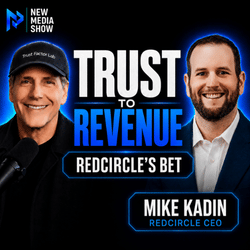
New Media Show with Podcast Hall of Famer Rob Greenlee and Guest Mike Kadin, CEO/co-founder of RedCircle.comPodcasting has one advantage that much of digital media struggles to maintain: trust.

In Episode #683 of the New Media Show, Rob Greenlee talks with Mike Kadin, CEO and co-founder of RedCircle.  What does that trust mean for podcast advertising as AI, video, HLS, YouTube, Spotify, and changing audience behavior reshape the business?

Long-form shows create a different relationship between creators and audiences than short-form social content. That relationship has always been one of the reasons host-read podcast advertising can work so well.

But what happens when AI can recreate the host’s voice?

Mike makes an important distinction. The value of a host-read ad is not simply hearing a familiar voice. It comes from the host’s language, personality, experience, humor, and actual judgment about the product. RedCircle does not use AI-generated versions of creators to perform host-read advertising.

Mike believes cloning the host’s voice without the actual human endorsement could undermine the very trust that makes the advertising valuable.

Authentic Host Reads Still Matter

Rob and Mike talk about the difference between reading advertising copy and genuinely recommending something a creator has used.

RedCircle has seen similar shows, with similar audience sizes, run by the same advertiser and using the same talking points, produce very different results. One of the biggest differences can be the quality and believability of the host read.

That also puts responsibility on creators to work with products they can credibly talk about.

Mike explains that RedCircle will sometimes hear from a creator who tried a sponsor’s product and did not like it.

Rather than force an endorsement, the company can take that feedback back to the advertiser and cancel the spot. That kind of process helps protect the relationship between the creator and audience.

Using AI to Find Better Brand Matches

Mike also talks about a newer RedCircle capability called Show IQ.

Over the years of running campaigns, RedCircle has accumulated information on its creators’ interests and brand affinities, as well as historical campaign performance. Show IQ uses that information to help identify creators who may be a natural fit for a particular advertiser.

This is an example of AI being used behind the scenes to improve the match rather than replacing the human doing the endorsement. The goal is to put advertisers with creators who can actually speak credibly about their products.

Spotify, YouTube and Control of Podcast Monetization

The conversation shifts to the growing influence of large consumption platforms. Spotify is experimenting with ways for listeners to move past advertising more easily. YouTube has already offered similar jump-ahead behavior around portions of videos that viewers commonly skip.

Mike does not see this as some unexpected attack on podcasting. Spotify and YouTube have built massive distribution platforms and naturally want to control more of the economics that happen inside them.

For creators, diversification becomes increasingly important.

A creator can use YouTube, Spotify, Apple Podcasts, and other platforms for distribution, but should also keep building direct relationships through websites, newsletters, subscriptions, and communities. No single distribution platform can be expected to always put the creator’s interests first.

RedCircle Is Moving Into Video

RedCircle has also started expanding beyond its traditional audio focus. Creators can now upload video through RedCircle and send it to YouTube, an expansion of its earlier audio-to-YouTube tools.

Mike says YouTube was the obvious first priority because that is where the largest existing video audience is today. RedCircle is also watching Spotify video, Apple Podcasts video, and HLS as podcasting becomes increasingly multi-format. The advertising systems will eventually need to evolve along with the content.

HLS Creates New Advertising Questions

A significant part of the conversation focuses on HLS and Apple’s new video-podcast approach in this episode.

Podcast advertising has traditionally been built around audio downloads. The video introduces a much more complex environment.

An Apple Podcasts episode may still automatically download its audio before the listener ever presses play.

If that listener later watches the video version, the advertising decision may already have been made. That makes traditional real-time programmatic video advertising harder to apply to podcast video.

For now, audio advertising may become a common advertising format, whether someone is listening or watching. That works technically, but it is not necessarily the best video experience.

Rob and Mike discuss the need for a new type of podcast video advertising that works whether someone hears the ad, watches it, or moves between both experiences.

Audio and Video Are Converging, But Not Cleanly

Rob raises a question he is dealing with directly on the New Media Show. Should a show have one combined audio-video experience, or should creators continue producing separate audio versions?

The New Media Show has distributed separate audio and video feeds for years. HLS makes it easier to move between listening and viewing, but that convergence can also lead to compromises.

Great video production does not automatically guarantee the best audio experience. The reverse is also true. Mike agrees there is a reasonable argument for preserving more flexibility between the two formats.

Measurement Is Getting Harder

Podcast measurement was already complicated.

Now creators may have traditional podcast downloads, Spotify streams, YouTube views, Apple video consumption, social views, and various advertising impressions.

Those numbers do not all mean the same thing. That creates an operational problem for creators trying to sell advertising and for brands trying to understand what they purchased. Mike believes technology needs to simplify this increasingly fragmented environment.

Mike compares it to the music industry, where tools were developed to distribute music and aggregate results across many different services. Creator media increasingly needs the same kind of cross-platform infrastructure.

What Is a Podcast Now? The episode also returns to a question the New Media Show has discussed for years.

What exactly is a podcast? Mike admits he has two answers.

As a longtime software engineer and RSS believer,  Mike still thinks of a podcast as episodic media distributed through RSS.

As the CEO of a podcast technology and advertising company, he sees younger people entering the business who do not know what RSS is and think of a podcast as the kind of long-form conversational content they see on YouTube.

At some point, audience behavior begins defining the medium.

Rob and Mike also discuss industry efforts such as the AMP work around definitions and measurement.

Mike supports efforts to build standards but says they only become truly meaningful if the major platforms where people actually consume podcasts implement them.

Where Podcasting Goes Next

Mike believes the industry has to follow audience behavior. Creators are becoming multi-channel because audiences already are.

Audio, video, YouTube, Spotify, Apple Podcasts, RSS apps, and social platforms are increasingly parts of the same creator-media business. The opportunity is to build better tools that allow creators to distribute, monetize, and measure it all without having to manage the complexity themselves.

HLS is one part of that transition.

The larger change is podcasting becoming a much broader medium for audio and video creators while trying to preserve the trust that made it valuable in the first place.

Discussion Highlights:

– Why long-form podcasting creates deeper audience trust
– Why authentic host reads still perform
– AI-generated advertising and creator voice cloning
– Why RedCircle does not use synthetic host reads
– RedCircle Show IQ and better creator-brand matching
– Dynamic versus baked-in podcast advertising
– Spotify and YouTube gaining more monetization control
– Why creators need direct audience relationships
– RedCircle’s move into video
– Why YouTube was its first video priority
– HLS and podcast video advertising
– Audio versus video ad creative
– Separate audio and video podcast experiences
– Cross-platform measurement problems
– Alternate enclosures and adoption
– What defines a podcast now
– The need for meaningful industry standards
– The future of multi-channel podcast monetization

Chapter Timestamp Markers

00:00 Podcasting, trust and long-form media
01:00 Introducing Mike Kadin of RedCircle
02:00 Why trust matters in podcast advertising
03:20 AI-generated ads and audience trust
06:10 Why RedCircle avoids cloned host reads
09:00 Authentic creator endorsements
11:00 Why some host reads outperform others
12:20 RedCircle Show IQ
14:00 The future of host-read advertising
15:30 Dynamic versus baked-in ads
17:20 Spotify and ad skipping
21:00 YouTube and platform control
22:20 Creators need direct audience relationships
24:00 RedCircle moves further into video
26:30 HLS and podcast video advertising
31:00 Opportunities for video host-read advertising
33:00 Ads that work in audio and video
36:30 Separate audio and video feeds
40:00 The fragmented consumption experience
42:00 Podcast measurement gets more complicated
44:30 HLS and alternate enclosures
47:20 What is a podcast now?
52:00 Standards and the major platforms
54:00 Measuring advertising by performance
56:00 The multi-channel future of podcasting
58:00 Closing thoughts

Mike Kadin Guest Links

RedCircle: https://redcircle.com

Host and Show Links

New Media Show
https://newmediashow.com

New Media Show on YouTube
https://youtube.com/@TheNewMediaShow

Rob Greenlee
https://robgreenlee.com

Rob Greenlee on LinkedIn
https://www.linkedin.com/in/robgreenlee

Podcast Hall of Fame
https://podcasthall.com

AI Disclosure

AI tools were used to assist with organizing and editing to remove filler words; this episode description was created from the completed full transcript of episode #683. The recorded conversation, human performances, perspectives, editorial direction, and final responsibility for the episode remain with Rob Greenlee and Mike Kadin. The New Media Show is human-hosted.

How Brands Buy Creator Media | Dan Granger, Oxford Road #677

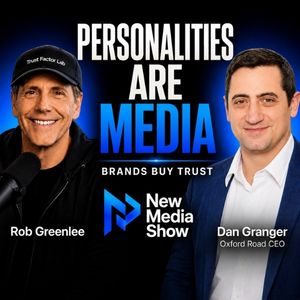
New Media Show with Podcast Hall of Famer Rob Greenlee and Guest Dan Granger, CEO of Oxford RoadIn Episode 677 of the New Media Show, host Rob Greenlee welcomes Dan Granger, founder and CEO of Oxford Road, for a detailed conversation about how personality-led media is changing what brands buy, how audiences are measured, and what the podcast industry must do to support its next stage of growth.

Audiences increasingly follow people rather than traditional media channels.

A trusted personality can carry an audience across podcasts, YouTube, livestreams, newsletters, social platforms, communities, events, and direct business relationships.

Advertisers, however, still tend to purchase and measure those formats as separate media channels.

That disconnect is becoming one of the largest challenges facing creator media. A creator may record a single conversation and distribute it across multiple platforms, yet each platform reports exposure differently. Advertisers are then left trying to compare downloads, streams, video views, watch time, impressions, attribution data, and host-read performance without a consistent standard.

Dan has spent his career connecting advertisers with personality-driven media. Oxford Road now describes its work as building performance systems across audio, video, creator, and programmatic media, with Dan serving as the company’s CEO.

The conversation begins with Oxford Road’s growing investment in bringing brands, creators, platforms, and media leaders together in person.

Dan explains how the company’s CAO Summit developed from the idea of a “Chief Audio Officer,” the person inside a brand responsible for making audio advertising work. That responsibility may belong to a founder, marketing leader, media buyer, or growth executive rather than someone with a formal audio title.

The CAO Summit was designed as a peer-learning environment where advertisers could speak openly with other advertisers about measurement, attribution, creative performance, and the practical problems preventing brands from spending more in podcasts and creator media. Oxford Road continues to position the CAO Summit as a meeting point for the marketers, platforms, and creators shaping what it calls “Podcast+” media. 

They also discuss the Independent Podcast and Creator Awards, also known as the Indie PaC Awards. The program was created to recognize independently owned creators and shows at a time when consolidation continues across podcasting and digital media.

Dan argues that independent creators remain central to the value of podcasting.

Creators who maintain closer relationships with their audiences, retain more editorial control, and deliver strong results for advertisers. Oxford Road’s own published ORBIT rankings show that independent shows account for a large share of its strongest-performing podcast inventory. 

Defining an independent creator is difficult, though.

A creator may own the intellectual property while accepting a minimum guarantee from a platform. A show may be represented by a large network without being owned by that company. A successful personality may have substantial corporate support while retaining full editorial control.

The Indie PaC criteria attempt to consider who owns the content, whether the show publishes consistently, and whether the podcast or creator channel is a central part of the person’s business rather than a side project created primarily to support an existing celebrity career. The inaugural awards were announced as an event focused on creator ownership and independently produced media.

That discussion leads into the episode’s central theme: personalities are becoming media businesses.

Creators once waited for a network, publisher, studio, or broadcaster to select them.

Today, personalities can build audiences directly and expand across formats without waiting for a traditional gatekeeper. Their name, voice, perspective, and relationship with the audience can become the media’s primary brand.

Dan believes advertising dollars will continue moving toward these creator-led environments. A brand may no longer purchase only a podcast placement or a YouTube integration. It may sponsor the creator across several surfaces and negotiate rights to reuse the resulting content in paid campaigns.  That changes the asset being purchased.

The value can include the creator’s audience relationship, intellectual property, content, distribution reach, endorsement, likeness, and permission to repurpose the campaign. Dan sees trust as the element that connects those assets.

Host-read advertising remains especially important because the recommendation comes through a person the audience already knows.

The strongest integrations allow the creator to speak naturally, test the product, acknowledge limitations, and explain why it may be useful.

Rob and Dan share early examples from the podcasting market in which creators criticize parts of a sponsor’s offering during paid integrations. That apparent risk can make the rest of the endorsement more believable because the audience hears an honest response rather than polished marketing language.

The discussion also examines where an advertisement appears inside an episode.

Dan is sharply critical of post-roll advertising because much of the audience has already left by the time the ad plays. Rob and Dan also discuss pre-rolls, mid-rolls, dynamic insertion, programmatic advertising, and the effects of placing too many ads in a single episode.

Oxford Road has published PodLoad research comparing the number of advertising units placed within shows.

Dan argues that an impression in a program carrying 6 minutes of advertising per hour should not automatically be valued the same as one in a show carrying 20 minutes of advertising. Excessive ad load can weaken attention and reduce campaign performance. 

Brand values and suitability add another layer.

Dan believes advertisers should understand the values they claim to support and make intentional decisions about the creators and environments they fund.

Dan also believes brands became overly reactive during the height of the brand-safety debate and then moved too far in the opposite direction.

The goal should be a durable position that considers business outcomes alongside genuine organizational values. Audience demographics matter, but the creator’s tone, worldview, conduct, and credibility can also affect whether the partnership makes sense.

The second half of the episode turns to the Alliance for Measurement in Podcasting, known as AMP.

Dan convened AMP as a one-year industry task force focused on three core questions:

– What qualifies as a podcast?
– How should exposure be counted across audio and video?
– How should advertising results be attributed?

AMP includes representatives from platforms, advertisers, publishers, creators, agencies, and measurement companies. Its stated purpose is to develop voluntary cross-platform standards that make podcast inventory easier to compare, buy, sell, and measure. 

One of the group’s most discussed recommendations is moving toward a 30-second play threshold.

Dan explains that he is less concerned with whether the correct threshold is exactly 30 seconds or 60 seconds. The larger problem is that different platforms use different definitions. That inconsistency prevents advertisers from confidently comparing performance across audio and video.

The 30-second recommendation reflects what AMP members believed had the greatest chance of broad adoption. A workable shared standard can move the market forward even when it does not represent every participant’s preferred method.

Dan compares the current landscape to islands that speak different languages. Each platform may have useful data, but the absence of a common language makes commerce harder. AMP is trying to provide a shared framework without requiring every platform to abandon its existing internal analytics.

The group is preparing the AMP Accords as a framework covering podcast classification, exposure, and advertising effectiveness. The official AMP site identifies Oxford Road as the organization that convened the process.

Rob and Dan then take on the most persistent question in podcasting: What is a podcast?

Two areas continue to create friction.

  1. One is whether a podcast must be distributed through RSS.
  2. The other is whether the medium must be primarily audio.

Dan believes RSS represents important principles, including open access and flexible distribution.

Dan does not believe RSS should be the only requirement determining whether a show qualifies as a podcast.

His practical test is whether the experience still works when the audience closes its eyes.

Video can enhance a podcast without disqualifying it. A program that requires constant visual attention will remain open to debate, but he argues that advertisers need enough consistency to conduct business.

Rob explains that RSS has increasingly become an industry-level, server-to-server distribution system. Many newer creators do not know where to find their RSS feed because hosting platforms now handle most submission and syndication work through dashboards and direct platform connections.

Audiences care even less about the technical delivery method. They call content a podcast based on how the experience looks and feels.

The conversation also covers Apple’s HLS video implementation. Rob supports the opportunity for high-quality streaming video but questions Apple’s use of a direct submission process rather than placing the HLS stream inside the open RSS feed. He believes alternative enclosures could enable the same video stream to reach more podcast apps without limiting it to a single platform.

Dan views HLS as broadly compatible with AMP’s goal of measuring real consumption across audio and video. He also recognizes that open distribution, platform control, creator ownership, and practical commercial adoption will continue pulling the market in different directions.

The episode closes with a look at what may happen to legacy media.

Dan does not expect established media companies to disappear quietly. Many still have capital, infrastructure, distribution, and the ability to acquire or support major personalities.

Dan expects some traditional media companies to adapt by functioning more like houses that provide resources to talent while allowing the personality to remain the visible brand.

Dan also expects renewed opportunity in local media, which could return through creator-led, community-focused models rather than traditional newspapers or broadcast stations.

Artificial intelligence will also become part of this future.

Dan sees value in personalized and AI-supported content, provided audiences can clearly understand when material is authentic, synthetic, or manipulated.

Rob argues that transparent labeling, human accountability, and audience awareness will become increasingly important as AI personalities and automated media gain adoption.

Episode 677 captures a media market in the middle of a structural change. Personalities are carrying audiences across platforms. Advertisers want creator trust while also demanding dependable measurement. Platforms want control over distribution, while creators want ownership and flexibility.

The companies that bring those interests together will help determine how creator media is bought, measured, and scaled.

Topics Covered in This Episode

– Why personalities are becoming media companies
– The CAO Summit and brand-to-brand learning
– Connecting advertisers directly with creators
– The purpose of the Indie PaC Awards
– How to define an independent creator
– Why independent shows can outperform larger networks
– Creator ownership and editorial control
– Brands shifting budget toward creator media
– Host-read advertising and audience trust
– Why honest creator criticism can improve an endorsement
– Pre-roll, mid-roll, and post-roll advertising
– Podcast ad load and campaign performance
– Brand safety, suitability, and values alignment
– Buying creators across several media platforms
– Licensing creator advertising content
– The Alliance for Measurement in Podcasting
– The proposed 30-second podcast-play standard
– Measuring audio and video through a common framework
– Defining a podcast beyond RSS
– Why video does not automatically change the medium
– Apple HLS video and alternative RSS enclosures
– The IAB’s possible role in industry adoption
– Legacy media adaptation
– The future of local creator media
– AI content, personalization, and disclosure

Chapter Time Stamp Markers:

00:00 Welcome to The New Media Show Episode 677
00:19 How personality-led media is changing the market
03:10 Introducing Dan Granger of Oxford Road
04:00 Why in-person media gatherings matter again
06:14 How the CAO Summit began
07:31 Defining the Chief Audio Officer
09:19 Bringing advertisers and creators together
11:34 The Independent Podcast and Creator Awards
13:38 Deal Room and a new approach to podcast upfronts
14:21 What makes a creator truly independent?
16:06 Joe Rogan, ownership, and platform influence
17:42 Publishing activity and independent-creator criteria
18:20 Creators are taking control of the media world
20:26 Personality-driven media reaches every institution
22:12 Brands move more budget toward creator content
25:16 Trust as the core creator-media asset
27:00 Why host-read advertising still works
28:22 Product testing and honest creator endorsements
30:00 Ad placement, post-rolls, and wasted impressions
31:18 How excessive ad load damages performance
33:00 Rob’s early radio and podcast advertising experience
35:46 Remembering Todd Cochrane
36:46 What advertisers now value in creators
37:00 Buying a personality across multiple platforms
38:17 Licensing creator content for paid campaigns
39:18 Brand safety, values, and commercial outcomes
45:54 Introducing the AMP measurement project
47:37 The 30-second versus 60-second play debate
48:00 Why a shared measurement language matters
51:38 AMP’s one-year mission and planned conclusion
52:25 Why the industry still needs to define a podcast
54:26 RSS, audio, video, and open distribution
56:00 HLS video and cross-platform attribution
57:12 Apple APIs compared with RSS alternative enclosures
59:08 Is RSS still essential to podcasting?
1:00:00 Why consumers no longer think about RSS
1:01:30 Dan’s “works with your eyes closed” podcast test
1:03:37 Why advertisers need a practical definition
1:04:35 AMP’s position on podcasts without RSS
1:05:49 The RSS education gap among newer creators
1:07:43 Building standards that grow the entire market
1:09:22 The IAB’s role in measurement adoption
1:11:18 Will personalities replace legacy media brands?
1:12:27 The possible rebirth of local media
1:13:42 AI content, personalization, and labeling
1:16:00 AMP’s contribution to a more scalable market
1:17:35 Closing remarks

Guest Links: Dan Granger, Founder and CEO, Oxford Road

Oxford Road: https://oxfordroad.com
Dan Granger on LinkedIn: https://www.linkedin.com/in/dangranger
Alliance for Measurement in Podcasting: https://www.ampaccords.com
Oxford Road Thought Leadership: https://oxfordroad.com/thought-leadership
Oxford Road ORBIT: https://oxfordroad.com/thought-leadership/orbit
Indie PaC Awards Announcement: https://oxfordroad.com/thought-leadership/this-weeks-influencer-introducing-the-inaugural-indie-pac-awards-tiktok-resumes-its-long-form-push-orbit-deems-niche-sports-vips-and-more

Rob Greenlee and New Media Show Links

New Media Show: https://newmediashow.com
New Media Show on YouTube: https://youtube.com/@TheNewMediaShow
New Media Show Audio on Apple Podcasts: https://podcasts.apple.com/us/podcast/new-media-show-audio/id392545649
Rob Greenlee Website: https://robgreenlee.com
Rob Greenlee on LinkedIn: https://www.linkedin.com/in/robgreenlee
Rob Greenlee on YouTube: https://youtube.com/@RobGreenlee
Podcast Hall of Fame: https://podcasthall.com

AI Disclosure Note

I used AI tools to help organize and edit this episode description and create chapter markers from the episode transcript. The editorial direction, final review, industry perspective, and responsibility for the published content remain mine. The discussion reflects the views expressed by my guest and me during the recorded conversation.