Can Apple Make Video Podcasts Matter? | Jay Nachlis #656

In episode 656 of the New Media Show, Podcast Hall of Famer Rob Greenlee is joined by Jay Nachlis,  Media Research VP at Coleman Insights.

“It’s a timely and deeper conversation about Apple Podcasts moving more aggressively into HLS video streaming and what that really means for the future of podcasting, audience behavior, platform competition, and creator strategy in 2026.”

This episode goes far beyond the Apple announcement itself. Jay brings a strong audience research and brand strategy perspective to the conversation, and together we dig into the real question behind all of this: will Apple’s push into video actually change listener and viewer behavior, or is this simply Apple trying to catch up to audience habits that are already being shaped by YouTube and Spotify?

“Apple Podcasts still has major brand recognition in podcasting, but may face an uphill battle in the current environment where YouTube has become the default platform for video-based podcast discovery, and Spotify continues to build a more native monetization and creator ecosystem.”

We talk about how audience habits often outweigh platform features, why consumer perception matters as much as technical innovation, and whether Apple can reclaim any meaningful momentum in a category it helped establish years ago.

We also discuss how this shift is creating a more fragmented publishing environment for creators. Audio and video are no longer just different formats. They increasingly represent different user expectations, different discovery paths, and different monetization opportunities.

“We discuss the growing need for creators to think strategically about separate audio and video feeds, platform-native publishing, HLS streaming delivery, audience experience, and the long-term risks of overreliance on closed ecosystems.”

Jay and I also explore the broader competitive chessboard. That includes YouTube’s dominance in video & video podcast consumption, Spotify’s continued attempts to define its role in both audio and video, and even whether players like Netflix could successfully move into podcast-adjacent content formats. This episode is really about where podcasting is headed as a medium, not just one Apple feature update.

If you are a podcaster, creator, media strategist, advertiser, or platform watcher trying to understand where podcasting, video, discovery, and monetization are all heading next, this is an episode you should not miss.

Chapters:

00:00 Apple Video Podcast Push
00:47 Meet the Hosts
01:56 Apple Streaming Update
03:14 Early Podcasting Era
05:19 YouTube Spotify Takeover
07:05 Can Apple Compete
08:25 Research YouTube Wins UX
10:30 Awareness Drives Usage
12:07 Netflix Podcasting Fit
15:58 Discovery Algorithms Habits
18:10 Apple Video Hidden Toggle
19:26 Audio Quality vs Video
22:22 Brand Content Trust Matrix
24:05 Apple Podcasts Brand Gap
24:51 Differentiation Over Video
25:41 RSS and HLS Debate
27:09 Why Listeners Choose Apple
28:03 Zune Era Video Podcasts
30:07 YouTube Parallel History
30:59 Winning Tech Standards
33:16 Reaching Younger Audiences
36:48 Hosting Costs and HLS
39:05 Creator Burden of Video
41:20 Future Screens in Cars
43:23 Marketing and Discovery Fixes
45:35 Alternative Enclosures Path
46:49 Wrap Up and Where to Follow

Guest Jay Nachlis Links
Jay Nachlis LinkedIn: https://www.linkedin.com/in/jaynachlis/
Coleman Insights: https://colemaninsights.com/
Tuesdays with Coleman: https://colemaninsights.com/blog/

Host Rob Greenlee and Show Links
New Media Show: https://newmediashow.com/
Rob Greenlee: https://robgreenlee.com/
Trust Factor Lab: https://trustfactorlab.com/
Adore Creator Network: https://adorenetwork.com/
Podcast Hall of Fame: https://podcasthall.com/
Rob Greenlee YouTube: https://youtube.com/@robgreenlee
Rob Greenlee LinkedIn: https://linkedin.com/in/robgreenlee
Rob Greenlee Instagram: https://instagram.com/robwgreenlee

Podcast Growth and Discovery in 2026 | Arielle Nissenblatt #655

Podcast discovery feels harder in 2026, not because creators stopped trying, but because attention is now split across podcast apps, YouTube, short-form video feeds, newsletters, and search-driven recommendations.
On this recorded episode of the New Media Show, host Rob Greenlee shares the screen and a microphone with Arielle Nissenblatt, 2026 Podcast Hall of Famer and Founder of EarBuds Podcast Collective and Head of Community and Content at Pinwheel by Audily, to break down what is actually changing right now and what creators can still do that consistently grows audience and trust.

“Arielle brings a listener-first, creator-first perspective that cuts through the noise. Platforms matter, but they are not the whole story. If a show is not clearly positioned, consistently delivered, and genuinely recommendable, the best metadata in the world will not create retention.”

This episode focuses on the practical middle ground: respect the power of platforms, but build your growth strategy around behaviors you can control.

“A big part of that conversation is Apple’s renewed push into video podcasts and what an HLS-based video experience signals for the direction of distribution.”

Rob frames it as part of a broader convergence toward a unified listen-and-watch experience, where measurement and monetization are easier for platforms when content is native.

“Arielle agrees that video is becoming an important top-of-funnel entry point, not because every show should be video-first, but because platforms can more easily optimize what they can see, track, and sell.”

We also talk through Spotify’s monetization strategy and what it means when major platforms keep building native paths to get paid. The underlying point is that creators need to understand the economics behind product decisions.

“The more platforms own the experience, the more they can shape the rules of distribution, monetization, and visibility.”

Then we get into the part that matters most for working creators: what still works.

“Arielle argues that recommendation culture remains one of the most underused growth engines in podcasting. Word of mouth, curated lists, and community flywheels can outperform algorithm chasing, especially for shows that serve a clear audience with a clear promise.”

That is exactly why EarBuds has remained durable for years in a market that constantly reinvents itself.

“Human curation is still a superpower because it creates trusted signals that travel even when platforms turn the knobs.”

Community comes up too, with a reality check. Not every show needs a community, and not every audience wants one.

“The test is whether people are already reaching for a deeper connection and shared identity around your content. When that demand exists, the community can compound trust and retention. When it does not, forcing it can drain your energy and distract you from the actual product, the show.”

If you are building in 2026, the creators who win are not the ones who panic-switch formats every quarter.

They are the ones who lock in a format strategy, build audience ownership where possible, and package their content for multiple environments without losing the core promise that makes listeners return.

Quick answers people are searching for:

Is podcast discovery broken in 2026?
It is fragmented. People discover shows across apps, video platforms, newsletters, and search experiences, so creators need packaging that works across multiple paths.

Do I need a video to grow a podcast?
Not always. Video is becoming a common entry point, but growth still comes from clarity, consistency, and ease of recommendation.

What is the fastest reliable growth lever right now?
Recommendation loops: collaborations, curated lists, newsletters, and audience sharing that create real trust signals.

What should creators prioritize this year?
Format strategy, audience ownership, cross-platform packaging, and a repeatable workflow you can sustain.

Show and Guest Links:

Host Rob Greenlee
https://robgreenlee.com/ (Rob Greenlee)
New Media Show
https://newmediashow.com/ (New Media Show)
Rob Greenlee Live Podcasts
https://robgreenlee.com/live-podcasts/ (Rob Greenlee)
Rob Greenlee & New Media Show YouTube
https://www.youtube.com/@RobGreenlee (Rob Greenlee)
Spoken Human Show – YouTube
https://www.youtube.com/@spokenhuman (Rob Greenlee)
LinkedIn – Rob Greenlee
https://www.linkedin.com/in/robgreenlee (Rob Greenlee)
Instagram – Rob Greenlee
https://www.instagram.com/robwgreenlee (Rob Greenlee)
X.com – Rob Greenlee
https://x.com/robgreenlee (Rob Greenlee)
Adore Podcast Network
https://AdoreNetwork.com (Rob Greenlee)
Podcast Hall of Fame
https://PodcastHall.com (Rob Greenlee)

Guest Arielle Nissenblatt
LinkedIn:
https://www.linkedin.com/in/arielle-nissenblatt
EarBuds Podcast Collective:
https://earbuds.audio/
Pinwheel by Audily:
https://pinwheelshows.com/

Building a Very Human Media Business | Erin Diehl #654

As AI becomes more embedded into content creation, discovery, and distribution, one truth is becoming clearer: the long-term winners in media may not be the fastest or the most automated. They may be the most human.
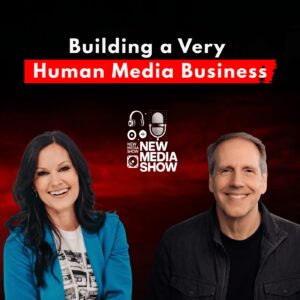
That was the core idea behind this conversation with Erin Diehl of Improve It! and the host of the Workday Playdate Podcast, and New Media Show host and Podcast Hall of Fame Inductee Rob Greenlee on New Media Show Episode 654, where we explored what it really means to build a media business rooted in trust, emotional connection, authenticity, and memorable audience experiences.

Erin Diehl, founder of improve it! and host of the Workday Playdate podcast, brings a distinctive perspective to this discussion.

Her work sits at the intersection of improv, leadership, communication, and community-building. On her podcast and in her live workshops, she focuses on helping people reconnect with empathy, listening, adaptability, humor, and playfulness as practical tools for stronger communication and leadership. Erin describes those same qualities as the traits of both a great improviser and a great human, and that framing shaped this entire conversation. (itserindiehl.com)

What made this episode especially timely is that it did not treat AI as the enemy. Instead, it argued that AI is becoming part of the infrastructure of modern media, especially in discovery, distribution, workflow, and scale, while human presence remains the true differentiator. I said during the episode that creators are still in the human media business, and Erin agreed that what continues to work is the authenticity of human experience.

That idea matters because audiences are increasingly surrounded by an abundance of content. When everything becomes easier to generate, the value of presence, perspective, vulnerability, and emotional resonance goes up.

Erin argued that humanity is not becoming less important in the AI era. It is becoming more important. She pointed to empathy, trust, culture, and connection as qualities that are not going away, even as new technologies reshape jobs, workflows, and media formats.

A major theme in this conversation was the role of play in serious work. Erin’s approach is not about being frivolous. It is about using play, improv, and emotional openness to create real breakthroughs in communication. In her workshops, she guides people step by step out of their comfort zones, not to embarrass them but to help them reconnect with spontaneity, attentiveness, and confidence. She explained that many adults lose that natural instinct for play as they grow older, replacing it with judgment, self-doubt, and emotional caution. Her work is designed to reverse some of that pattern and reawaken more authentic human interaction.

We also talked about how this translates directly into content creation. Erin shared that her podcast has become more than just a show. It is part of a broader ecosystem that supports her workshops, speaking, community, and business growth. She uses monthly themes to shape her episodes, guest selection, social content, and offers. That strategy helps create consistency, clarity, and a stronger trust pathway between audience attention and business outcomes. It is a smart reminder that a podcast today often works best when it is part of a larger media and relationship-building system.

Another valuable part of this episode was Erin’s openness about team building. She made it clear that creating across podcasting, social media, video, live events, and community is difficult to sustain on one’s own. She credited her team with helping manage production, guest coordination, marketing, logistics, sales, and creative execution. That is an important lesson for professional creators and media entrepreneurs. Building a durable media business often means building systems and support around your voice, not trying to do every part of the machine alone.

We also dug into mindset, self-expression, and the emotional reality of being a creator today. Erin spoke candidly about doubt, comparison, and the danger of code-switching or muting your true personality to fit an environment. Her advice was direct: find the people, audiences, and teams that allow you to be more fully yourself. In a media environment increasingly shaped by algorithmic incentives and imitation, that may be one of the most important strategic advantages a creator can have.

This episode is really about a bigger question facing everyone in podcasting, video, and digital media right now: if AI can help produce and distribute content at scale, what still makes a creator matter? The answer from this conversation is not just better tools or smarter systems. It is humanity. It is the ability to make people feel seen, understood, energized, and connected. That is what creates trust. That is what builds community. And that is what makes a media business more durable over time.

Brief Episode Description

In New Media Show Episode 654, Rob Greenlee talks with Erin Diehl, founder of improve it! and host of Workday Playdate, about what it takes to build a truly human media business in an AI-driven era.

They explore why trust, empathy, emotional intelligence, playfulness, authenticity, and community may become even more valuable as AI expands across media creation and distribution.

The conversation also looks at how improv principles can strengthen podcasting, leadership, content strategy, live events, and audience connection. Erin shares how she built her business and shows around human transformation, while Rob frames why creators still need to think of themselves as being in the human media business first.

Key Takeaways

– Creators are still in the human media business, even as AI becomes more useful for discovery, workflow, and distribution.

– Authenticity, empathy, trust, and emotional connection are becoming more valuable as content volume increases.

– Improv skills like listening, adaptability, humor, and presence map directly to stronger media creation and leadership.

– A podcast works best when it is part of a broader ecosystem that includes community, services, events, and business strategy.

– Monthly content themes can help creators build a more focused and sustainable content engine across multiple platforms.

– In-person human experiences still have unique power in an increasingly digital media world.

– A strong team can be essential for creators trying to build across audio, video, social, and live experiences.

– The future of media may depend less on sounding polished and more on being unmistakably human.

Relevant Links

Host Rob Greenlee
https://robgreenlee.com/ (Rob Greenlee)
New Media Show
https://newmediashow.com/ (New Media Show)
Rob Greenlee Live Podcasts
https://robgreenlee.com/live-podcasts/ (Rob Greenlee)
Rob Greenlee & New Media Show YouTube
https://www.youtube.com/@RobGreenlee (Rob Greenlee)
Spoken Human Show – YouTube
https://www.youtube.com/@spokenhuman (Rob Greenlee)
LinkedIn – Rob Greenlee
https://www.linkedin.com/in/robgreenlee (Rob Greenlee)
Instagram – Rob Greenlee
https://www.instagram.com/robwgreenlee (Rob Greenlee)
X.com – Rob Greenlee
https://x.com/robgreenlee (Rob Greenlee)
Adore Podcast Network
https://AdoreNetwork.com (Rob Greenlee)
Podcast Hall of Fame
https://PodcastHall.com (Rob Greenlee)

Guest Erin Diehl
https://www.itserindiehl.com/meet-erin (itserindiehl.com)
improve it!
https://www.learntoimproveit.com/ (learntoimproveit.com)
Workday Playdate Podcast
https://www.learntoimproveit.com/podcast-page (learntoimproveit.com)
Workday Playdate on Apple Podcasts
https://podcasts.apple.com/us/podcast/workday-playdate/id1508450538 (Apple Podcasts)

Shocking Change: Video, AI, and RSS Podcasting | Dave Jackson #646

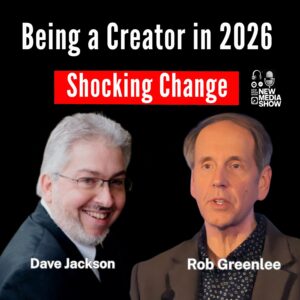
In this new episode from a LIVE Jan 7th, 2026 New Media Show, Host RobGreenlee.com is joined by Dave Jackson (School of Podcasting and co-host of Ask the Podcast Coach) to unpack why the current shift toward video and AI feels like an earthquake inside podcasting, while the YouTube creator world treats it like a normal day.

We dig into how creators are now forced to play two games at once: the RSS subscription game and the algorithm discovery game especially for video, and why the definition debates did not matter as much as audience behavior.

Rob and Dave also get practical about what breaks and what endures, including growing frustration with heavy ad loads and pre-roll stacking, the realities of programmatic monetization, and why the first thing a listener should hear is you.

We cover where video delivery and monetization are heading (including HLS and video ad insertion), why “watch something” still defaults to YouTube for most people, and what Apple Podcasts would need to change if it ever wanted to truly reprioritize RSS-based video podcasting again.

Plus, a look at what live content signals in an AI-accelerated era, including the idea of live as proof of life and real-time audience feedback.

Rob also shares reminders about Podfest Expo (Jan 14–18 in Orlando) and the upcoming 2026 Podcast Hall of Fame activity on Jan 16th, 2026 (PodcastHall.com).

Topics Covered:

Video becoming default across platforms
AI accelerating the creator loop and increasing pressure to optimize for algorithms
RSS portability, ownership, and the growing discovery gap
Programmatic ads, pre-roll backlash, and audience ad tolerance
HLS, video ad insertion, and why the ad infrastructure is pushing streaming delivery
Apple Podcasts video discoverability problems and what would need to change
Netflix exclusivity lessons after the Spotify era of exclusives
Live as proof of life in a world flooding with synthetic content

Hosts Links

New Media Show: https://newmediashow.com/
Rob Greenlee: https://robgreenlee.com/
Rob on YouTube: https://www.youtube.com/@RobGreenlee
Rob on LinkedIn: https://www.linkedin.com/in/robgreenlee
Rob on Instagram: https://www.instagram.com/robwgreenlee/
Podcast Hall of Fame: https://podcasthall.com/
Podfest Expo: https://podfestexpo.com/

Dave Jackson, School of Podcasting: https://schoolofpodcasting.com/
Ask the Podcast Coach (Live Saturdays): https://askthepodcastcoach.com/


Rebooting the Show: Video, AI and Revenue #643

New Media Show with Rob Greenlee and Rob WalchIn this episode, we relaunch the New Media Show #643 with special guest Rob Walsh, VP of Libsyn.

After a difficult last few months following the passing of longtime friend and co-host Todd Cochrane, The New Media Show officially returns with a fresh format and a familiar voice. In this reboot episode, we again talk candidly about the process of bringing the show back, honoring Todd’s legacy, and where the podcasting industry is really headed in 2025 and beyond.

Rob Greenlee and Rob Walch dig into the renewed 2026 Podcast Hall of Fame, why hosting it at Podfest Expo matters, and how this year’s inductee class reflects both the early pioneers and today’s global voices.

They unpack what advertisers are actually buying right now, why mid sized loyal shows often outperform the “big names,” and how the shift from demographic targeting to psychographic and genre based buying is changing deals for creators at every level.

The conversation also explores the rise of private communities and paid video ecosystems on platforms like Substack and Uscreen, plus the relaunch of NewMediaShow.com with a fully restored archive of nearly 600 past episodes.

From YouTube and Spotify’s “top podcast” charts to Apple’s long running audio ecosystem, the two Robs wrestle with a core question: what truly counts as a podcast in an era where many YouTube only shows get labeled as such.

They contrast audio first and video first strategies, debate download versus HLS streaming, and talk through how measurement, attribution, and IAB revenue reports reveal a still under valued ad market relative to radio and other media.

Finally, they tackle the current wave of AI generated ads and shows, including legal requirements around disclosure and why so much AI content still feels soulless, even as tools get faster and more powerful.

Whether you are an indie creator, a network executive, or someone who has followed The New Media Show for years, this reboot episode sets the tone for a new chapter that stays true to the show’s roots while leaning hard into the realities of today’s business of podcasting.

Rob Greenlee

Rob Greenlee website
https://RobGreenlee.com
New Media Show for Audio and Video RSS feeds
https://NewMediaShow.com
Adore Creator Network and shows hub
https://AdoreNetwork.com
Adore Creator Community on Skool
https://Skool.com/AdoreNetwork
Podcast Hall of Fame
https://PodcastHall.com
https://YouTube.com/@OfficialPodcastHallofFame
The Pro Creator Playbook with Rob Greenlee
Audio podcast
https://www.adorenetwork.com/show/pro-creator-playbook-audio/
Video show
https://www.adorenetwork.com/show/pro-creator-playbook-video/
Spoken Life Show
https://www.adorenetwork.com/show/spoken-life-show/
Spoken Human show on YouTube
https://YouTube.com/@spokenhuman
Rob Greenlee YouTube channel
https://YouTube.com/@RobGreenlee

Rob Walch

Libsyn podcast hosting and network
https://libsyn.com
Podcast411 with Rob Walch
https://podcast411.com