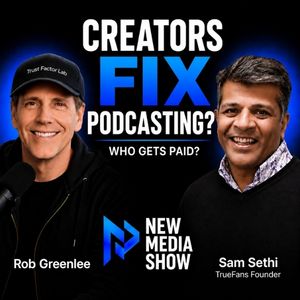
Can Creator Economy Build a Better Podcasting? | Sam Sethi, TrueFans #671

New Media Show with Rob Greenlee and Guest Sam Sethi of TruFansIn this episode of The New Media Show, host 2017 Podcast Hall of Famer Rob Greenlee welcomes Sam Sethi, founder of TrueFans and co-host of the Podnews Weekly Review.

They had a wide-ranging conversation about the future of podcasting inside the larger creator economy.

Podcasting helped create the independent creator movement through RSS, niche audiences, direct publishing, and long-form content that builds audience trust.

Today’s creators are building broader businesses around video, memberships, newsletters, live events, merchandise, premium content, clips, community, and direct fan relationships.

So, can the creator economy help build a better, more sustainable podcasting industry?

Rob and Sam explore why podcasting can no longer think only in terms of feeds, files, downloads, and ad impressions. They discuss the rise of creator portals, the importance of owning the relationship with audiences, and how platforms such as Patreon, Substack, Beehiiv, YouTube, Spotify, and Apple are changing creator expectations.

The conversation also examines whether advertising is becoming less central to the creator business model, and how subscriptions, premium content, micropayments, stablecoins, and value-for-value models could create new ways to share revenue among creators, listening apps, platforms, and even audiences.

Sam shares his perspective on HLS streaming, watch time and listen time analytics, activity streams, super fans, publisher feeds, and “super feeds” that can connect audio, video, events, merchandise, blogs, and community into a more portable, creator-owned media presence.

Rob and Sam also dig into the impact of AI on podcasting: AI-generated shows, human engagement as a discovery signal, AI bots scraping media, the rising need for clear content licensing, and the tension between making content available to AI discovery systems while protecting creator rights and value.

This episode is a deep look at where open RSS, creator ownership, platform control, AI discovery, video, monetization, and audience relationships may be heading next.

Topics covered in this episode include:

• The evolution of podcasting into a broader creator-led media business
• Why creators need direct relationships with fans, not just platform reach
Creator portals – memberships, newsletters, live events, merchandise, and premium content
Whether ad-supported podcasting is becoming less important
HLS streaming, listen-time and watch-time measurement, and better advertising accountability
Micropayments, value-for-value, stablecoins, and new revenue-sharing models
Activity streams, super fans, community engagement, and audience signals
AI-generated podcasts, discovery, AI bots, and licensing creator content
Publisher feeds, super feeds, playlists, and collective buying power for independent creators
Open RSS, data portability, proprietary platforms, and the future of media distribution

The New Media Show is a human-hosted and guested conversation about the future of creator-led digital media, including podcasting, video, live streaming, AI, audience trust, discovery, monetization, platforms, and the changing relationship between creators and their communities.

Watch the video and audio editions below and on YouTube; listen to the audio edition in your favorite podcast app; watch the video edition in Apple Podcasts; and visit NewMediaShow.com and RobGreenlee.com for more episodes and industry conversations.

Guest Links: Sam Sethi, Founder/CEO, TrueFans

TrueFans: https://truefans.fm
Sam Sethi on LinkedIn: https://uk.linkedin.com/in/samsethi
Sam Sethi on TrueFans: https://truefans.fm/fans/sam
Podnews Weekly Review: https://weekly.podnews.net
Sam Sethi on Podnews Weekly Review: https://weekly.podnews.net/1538779/contributors/411-sam-sethi

Rob Greenlee and New Media Show Links

Rob Greenlee Website: https://robgreenlee.com/
New Media Show: https://newmediashow.com/
New Media Show Audio on Apple Podcasts: https://podcasts.apple.com/us/podcast/new-media-show-audio/id392545649
New Media Show on YouTube: https://youtube.com/@TheNewMediaShow
Rob Greenlee on YouTube: https://youtube.com/@RobGreenlee
Podcast Hall of Fame: https://podcasthall.com/

About the Host/Author:
Rob Greenlee is a 2017 Podcast Hall of Fame inductee and Chair, a global new-media leader who bridges podcasting’s human roots and its AI-driven future. As founder of Trust Factor Lab and host of the New Media Show and Spoken Human, Rob helps creators start, grow, monetize, and future-proof their content. He has held leadership roles at Microsoft, Spreaker, Libsyn, StreamYard, Podbean, and PodcastOne, and serves as Chairperson of the Podcast Hall of Fame.

Personal / AI Disclosure Note:
I used AI tools to help organize and edit this video, episode description, and generate show notes from the episode transcript. The views, clarifications, responsibility, and industry perspective are mine and my guest’s. I have been working in podcasting, digital media, and platform adoption for more than two decades, and this article reflects my own position and editorial direction.

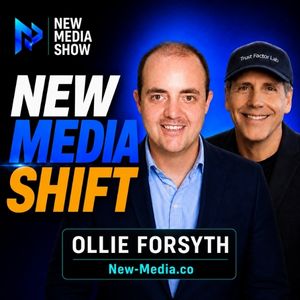
Is New Media Replacing the Creator Economy? | Ollie Forsyth #668

In episode 668 of the New Media Show, host Rob Greenlee talks with Ollie Forsyth, founder of New Economies and New-Media.co, about the fast-changing meaning of “New Media” and why creator-led media is becoming one of the most important shifts in digital publishing, podcasting, video, newsletters, live streaming, and AI-powered content.

The conversation begins with a bigger question: what does “New Media” mean now?

For years, the term New Media has described digital media outside traditional broadcast, print, and cable. But in 2026, the meaning is changing again. New Media is becoming less about a format and more about who the audience trusts, where attention is moving, and how creators are building direct relationships through podcasts, YouTube channels, newsletters, X, Instagram, live shows, private communities, short-form clips, and emerging AI-generated formats.

Ollie shares how New-Media.co started as a mapping project focused on tech newsletters, podcasts, and creator-led media brands, and quickly became a broader signal that a new category is forming. New Media is no longer just a description of online content. It is becoming a business, creator, and distribution category.

Rob and Ollie explore whether podcasting is still its own category or is becoming one lane within a larger New Media ecosystem. Rob brings the long history of podcasting, RSS, video podcasting, Apple Podcasts, YouTube, Spotify, Netflix, and creator platforms into the discussion, asking whether the word “podcast” is still enough to describe what audiences now consume.

A major theme in this episode is the difference between audience size and audience value. Ollie argues that creators do not always need massive audiences if they have focused, valuable, trusted communities. A show with 5,000 highly relevant listeners or viewers can be more valuable than a much larger audience that does not convert or engage.

The discussion also moves into traditional media and why legacy media companies may struggle to adapt to this new creator-led environment. Ollie says the difference is not just production quality. It is the vibe, the trust, the format, and the feeling that audiences are getting access to something more direct and less institutional.

Rob and Ollie also talk about how X, Instagram, YouTube, newsletters, and short-form clips are becoming the new media distribution stack. YouTube remains central for video and long-form discovery, while X and Instagram are becoming powerful platforms for attention and conversation for creators and media brands.

The final part of the episode turns to AI-generated content, synthetic media, AI micro-dramas, AI-generated podcasts, disclosure, and audience trust. Rob raises the tension around the term “AI slop” and whether the podcast industry is reacting differently to bad AI content than it has historically reacted to bad human-created content.

Ollie argues that AI can help create new forms of content, but it cannot replace the human element, charisma, taste, and trust that make a real show work.

This episode lands on a core New Media Show idea: podcasting helped build the foundation of today’s creator-led media world, but the next era is broader, more video-driven, more AI-assisted, more platform-diverse, and more dependent on human trust than ever before.

Key Topics:

  • What “New Media” means in 2026
  • Why creator-led media is gaining cultural and business influence
    New Media vs. the creator economy
  • How New-Media.co maps creators, newsletters, podcasts, and media brands
  • Why podcasting may now be one lane inside a broader media ecosystem
    Audience size vs. audience value
  • Why niche audiences can be more powerful than mass reach
  • How creators are building multi-platform distribution systems
  • YouTube, X, Instagram, Substack, newsletters, and short-form video
    The role of clips in modern media growth
  • Why traditional media struggles to capture the creator-led “vibe”
  • How legacy media companies could partner with creators
  • Why “podcast” may be an audience term more than a creator identity
    Netflix, YouTube, Apple Podcasts, and the shifting meaning of shows
  • AI-generated podcasts, AI micro-dramas, and synthetic content
  • Disclosure and transparency around AI-created media
  • Why human taste, trust, charisma, and curation still matter
  • The future of podcasting inside the larger New Media category

Chapter Markers:

00:00 Welcome to New Media Show #668
00:30 Why New Media Is Entering a New Era
01:30 Introducing Ollie Forsyth
03:00 What New Media Means Now
04:00 How New-Media.co Started
05:30 Why the New Media Category Is Gaining Attention
06:30 Mapping the New Media Landscape
08:00 How Creators Get Discovered
10:00 Creator Economy vs. New Media
11:30 Why OpenAI and TBPN Became a Signal
13:30 Audience Value vs. Audience Size
16:30 Timely vs. Timeless Content
18:00 Why Distribution Channels Matter
20:00 Are Podcasters Becoming Creators?
21:30 AI Micro-Dramas and New Entertainment Formats
23:00 Short-Form Content and Creator ROI
25:00 Building Multiple Distribution Channels
27:00 Is Podcasting Still the Right Term?
29:00 Apple Podcasts, HLS Video, and YouTube’s Influence
31:30 New Media as a Broader Category
32:30 Why AI Companies Want New Media Shows
33:30 Why Legacy Media Struggles to Adapt
35:00 The Vibe Difference Between Traditional Media and Creator Media
37:00 X, Instagram, and the New Distribution Stack
40:30 YouTube, Video, and Future-Proofing Media Brands
43:00 Planning Content Like a Media Company
45:00 Is Podcasting One Lane on a Bigger Freeway?
48:00 Why Creators Need More Than One Channel
50:00 Does the Audience Care What We Call It?
52:00 Is It Just a Show Now?
53:30 Netflix, YouTube, and Audience Expectations
55:00 Is New Media Here to Stay?
56:30 Taste, Attention, and Human Connection
58:30 AI-Generated Content and Podcasting’s Reaction
01:00:30 AI Disclosure and Transparency
01:02:00 AI Micro-Dramas and Synthetic Media
01:03:30 Can AI Replace the Human Element?
01:05:00 Bad AI Content vs. Bad Human Content
01:07:00 Why YouTube Raises the Production Bar
01:09:00 Why Human Curation Still Matters
01:11:00 Where New Media Goes Next
01:13:00 Closing Thoughts

Guest and Host Links

Guest: Ollie Forsyth
Founder, New Economies and New-Media.co
New Media: new-media.co
New Economies: neweconomies.co

Host: Rob Greenlee
New Media Show: NewMediaShow.com
Rob Greenlee: RobGreenlee.com
Podcast Hall of Fame: PodcastHall.com
Rob Greenlee on LinkedIn: linkedin.com/in/robgreenlee
Rob Greenlee Booking: calendly.com/robgreenlee

About the Host/Author:
Rob Greenlee is a 2017 Podcast Hall of Fame inductee and Chair, a global new-media leader who bridges podcasting’s human roots and its AI-driven future. As founder of Trust Factor Lab and host of the New Media Show and Spoken Human, Rob helps creators start, grow, monetize, and future-proof their content. He has held leadership roles at Microsoft, Spreaker, Libsyn, StreamYard, Podbean, and PodcastOne, and serves as Chairperson of the Podcast Hall of Fame.

Personal / AI Disclosure Note:
I used AI tools to help organize and edit this episode description and generate show notes from the episode transcript. The views, clarifications, responsibility, and industry perspective are mine and my guest’s. I have been working in podcasting, digital media, and platform adoption for more than two decades, and this article reflects my own position and editorial direction.

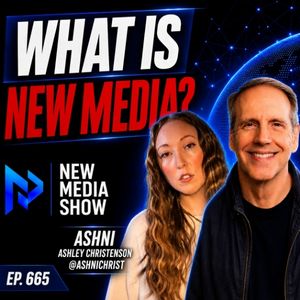
What Is New Media Now vs Podcasting? | Ashley Christenson / @Ashni #665

In episode 665 of the New Media Show, hosted by 2017 Podcast Hall of Famer Rob Greenlee, Rob talks with Ashley Christenson, also known as Ashni, for a deep conversation about one of the most important questions facing podcasting, streaming, creator media, startups, and traditional media right now:

What does “New Media” actually mean today?

The term “New Media” has been around since the late 1990s, but its meaning is shifting again. What once described digital media outside traditional broadcast and print is now being used by creators, VCs, startups, streaming strategists, AI companies, and professional communities to refer to something more specific: creator-led media that builds trust, influence, industry position, and direct audience relationships.

Ashley brings a unique perspective from 13 years in online media, Twitch streaming, YouTube education, startup marketing, community building, and creator strategy. She explains that she sees the creator economy as building an audience as the asset, whereas the emerging version of New Media is more about building status and position within an industry conversation. In her view, the key difference is not simply between consumer and professional audiences, but about what the media operation is designed to build and protect.

Rob brings the longer history of podcasting and digital media into the discussion, asking whether podcasting was one of the first major expressions of New Media and whether it now sits within a much larger creator-led ecosystem. The conversation explores how podcasting, YouTube, streaming video, newsletters, live shows, X, AI-generated content, and Apple Podcasts’ move toward HLS video streaming are all blurring the old lines between podcasting, creator media, and professional media.

A major theme in this episode is whether podcasting is still its own category or has become a powerful format within the broader New Media industry. Rob argues that the word “podcast” is increasingly defined by audiences and platforms, while creators may need to think more broadly as show builders, media operators, and participants in the creator economy.

Ashley and Rob also explore how X is becoming a real-time professional media layer, why founders, investors, executives, and AI builders are returning to the platform, and why companies are experimenting with live streaming, clipping, launch videos, short-form content, and creator-style formats to reach professional audiences.

The episode also moves into AI-generated media, human-hosted content, AI clones, disclosure, and trust. Rob argues that human-created and AI-created content may both need clear labeling, while Ashley points out that long-form podcasts may remain more defensible because listeners often build real relationships with hosts over time.

This conversation lands on a bigger media reality: New Media is no longer just a technology term. It is becoming a business category, a creator category, a trust category, and a professional influence category. Podcasting helped build the foundation, but the next version of New Media is broader, more video-driven, more AI-assisted, more platform-diverse, and more dependent on trust than ever before.

Key Topics:

  • What “New Media” means in 2026
  • Creator economy vs. New Media
  • Audience as an asset vs. status as an asset
  • Why podcasting helped define early New Media
  • Whether podcasters should now think more like creators and show builders
  • Apple Podcasts HLS video and the return of video podcasting
  • YouTube, Spotify, X, and the platform shift around shows
  • Why VCs and startups are using the term New Media
  • X is a professional media and live content platform
  • Traditional media is trying to become more internet-native
  • AI-generated podcasts, AI clones, and synthetic media
  • Human-hosted content, disclosure, and audience trust
  • Why long-form podcasts may remain defensible in the AI era

Chapter Markers:

00:00 Cold Open and Welcome
00:32 What Does New Media Mean
02:08 Podcasting Meets Multi Format
03:14 Meet Rob Greenlee
04:01 Introducing Ashley Christensen
04:53 Ashley’s Creator Economy Journey
08:26 AI Definitions of New Media
12:35 Creator Economy vs New Media
16:29 The Kill Switch Test
21:38 Is VC Rebranding New Media
24:10 Niche Status Media Examples
31:55 Traditional Media Goes Internet Native
34:59 Podcasting Identity and Convergence
41:35 Creator as a Catch-All Term
43:56 Naming New Media
46:11 Podcast Term Debate
51:02 X Shapes Media
55:35 X Video Creator Push
01:00:51 Twitter Podcast Roots
01:04:38 AI Flooding Podcasts
01:07:48 Human Trust Labels
01:11:34 Clones and Disclosure
01:17:49 Trust Factor Wrap
01:18:19 Closing and Where to Follow

Guest and Host Links

Guest: Ashley Christenson / Ashni

Streaming strategist, creator economy, and new media operator

Host: Rob Greenlee

About the Host/Author:
Rob Greenlee is a 2017 Podcast Hall of Fame inductee and Chair, a global new-media leader who bridges podcasting’s human roots and its AI-driven future. As founder of Trust Factor Lab and host of the “New Media Show” and “Spoken Human”, Rob helps creators start, grow, monetize, and future-proof their content. He’s held leadership roles at Microsoft, Spreaker, Libsyn, StreamYard, and PodcastOne, and serves as Chairperson of the Podcast Hall of Fame. Learn more at RobGreenlee.com and join the Trust Factor Lab Creator/Podcast Services.

Personal/AI Disclosure Note: I used AI tools to help organize and edit this episode and generate show notes. I have many hand edits; the views, clarifications, responsibility, and industry perspective are mine and my guests’. I have been working in podcasting and platform adoption for more than two decades, and this article reflects my own position. The original word choice was mine, and so is the clarification.