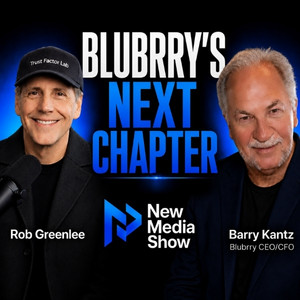
 In Episode 678 of the New Media Show, host and Podcast Hall of Famer Rob Greenlee welcomes Barry Kantz, CEO and CFO of Blubrry Podcasting, for a candid conversation about Blubrry’s leadership transition, the legacy of (RIP) former CEO Todd Cochrane, independent podcasting, video, artificial intelligence, monetization, measurement, human support, and the changing podcast-hosting market.
For more than 20 years, Blubrry and its parent company, RawVoice, have helped build and support the open podcast ecosystem. The sudden passing of Blubrry founder and longtime New Media Show co-host Todd Cochrane forced the company, its team, and Todd’s family to navigate an unexpected personal and business transition.
Barry explains how Blubrry responded, how leadership responsibilities shifted, and how his management approach differs from Todd’s hard-charging entrepreneurial style. Barry is bringing a more data-driven and systems-focused approach while trusting Blubrry’s experienced remote team to carry the company forward.
The conversation also examines how podcasting itself is changing.
Audio remains central to the medium, but video has become part of how audiences define and experience podcasts. Rob and Barry discuss YouTube discovery, the overlap between watching and listening, short-form clips, RSS distribution, Apple’s HLS video support, alternative enclosures, Podcasting 2.0, and Blubrry’s Vid2Pod tool for turning YouTube videos into audio podcast episodes.
Barry also shares an update on Blubrry’s HLS video development and discusses the company’s new lower-priced starter plan introduced around the time of the recording.
Artificial intelligence is another major part of Blubrry’s next chapter.
Barry explains how he uses Claude as a daily assistant for analytics, automation, research, and company operations.
Barry sees AI as a way to make podcast creation and management easier, especially for creators who may not have extensive technical experience.
At the same time, Blubrry’s larger goal is to use technology to support human expression rather than replace the human connection that gives podcasting its value.
Rob and Barry discuss low-effort AI-generated content, synthetic media, voice cloning, the limitations of automated clipping tools, and the growing need to distinguish human-hosted shows from fully automated productions.
The discussion then moves into monetization and the opportunities still available to independent creators.
Barry argues that smaller shows can create meaningful business value when they serve a clearly defined audience and develop strong relationships with listeners. Creators do not necessarily need millions of downloads. A focused show with several hundred deeply engaged listeners can provide valuable access to a professional, geographic, or consumer community.
Barry also reflects on Blubrry’s early work with host-read advertising and Todd Cochrane’s long-running sponsorship relationship with GoDaddy as examples of how trust, consistency, niche relevance, and audience connection can create durable advertiser value.
Rob and Barry also examine the challenge of measuring audio and video under a common standard.
HLS video, progressive audio downloads, platform-controlled playback, and various delivery methods complicate the determination of what should count as a verified play. The discussion explores why common measurement matters to advertisers and why the industry may need different technical approaches for audio and video consumption.
The episode closes with a broader look at the increasingly competitive podcast-hosting market.
Hosting, storage, and delivery have become commodities. The competitive difference now comes from the tools, services, support, analytics, workflows, distribution options, and human expertise built around the infrastructure.
For Blubrry, that includes PowerPress, WordPress integration, video support, Vid2Pod, Podcasting 2.0 features, AI-assisted workflows, monetization options, analytics, and access to experienced human support.
Both reflect on the legacy Todd Cochrane helped create and provide a detailed look at how Blubrry plans to move forward in a media environment shaped by audio, video, AI, open distribution, creator ownership, and changing audience expectations.
Key Discussion Topics:
– Blubrry’s transition following Todd Cochrane’s passing
– Barry Kantz’s leadership and management approach
– How the Blubrry team responded to sudden change
– Todd’s influence on podcasting and the open ecosystem
– The evolving definition of a podcast
– Audience movement between watching and listening
– YouTube discovery and short-form video
– Blubrry’s Vid2Pod technology
– Apple HLS video support
– RSS, alternative enclosures, and Podcasting 2.0
– Blubrry’s lower-priced starter plan
– AI-assisted podcast production and operations
– Human-hosted media versus automated content
– Voice cloning, authenticity, and audience trust
– Monetization for independent and niche creators
– Host-read advertising and direct sponsorships
– Measuring audio and video consumption
– Podcast hosting as a commodity
– PowerPress and the continuing role of WordPress
– Human customer support as a competitive advantage
– The future of independent podcasting
Chapter Time Stamps:
00:00 Welcome to The New Media Show Episode 678
00:44 Blubrry’s role in the open podcast ecosystem
02:03 Introducing Barry Kantz, CEO and CFO of Blubrry Podcasting
03:31 The sudden loss of former co-founder/CEO of Blubrry, Todd Cochrane
05:22 How the Blubrry team responded
06:29 Barry’s leadership style compared with Todd’s
08:17 Bringing data and operational systems into the company
09:57 How Todd might view today’s podcast market
11:11 Video becomes part of podcasting
13:20 Blubrry’s Vid2Pod product
14:46 Barry’s transition from CFO to CEO
18:14 The opportunity for independent creators
20:00 Who now defines what a podcast is?
21:07 Audiences move between watching and listening
23:24 YouTube discovery and the importance of Shorts
24:55 The limitations of AI-generated clips
26:20 Blubrry’s Apple HLS video rollout
28:12 Blubrry introduces a lower-priced starter plan
29:08 Alternative enclosures and Podcasting 2.0
30:34 Barry’s use of Claude as an AI assistant
32:02 Supporting human creators while limiting AI slop
33:20 Voice cloning and the challenge of replicating humanity
36:18 Blubrry’s philosophy on podcast monetization
37:30 How niche shows can attract direct sponsors
39:27 Managing expectations for new podcasters
43:16 Measuring HLS video and audio downloads
46:45 New competition in podcast hosting
47:36 Why hosting has become a commodity
50:45 Product focus, acquisitions, and platform complexity
52:01 WordPress, PowerPress, and AI-assisted websites
55:00 Blubrry’s commitment to human customer support
57:31 Closing thoughts on Blubrry’s future
About the Guest:
Barry Kantz is CEO and CFO of Blubrry Podcasting and one of the original founders of its parent company, RawVoice.
Barry has produced podcasts since 2005 and has worked with Blubrry throughout its more than 20-year history. His responsibilities have included company finance, legal affairs, human resources, analytics, operations, and business leadership.
Following the passing of Blubrry founder Todd Cochrane, Barry stepped into the company’s primary leadership role. He is now guiding Blubrry through its next chapter as podcasting expands across audio, video, artificial intelligence, open RSS distribution, WordPress, and creator-led media.
Blubrry Podcasting
https://blubrry.com
Blubrry Leadership and Company Information
https://blubrry.com/about
Barry Kantz on LinkedIn
https://www.linkedin.com/in/kantzb
Blubrry Podcast Insider
https://blubrry.com/podcast-insider
About the Host:
Rob Greenlee is a 2017 Podcast Hall of Fame inductee, Chair of the Podcast Hall of Fame, and a longtime new-media executive, creator, strategist, and industry leader. He is the co-founder and current host of The New Media Show and the founder of Trust Factor Lab. Rob has worked across podcasting, radio, digital media, audio, video, creator platforms, partnerships, distribution, monetization, and emerging AI-assisted media for more than 26 years.
His previous leadership roles include Microsoft, PodcastOne, Spreaker, and Libsyn, where he helped shape the growth of podcasting, distribution platforms, creator partnerships, and digital audio.
Through The New Media Show, Rob explores how podcasting fits inside the larger new-media ecosystem, including video, livestreaming, artificial intelligence, platforms, audience ownership, intellectual property, advertising, trust, and sustainable creator businesses.
New Media Show
https://newmediashow.com
The New Media Show on YouTube
https://youtube.com/@TheNewMediaShow
New Media Show Audio on Apple Podcasts
https://podcasts.apple.com/us/podcast/new-media-show-audio/id392545649
Rob Greenlee
https://robgreenlee.com
Rob Greenlee on LinkedIn
https://www.linkedin.com/in/robgreenlee
Rob Greenlee on YouTube
https://youtube.com/@RobGreenlee
Podcast Hall of Fame
https://podcasthall.com
AI Disclosure:
AI tools were used to help organize and edit this episode description and create chapter markers from the completed episode transcript. The editorial direction, final review, industry perspective, and responsibility for the published content remain with Rob Greenlee. This description reflects the substance of the recorded conversation between Barry Kantz and Rob Greenlee.
Podcast: Play in new window | Download
Subscribe: Apple Podcasts | Android | Podcast Index | RSS
Podcast (audio): Play in new window | Download
Subscribe: Apple Podcasts | Spotify | Android | Podcast Index | RSS
 In Episode 675 of the New Media Show, host
 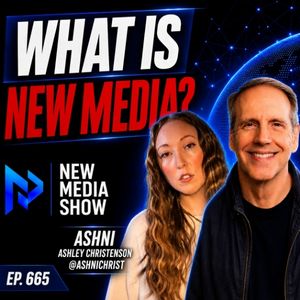 In episode 665 of the New Media Show, hosted by 2017 Podcast Hall of Famer Rob Greenlee, Rob talks with Ashley Christenson, also known as Ashni, for a deep conversation about one of the most important questions facing podcasting, streaming, creator media, startups, and traditional media right now:
 This article provides context about my comments on