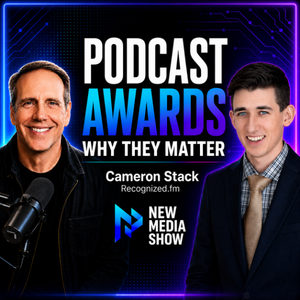
Why Podcast and Creator Awards Matter | Cameron Stack, Recognized.fm #675

New Media Show with Podcast Hall of Famer Rob Greenlee and Guest Cameron Stack of Recognized.fmIn Episode 675 of the New Media Show, host Rob Greenlee welcomes Cameron Stack, founder and curator of Recognized.fm, for a conversation about podcast awards, creator credibility, industry recognition, and the growing business behind awards, nominations, platform distinctions, editorial selections, and career honors.

Podcast awards can be easy to dismiss as another trophy or promotional exercise. Credible recognition can have a much larger impact on a creator, a show, a network, or a media company.

An award nomination or win can strengthen a media kit, support sponsor conversations, attract better guests, generate press coverage, and give prospective listeners another reason to take a show seriously.

The difficult part is deciding which awards deserve the investment.

Podcasting now has a wide recognition ecosystem that includes juried competitions, audience-voted awards, editorial selections, regional programs, platform honors, niche-category awards, professional distinctions, and lifetime-achievement recognition such as the Podcast Hall of Fame.

Cameron created Recognized.fm to organize this expanding market and help creators understand their options. Recognized currently tracks more than 100 audio and podcast awards, with information that can be filtered by factors such as geographic scope, entry fees, voting format, and prestige. 

They discuss why creators should begin with a clear objective before paying to submit. A widely known international award may bring general visibility, while a smaller award focused on a creator’s profession, region, language, or subject category may carry more influence with the people they most want to reach.

Example 1: A medical podcast may receive greater credibility in healthcare than from a broad entertainment competition.

Example 2: A true-crime show may benefit more from an award respected by that community than from competing across every podcast genre.

Submission fees also need to be considered. Independent creators may only have the budget to enter one or two competitions, while networks and larger publishers can treat award submissions as part of a broader marketing strategy.

Cameron explains why creators should compare costs against potential returns in visibility, authority, business development, audience growth, and professional validation.

The judging process matters just as much as the entry fee. Creators should understand who operates the award, how judges are selected, what criteria are used, whether the process is transparent, and how much weight the recognition will carry with the intended audience.

Every award has its own purpose and incentives. Some are selected by industry juries. Others rely on fan voting, editorial judgment, platform data, or a combination of methods. Recognized.fm is building a clearer taxonomy so creators can understand those differences before committing their time and money. 

Awards also function as social proof. Audiences already use ratings, reviews, trailers, artwork, recommendations, and visible audience activity to decide whether a show deserves attention. A respected award or nomination adds another outside signal that the work has been evaluated and recognized.

The recognition can strengthen sponsor decks, improve outreach to potential guests, support speaking opportunities, and help creators position themselves as credible voices within a category.

The impact can continue long after the ceremony, as recognition becomes part of the creator’s biography, website, introductions, and business materials.

We also explore the larger “recognition economy”. Awards are one part of an industry that includes trophy manufacturers, submission platforms, consultants, event producers, sponsors, judging systems, media organizations, and the businesses that support professional recognition.

As creator-led media grows, new awards will continue to emerge around podcasts, YouTube shows, livestreaming, newsletters, social video, and other online formats. Established awards will also need to adapt as audiences and media habits change.

Artificial intelligence will bring another layer of change.

Cameron expects AI-related categories and dedicated AI awards to emerge as organizations seek ways to recognize new forms of production and technological achievement.

Rob raises the trust questions that will accompany that shift, especially when established human-centered awards begin considering synthetic or substantially AI-generated work.

The episode closes with a look at the physical trophies themselves. Cameron shares examples from the Webbys, Signal Awards, iHeartPodcast Awards, international design competitions, and other recognition programs. A memorable trophy can become a visible symbol of the award and extend its value through videos, studio sets, social posts, and public appearances.

For creators, producers, networks, and media companies, Episode 675 provides a practical framework for deciding when awards are worth pursuing, how to evaluate them, and how credible recognition can support broader media and business strategies.

Topics Covered in This Episode

* Why credible podcast recognition matters
* Cameron Stack’s background in podcast production
* The development of Recognized.fm
* Juried, fan-voted, editorial, regional, and platform awards
* How creators should decide which awards to enter
* Submission fees and potential return on investment
* Broad awards compared with niche recognition
* Awards as social proof for listeners and sponsors
* Strengthening media kits and guest outreach
* Podcast Hall of Fame and career recognition
* Judging standards, transparency, and organizational bias
* The larger recognition economy
* AI-generated content and future award categories
* Creator-native awards and legacy media ceremonies
* Why memorable trophy design matters

Chapter Time Stamp Markers:

00:00 Why podcast awards and recognition matter
02:05 Cameron Stack and the origin of Recognized.fm
04:08 Recognition expands beyond traditional podcast awards
05:47 Building a comprehensive guide to audio awards
07:34 Should every creator submit to awards?
10:23 The full podcast recognition ecosystem
11:56 What creators gain from recognition
13:33 Broad awards compared with niche awards
15:00 Editorial selections and platform recognition
17:16 Awards as credibility and social proof
19:03 Measuring the return from an award
21:39 Mapping the taxonomy of podcast awards
24:52 Inside the Recognized.fm platform
26:03 Events, jobs, and recognition-industry resources
28:09 Future award discovery and submission tools
29:54 Niche communities and the demand for recognition
31:52 Judging standards, transparency, and trust
34:15 Submission fees, bias, and due diligence
38:23 How AI may reshape awards
40:59 AI categories, positioning, and possible backlash
43:22 The growing recognition economy
46:01 Creator-native awards and legacy ceremonies
48:06 Why the physical trophy matters
52:27 The Webbys, Lovie Awards, and digital recognition
53:31 iHeartPodcast Awards and major-industry trophies
54:53 Signal Awards, the Ambies, and podcast trophy design
56:00 Recognized.fm and closing thoughts
58:49 End of episode

Guest Links: Cameron Stack, Founder and Curator, Recognized.fm

Recognized.fm: https://recognized.fm
Podcast Awards Taxonomy: https://recognized.fm/podcast-awards
About Recognized: https://recognized.fm/about-recognized
Recognized Newsletter: https://recognized.substack.com
Cameron Stack on LinkedIn: https://www.linkedin.com/in/cameron-stack

Recognized.fm, curated by Cameron Stack, focuses on making the awards and recognition industry easier to understand and navigate. 

Rob Greenlee and New Media Show Links

Rob Greenlee Website: https://robgreenlee.com
New Media Show: https://newmediashow.com
New Media Show Audio on Apple Podcasts: https://podcasts.apple.com/us/podcast/new-media-show-audio/id392545649
New Media Show on YouTube: https://youtube.com/@TheNewMediaShow
Rob Greenlee on YouTube: https://youtube.com/@RobGreenlee
Podcast Hall of Fame: https://podcasthall.com

About Trust Factor Lab

Trust Factor Lab helps creators, media leaders, executives, and brands build stronger audience trust across AI, video, podcasts, and creator-led media. Founded by Rob Greenlee, it focuses on media positioning, content strategy, authority development, AI transparency, audience growth, and trust-centered business outcomes.

AI Disclosure Note:

I used AI tools to help organize and edit this episode and its description, then create chapter markers from the episode transcript. The editorial direction, final review, industry perspective, and responsibility for the published content remain mine. The discussion reflects the views expressed by my guest and me during the recorded conversation.

Podcast Growth and Discovery in 2026 | Arielle Nissenblatt #655

Podcast discovery feels harder in 2026, not because creators stopped trying, but because attention is now split across podcast apps, YouTube, short-form video feeds, newsletters, and search-driven recommendations.

On this recorded episode of the New Media Show, host Rob Greenlee shares the screen and a microphone with Arielle Nissenblatt, 2026 Podcast Hall of Famer and Founder of EarBuds Podcast Collective and Head of Community and Content at Pinwheel by Audily, to break down what is actually changing right now and what creators can still do that consistently grows audience and trust.

“Arielle brings a listener-first, creator-first perspective that cuts through the noise. Platforms matter, but they are not the whole story. If a show is not clearly positioned, consistently delivered, and genuinely recommendable, the best metadata in the world will not create retention.”

This episode focuses on the practical middle ground: respect the power of platforms, but build your growth strategy around behaviors you can control.

“A big part of that conversation is Apple’s renewed push into video podcasts and what an HLS-based video experience signals for the direction of distribution.”

Rob frames it as part of a broader convergence toward a unified listen-and-watch experience, where measurement and monetization are easier for platforms when content is native.

“Arielle agrees that video is becoming an important top-of-funnel entry point, not because every show should be video-first, but because platforms can more easily optimize what they can see, track, and sell.”

We also talk through Spotify’s monetization strategy and what it means when major platforms keep building native paths to get paid. The underlying point is that creators need to understand the economics behind product decisions.

“The more platforms own the experience, the more they can shape the rules of distribution, monetization, and visibility.”

Then we get into the part that matters most for working creators: what still works.

“Arielle argues that recommendation culture remains one of the most underused growth engines in podcasting. Word of mouth, curated lists, and community flywheels can outperform algorithm chasing, especially for shows that serve a clear audience with a clear promise.”

That is exactly why EarBuds has remained durable for years in a market that constantly reinvents itself.

“Human curation is still a superpower because it creates trusted signals that travel even when platforms turn the knobs.”

Community comes up too, with a reality check. Not every show needs a community, and not every audience wants one.

“The test is whether people are already reaching for a deeper connection and shared identity around your content. When that demand exists, the community can compound trust and retention. When it does not, forcing it can drain your energy and distract you from the actual product, the show.”

If you are building in 2026, the creators who win are not the ones who panic-switch formats every quarter.

They are the ones who lock in a format strategy, build audience ownership where possible, and package their content for multiple environments without losing the core promise that makes listeners return.

Quick answers people are searching for:

Is podcast discovery broken in 2026?
It is fragmented. People discover shows across apps, video platforms, newsletters, and search experiences, so creators need packaging that works across multiple paths.

Do I need a video to grow a podcast?
Not always. Video is becoming a common entry point, but growth still comes from clarity, consistency, and ease of recommendation.

What is the fastest reliable growth lever right now?
Recommendation loops: collaborations, curated lists, newsletters, and audience sharing that create real trust signals.

What should creators prioritize this year?
Format strategy, audience ownership, cross-platform packaging, and a repeatable workflow you can sustain.

Show and Guest Links:

Host Rob Greenlee
https://robgreenlee.com/ (Rob Greenlee)
New Media Show
https://newmediashow.com/ (New Media Show)
Rob Greenlee Live Podcasts
https://robgreenlee.com/live-podcasts/ (Rob Greenlee)
Rob Greenlee & New Media Show YouTube
https://www.youtube.com/@RobGreenlee (Rob Greenlee)
Spoken Human Show – YouTube
https://www.youtube.com/@spokenhuman (Rob Greenlee)
LinkedIn – Rob Greenlee
https://www.linkedin.com/in/robgreenlee (Rob Greenlee)
Instagram – Rob Greenlee
https://www.instagram.com/robwgreenlee (Rob Greenlee)
X.com – Rob Greenlee
https://x.com/robgreenlee (Rob Greenlee)
Adore Podcast Network
https://AdoreNetwork.com (Rob Greenlee)
Podcast Hall of Fame
https://PodcastHall.com (Rob Greenlee)

Guest Arielle Nissenblatt
LinkedIn:
https://www.linkedin.com/in/arielle-nissenblatt
EarBuds Podcast Collective:
https://earbuds.audio/
Pinwheel by Audily:
https://pinwheelshows.com/