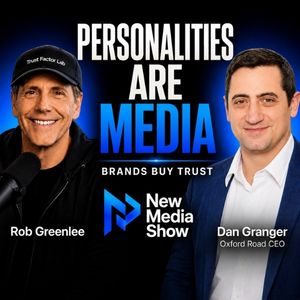
How Brands Buy Creator Media | Dan Granger, Oxford Road #677

New Media Show with Podcast Hall of Famer Rob Greenlee and Guest Dan Granger, CEO of Oxford RoadIn Episode 677 of the New Media Show, host Rob Greenlee welcomes Dan Granger, founder and CEO of Oxford Road, for a detailed conversation about how personality-led media is changing what brands buy, how audiences are measured, and what the podcast industry must do to support its next stage of growth.
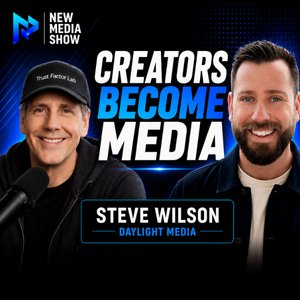
Audiences increasingly follow people rather than traditional media channels.

A trusted personality can carry an audience across podcasts, YouTube, livestreams, newsletters, social platforms, communities, events, and direct business relationships.

Advertisers, however, still tend to purchase and measure those formats as separate media channels.

That disconnect is becoming one of the largest challenges facing creator media. A creator may record a single conversation and distribute it across multiple platforms, yet each platform reports exposure differently. Advertisers are then left trying to compare downloads, streams, video views, watch time, impressions, attribution data, and host-read performance without a consistent standard.

Dan has spent his career connecting advertisers with personality-driven media. Oxford Road now describes its work as building performance systems across audio, video, creator, and programmatic media, with Dan serving as the company’s CEO.

The conversation begins with Oxford Road’s growing investment in bringing brands, creators, platforms, and media leaders together in person.

Dan explains how the company’s CAO Summit developed from the idea of a “Chief Audio Officer,” the person inside a brand responsible for making audio advertising work. That responsibility may belong to a founder, marketing leader, media buyer, or growth executive rather than someone with a formal audio title.

The CAO Summit was designed as a peer-learning environment where advertisers could speak openly with other advertisers about measurement, attribution, creative performance, and the practical problems preventing brands from spending more in podcasts and creator media. Oxford Road continues to position the CAO Summit as a meeting point for the marketers, platforms, and creators shaping what it calls “Podcast+” media. 

They also discuss the Independent Podcast and Creator Awards, also known as the Indie PaC Awards. The program was created to recognize independently owned creators and shows at a time when consolidation continues across podcasting and digital media.

Dan argues that independent creators remain central to the value of podcasting.

Creators who maintain closer relationships with their audiences, retain more editorial control, and deliver strong results for advertisers. Oxford Road’s own published ORBIT rankings show that independent shows account for a large share of its strongest-performing podcast inventory. 

Defining an independent creator is difficult, though.

A creator may own the intellectual property while accepting a minimum guarantee from a platform. A show may be represented by a large network without being owned by that company. A successful personality may have substantial corporate support while retaining full editorial control.

The Indie PaC criteria attempt to consider who owns the content, whether the show publishes consistently, and whether the podcast or creator channel is a central part of the person’s business rather than a side project created primarily to support an existing celebrity career. The inaugural awards were announced as an event focused on creator ownership and independently produced media.

That discussion leads into the episode’s central theme: personalities are becoming media businesses.

Creators once waited for a network, publisher, studio, or broadcaster to select them.

Today, personalities can build audiences directly and expand across formats without waiting for a traditional gatekeeper. Their name, voice, perspective, and relationship with the audience can become the media’s primary brand.

Dan believes advertising dollars will continue moving toward these creator-led environments. A brand may no longer purchase only a podcast placement or a YouTube integration. It may sponsor the creator across several surfaces and negotiate rights to reuse the resulting content in paid campaigns.  That changes the asset being purchased.

The value can include the creator’s audience relationship, intellectual property, content, distribution reach, endorsement, likeness, and permission to repurpose the campaign. Dan sees trust as the element that connects those assets.

Host-read advertising remains especially important because the recommendation comes through a person the audience already knows.

The strongest integrations allow the creator to speak naturally, test the product, acknowledge limitations, and explain why it may be useful.

Rob and Dan share early examples from the podcasting market in which creators criticize parts of a sponsor’s offering during paid integrations. That apparent risk can make the rest of the endorsement more believable because the audience hears an honest response rather than polished marketing language.

The discussion also examines where an advertisement appears inside an episode.

Dan is sharply critical of post-roll advertising because much of the audience has already left by the time the ad plays. Rob and Dan also discuss pre-rolls, mid-rolls, dynamic insertion, programmatic advertising, and the effects of placing too many ads in a single episode.

Oxford Road has published PodLoad research comparing the number of advertising units placed within shows.

Dan argues that an impression in a program carrying 6 minutes of advertising per hour should not automatically be valued the same as one in a show carrying 20 minutes of advertising. Excessive ad load can weaken attention and reduce campaign performance. 

Brand values and suitability add another layer.

Dan believes advertisers should understand the values they claim to support and make intentional decisions about the creators and environments they fund.

Dan also believes brands became overly reactive during the height of the brand-safety debate and then moved too far in the opposite direction.

The goal should be a durable position that considers business outcomes alongside genuine organizational values. Audience demographics matter, but the creator’s tone, worldview, conduct, and credibility can also affect whether the partnership makes sense.

The second half of the episode turns to the Alliance for Measurement in Podcasting, known as AMP.

Dan convened AMP as a one-year industry task force focused on three core questions:

– What qualifies as a podcast?
– How should exposure be counted across audio and video?
– How should advertising results be attributed?

AMP includes representatives from platforms, advertisers, publishers, creators, agencies, and measurement companies. Its stated purpose is to develop voluntary cross-platform standards that make podcast inventory easier to compare, buy, sell, and measure. 

One of the group’s most discussed recommendations is moving toward a 30-second play threshold.

Dan explains that he is less concerned with whether the correct threshold is exactly 30 seconds or 60 seconds. The larger problem is that different platforms use different definitions. That inconsistency prevents advertisers from confidently comparing performance across audio and video.

The 30-second recommendation reflects what AMP members believed had the greatest chance of broad adoption. A workable shared standard can move the market forward even when it does not represent every participant’s preferred method.

Dan compares the current landscape to islands that speak different languages. Each platform may have useful data, but the absence of a common language makes commerce harder. AMP is trying to provide a shared framework without requiring every platform to abandon its existing internal analytics.

The group is preparing the AMP Accords as a framework covering podcast classification, exposure, and advertising effectiveness. The official AMP site identifies Oxford Road as the organization that convened the process.

Rob and Dan then take on the most persistent question in podcasting: What is a podcast?

Two areas continue to create friction.

  1. One is whether a podcast must be distributed through RSS.
  2. The other is whether the medium must be primarily audio.

Dan believes RSS represents important principles, including open access and flexible distribution.

Dan does not believe RSS should be the only requirement determining whether a show qualifies as a podcast.

His practical test is whether the experience still works when the audience closes its eyes.

Video can enhance a podcast without disqualifying it. A program that requires constant visual attention will remain open to debate, but he argues that advertisers need enough consistency to conduct business.

Rob explains that RSS has increasingly become an industry-level, server-to-server distribution system. Many newer creators do not know where to find their RSS feed because hosting platforms now handle most submission and syndication work through dashboards and direct platform connections.

Audiences care even less about the technical delivery method. They call content a podcast based on how the experience looks and feels.

The conversation also covers Apple’s HLS video implementation. Rob supports the opportunity for high-quality streaming video but questions Apple’s use of a direct submission process rather than placing the HLS stream inside the open RSS feed. He believes alternative enclosures could enable the same video stream to reach more podcast apps without limiting it to a single platform.

Dan views HLS as broadly compatible with AMP’s goal of measuring real consumption across audio and video. He also recognizes that open distribution, platform control, creator ownership, and practical commercial adoption will continue pulling the market in different directions.

The episode closes with a look at what may happen to legacy media.

Dan does not expect established media companies to disappear quietly. Many still have capital, infrastructure, distribution, and the ability to acquire or support major personalities.

Dan expects some traditional media companies to adapt by functioning more like houses that provide resources to talent while allowing the personality to remain the visible brand.

Dan also expects renewed opportunity in local media, which could return through creator-led, community-focused models rather than traditional newspapers or broadcast stations.

Artificial intelligence will also become part of this future.

Dan sees value in personalized and AI-supported content, provided audiences can clearly understand when material is authentic, synthetic, or manipulated.

Rob argues that transparent labeling, human accountability, and audience awareness will become increasingly important as AI personalities and automated media gain adoption.

Episode 677 captures a media market in the middle of a structural change. Personalities are carrying audiences across platforms. Advertisers want creator trust while also demanding dependable measurement. Platforms want control over distribution, while creators want ownership and flexibility.

The companies that bring those interests together will help determine how creator media is bought, measured, and scaled.

Topics Covered in This Episode

– Why personalities are becoming media companies
– The CAO Summit and brand-to-brand learning
– Connecting advertisers directly with creators
– The purpose of the Indie PaC Awards
– How to define an independent creator
– Why independent shows can outperform larger networks
– Creator ownership and editorial control
– Brands shifting budget toward creator media
– Host-read advertising and audience trust
– Why honest creator criticism can improve an endorsement
– Pre-roll, mid-roll, and post-roll advertising
– Podcast ad load and campaign performance
– Brand safety, suitability, and values alignment
– Buying creators across several media platforms
– Licensing creator advertising content
– The Alliance for Measurement in Podcasting
– The proposed 30-second podcast-play standard
– Measuring audio and video through a common framework
– Defining a podcast beyond RSS
– Why video does not automatically change the medium
– Apple HLS video and alternative RSS enclosures
– The IAB’s possible role in industry adoption
– Legacy media adaptation
– The future of local creator media
– AI content, personalization, and disclosure

Chapter Time Stamp Markers:

00:00 Welcome to The New Media Show Episode 677
00:19 How personality-led media is changing the market
03:10 Introducing Dan Granger of Oxford Road
04:00 Why in-person media gatherings matter again
06:14 How the CAO Summit began
07:31 Defining the Chief Audio Officer
09:19 Bringing advertisers and creators together
11:34 The Independent Podcast and Creator Awards
13:38 Deal Room and a new approach to podcast upfronts
14:21 What makes a creator truly independent?
16:06 Joe Rogan, ownership, and platform influence
17:42 Publishing activity and independent-creator criteria
18:20 Creators are taking control of the media world
20:26 Personality-driven media reaches every institution
22:12 Brands move more budget toward creator content
25:16 Trust as the core creator-media asset
27:00 Why host-read advertising still works
28:22 Product testing and honest creator endorsements
30:00 Ad placement, post-rolls, and wasted impressions
31:18 How excessive ad load damages performance
33:00 Rob’s early radio and podcast advertising experience
35:46 Remembering Todd Cochrane
36:46 What advertisers now value in creators
37:00 Buying a personality across multiple platforms
38:17 Licensing creator content for paid campaigns
39:18 Brand safety, values, and commercial outcomes
45:54 Introducing the AMP measurement project
47:37 The 30-second versus 60-second play debate
48:00 Why a shared measurement language matters
51:38 AMP’s one-year mission and planned conclusion
52:25 Why the industry still needs to define a podcast
54:26 RSS, audio, video, and open distribution
56:00 HLS video and cross-platform attribution
57:12 Apple APIs compared with RSS alternative enclosures
59:08 Is RSS still essential to podcasting?
1:00:00 Why consumers no longer think about RSS
1:01:30 Dan’s “works with your eyes closed” podcast test
1:03:37 Why advertisers need a practical definition
1:04:35 AMP’s position on podcasts without RSS
1:05:49 The RSS education gap among newer creators
1:07:43 Building standards that grow the entire market
1:09:22 The IAB’s role in measurement adoption
1:11:18 Will personalities replace legacy media brands?
1:12:27 The possible rebirth of local media
1:13:42 AI content, personalization, and labeling
1:16:00 AMP’s contribution to a more scalable market
1:17:35 Closing remarks

Guest Links: Dan Granger, Founder and CEO, Oxford Road

Oxford Road: https://oxfordroad.com
Dan Granger on LinkedIn: https://www.linkedin.com/in/dangranger
Alliance for Measurement in Podcasting: https://www.ampaccords.com
Oxford Road Thought Leadership: https://oxfordroad.com/thought-leadership
Oxford Road ORBIT: https://oxfordroad.com/thought-leadership/orbit
Indie PaC Awards Announcement: https://oxfordroad.com/thought-leadership/this-weeks-influencer-introducing-the-inaugural-indie-pac-awards-tiktok-resumes-its-long-form-push-orbit-deems-niche-sports-vips-and-more

Rob Greenlee and New Media Show Links

New Media Show: https://newmediashow.com
New Media Show on YouTube: https://youtube.com/@TheNewMediaShow
New Media Show Audio on Apple Podcasts: https://podcasts.apple.com/us/podcast/new-media-show-audio/id392545649
Rob Greenlee Website: https://robgreenlee.com
Rob Greenlee on LinkedIn: https://www.linkedin.com/in/robgreenlee
Rob Greenlee on YouTube: https://youtube.com/@RobGreenlee
Podcast Hall of Fame: https://podcasthall.com

AI Disclosure Note

I used AI tools to help organize and edit this episode description and create chapter markers from the episode transcript. The editorial direction, final review, industry perspective, and responsibility for the published content remain mine. The discussion reflects the views expressed by my guest and me during the recorded conversation.

Creators Become Media | Steve Wilson, Daylight Media and QCODE #676

New Media Show with Podcast Hall of Famer Rob Greenlee and Guest Steve Wilson of Daylight Media & QCODEIn Episode #676 of the New Media Show, host and Podcast Hall of Famer Rob Greenlee welcomes Steve Wilson, Chief Strategy Officer at Daylight Media and QCODE, for a wide-ranging conversation about the shift from producing a successful podcast to building a sustainable creator-led media company.
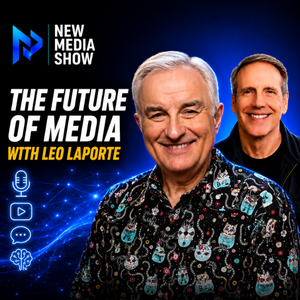
Creators no longer operate in a simple world of publishing one show to ONE place and relying mainly on advertising.

The strongest creators are building direct relationships with audiences across podcasts, video, short-form clips, newsletters, communities, subscriptions, live events, products, and services.

Podcasting remains one of the most effective long-form formats for building trust and repeated audience connection.

It is now one part of a larger media strategy shaped by video distribution, platform algorithms, artificial intelligence, audience ownership, and the growing power of individual personalities.

Steve brings a valuable perspective to this discussion. Before joining QCODE, he spent years working with Apple Podcasts and iTunes. At QCODE, he helped develop and distribute premium scripted audio series featuring talent including Matthew McConaughey, Demi Moore, and Rami Malek. QCODE has since expanded through Daylight Media, which provides distribution, monetization, technology, marketing, and business support for a broader network of creators.

Daylight currently works with roughly 70 creators and shows representing approximately 300 million monthly audio downloads and video views.

Across that network, video now accounts for a significant share of consumption, although the balance between audio and video differs considerably from show to show.

That difference is important.

Some creators have audiences that strongly favor YouTube and Spotify video. Other shows continue to perform primarily through audio.

For some programs, video may be valuable mainly as a discovery and social marketing layer rather than as the central product. Steve argues that creators should evaluate their format, audience, resources, and business goals before committing to a major video expansion.

Rob and Steve discuss Apple’s HLS video support and why it may become an important addition to the podcast distribution ecosystem. HLS can give creators greater flexibility in delivering video while maintaining many of the ownership and control principles associated with RSS.

The larger issue is whether creators retain access to their audience data, revenue information, advertising options, and the ability to move their shows between services.

The conversation also examines what makes a show work in both audio and video.

A strong video presentation may include thoughtful set design, lighting, visual storytelling, archival material, graphics, and physical objects that add context. The underlying audio still needs to stand on its own.

Listeners should not feel as though they are receiving an incomplete version of a show because they cannot see what is happening on screen.

Steve points to television, documentary production, and the work of filmmakers such as Ken Burns as useful references.

A show can begin with excellent audio storytelling and add visuals that deepen the experience without making the audio audience feel secondary.

There are also cases where the audio and video products should remain different. Scripted fiction uses sound to create a theater of the mind, allowing listeners to imagine the world and its characters. Turning that same property into a visual production may require a separate creative and business decision rather than a simple video version of the podcast.

We also explore the potential for long-form content on Instagram, the renewed interest in vertical video, and the growing market for microdramas. They also revisit Quibi and consider whether some earlier media ideas failed because the technology, audience behavior, or distribution environment was not yet ready for them.

The discussion then turns to one of the most important distinctions between podcasting and YouTube.

YouTube can generate large spikes around individual videos, but performance may vary widely from episode to episode.

Traditional RSS-based podcast audiences are often more consistent. That stability can make an audio podcast especially valuable to advertisers because future episode delivery and revenue are easier to forecast.

YouTube is highly effective for discovery. Podcast feeds are often stronger at developing recurring habits around a series. Successful media companies will increasingly need to understand the value of both.

Catalog discovery is another major opportunity. Podcasts and long-form videos can remain useful for years, but most platforms continue to prioritize newly released material. Steve argues that the industry needs better ways to help audiences find relevant episodes from existing catalogs based on subject, location, interest, and current context.

Daylight recently acquired Podcast Review, a long-running editorial publication focused on podcast reviews, interviews, recommendations, and lists. Steve sees independent editorial guidance as an important part of helping audiences find strong shows beyond what algorithms automatically recommend. Podcast Review continues to publish consumer-focused coverage while operating as a Daylight Media property with stated editorial standards and disclosures. 

Rob and Steve discuss whether the audience now has more influence over what qualifies as a podcast. Listeners and viewers increasingly use the word to describe a style of recurring, personality-led media rather than a specific technical delivery method.

Steve is less concerned with rigid format definitions. He compares the current debate to earlier questions about whether a streaming series released all at once should still be called television. Distribution formats change. Audience behavior changes. The most useful question is whether the content delivers the experience people expect from the show.

The second half of the episode focuses on creators becoming media companies.

Daylight works with creators at different stages, from established personalities such as Jon Stewart to growing shows entering advertising for the first time. Some partners need only ad sales support. Others are developing subscriptions, merchandise, tours, live events, networks, and additional shows.

Steve describes Daylight as an infrastructure layer that often works behind the scenes. The goal is to help the creator’s brand remain visible while providing the operational systems needed to grow. Daylight was launched as an expansion of QCODE’s creator-support work, with services covering distribution, audience development, marketing, technology, products, and monetization. 

Creator-first structure differs from an older media model in which the studio or network brand often controlled the relationship between talent and audience. Steve believes the next era will give creators more leverage, flexibility, and ownership. The companies that support them will need to prove their value without taking over the show’s identity.

Artificial intelligence is already affecting that work, although adoption varies widely. Some creators are using AI for research, transcription, artwork, editing, and production support. Others remain strongly opposed to it.

Steve does not see the choice as a complete acceptance or rejection of AI.

Each use case needs to be evaluated separately. Voice dubbing may help a creator correct a short line without having to re-record an entire session. Transcription can reduce production time. Synthetic performances or undisclosed manipulation may violate the audience’s expectations and trust.

Both agree that growing volumes of synthetic content may also increase the value of live, in-person, and clearly human experiences. 

Podcast tours, creator conferences, community gatherings, retreats, and interactive events allow audiences to participate in ways that digital platforms cannot fully reproduce. The opportunity may extend beyond recording a regular episode on stage.

Future creator events could include audience conversations, workshops, performances, shared activities, and experiences built around a particular community or interest.

This episode offers a clear view of where creator media is heading. A show can remain the center of the relationship, but the greater opportunity lies in building a flexible media business around the audience, protecting creator ownership, and selecting formats that serve the content rather than following every platform trend.

Topics Covered in This Episode

– Why successful creators are becoming media companies
– QCODE’s expansion into Daylight Media
– Audio and video consumption across the Daylight network
– Apple HLS video and creator-controlled distribution
– Why every show needs a different audio and video strategy
– Set design and visual storytelling for video shows
– Preserving a complete experience for audio listeners
– Scripted fiction, video adaptations, and intellectual property
– Instagram, vertical video, and microdramas
– YouTube discovery compared with RSS audience stability
– Evergreen content and podcast-catalog discovery
– Apple Podcasts editorial discovery
– Daylight Media’s acquisition of Podcast Review
– Whether audiences now define what a podcast is
– Revenue beyond advertising
– Subscriptions, merchandise, networks, touring, and events
– Daylight as a behind-the-scenes creator infrastructure company
– RSS, APIs, alternate enclosures, and platform control
– Creator access to audience and revenue data
– AI production tools and audience trust
– The growing value of live and human experiences

Chapter Time Stamp Markers:

00:00 Welcome to The New Media Show Episode 676
00:36 Creators are building full media businesses
02:24 Introducing Steve Wilson of Daylight Media and QCODE
03:05 How QCODE expanded into Daylight Media
04:23 From premium audio fiction to a creator network
05:16 Video now drives much of the network’s consumption
05:59 Apple HLS video and creator flexibility
08:27 Why there is no single audio-video strategy
09:03 What makes a show work in video?
10:44 Keeping audio listeners at the center
12:09 Higher production values and video set design
14:34 Theater of the mind and the value of audio
15:37 Short-form video and social-first podcasts
16:00 Could Instagram become a long-form video platform?
17:33 Microdramas, vertical storytelling, and the Quibi lesson
18:27 Audio-first creators and video anxiety
19:24 YouTube volatility compared with RSS stability
21:01 Tentpole episodes, long-form content, and audience habits
22:10 Evergreen catalog discovery
23:26 Apple Podcasts editorial discovery
25:00 Daylight Media acquires Podcast Review
25:46 Is the audience taking control of media definitions?
27:52 Does the technical definition of a podcast still matter?
31:03 Moving from a show to a media company
32:14 Daylight’s creator network and growth spectrum
32:54 Subscriptions, merchandise, tours, and new revenue
33:35 Daylight as a creator infrastructure layer
34:07 Why Daylight works behind the scenes
36:12 The future of video distribution and RSS
37:17 Alternate enclosures and location-based discovery
38:24 Creator ownership beyond RSS purity
39:59 Audio ads, video ads, platforms, and advertiser results
41:07 Independent creators gain more media power
42:07 How creators are using AI
43:02 Where AI can damage audience trust
45:05 AI voice dubbing and practical production uses
45:34 The return of live and human experiences
47:18 Podcast tours, conferences, and creator communities
49:18 Building more interactive creator events
50:51 Final thoughts on Daylight Media and QCODE
51:31 Where to find Daylight and QCODE shows
52:44 End of episode

Guest Links: Steve Wilson, Chief Strategy Officer, Daylight Media and QCODE

Daylight Media: https://daylightmedia.com
QCODE Media: https://qcodemedia.com
Podcast Review: https://podcastreview.org
Steve Wilson on LinkedIn: https://www.linkedin.com/in/stephenwilson7
Steve Wilson on Instagram: https://www.instagram.com/wilsonomics

Steve Wilson is currently Chief Strategy Officer at Daylight Media, with his work continuing across the QCODE and Daylight organizations.

Host, Rob Greenlee and New Media Show Links

New Media Show: https://newmediashow.com
New Media Show on YouTube: https://youtube.com/@TheNewMediaShow
New Media Show Audio on Apple Podcasts: https://podcasts.apple.com/us/podcast/new-media-show-audio/id392545649
Rob Greenlee Website: https://robgreenlee.com
Rob Greenlee on LinkedIn: https://www.linkedin.com/in/robgreenlee
Rob Greenlee on YouTube: https://youtube.com/@RobGreenlee
Podcast Hall of Fame: https://podcasthall.com

About Trust Factor Lab

Trust Factor Lab helps creators, media leaders, executives, and brands build stronger audience trust across AI, video, podcasts, and creator-led media. Founded by Rob Greenlee, it focuses on content strategy, authority development, media positioning, AI transparency, audience growth, and business outcomes built through credibility.

AI Disclosure Note:

I used AI tools to help organize and edit this episode description and create chapter markers from the episode transcript. The editorial direction, final review, industry perspective, and responsibility for the published content remain mine. The discussion reflects the views expressed by my guest and me during the recorded conversation.

The Future of Media | Leo Laporte, TWiT.tv #672

In Episode 672 of the New Media Show, host 2017 Podcast Hall of Famer Rob Greenlee welcomes Leo Laporte, founder and owner of the TWiT Podcast Network, longtime technology broadcaster, and 2015 Podcast Hall of Famer
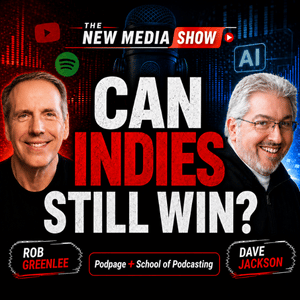
He launched TWiT in 2005 and built one of the earliest independent technology media networks around a simple idea: make strong shows, distribute them everywhere the audience wants to watch or listen, and build a real relationship with the people who return every week.

Leo has spent decades at the center of the shift from broadcast radio and cable television into online shows, podcasts, livestreams, video, and creator-led media. 

This conversation looks at where that model is heading now.

The word “podcast” helped define an era of downloadable audio, RSS feeds, and iPods. Today, audiences find shows through YouTube, Apple Podcasts, Spotify, Netflix, social platforms, livestreams, clips, newsletters, and communities.

Most viewers or listeners do not care how a show is technically delivered. They care whether it is easy to find, worth their attention, and made by people they trust.

Rob and Leo discuss why the technical barrier to starting a show has fallen so far, while the challenge of creating meaningful content has never gone away. Anyone can publish.

Building a show that earns repeat attention takes perspective, consistency, subject knowledge, and a genuine relationship with an audience.

Leo reflects on TWiT’s early video strategy, its experiments with live 24/7 programming, and the importance of creating a sense of place around a media brand.

Video can deepen audience connection, while audio remains one of the most personal forms of media because it travels with listeners through daily life.

The discussion also explores the growing complexity of distribution and measurement. Audio and video are increasingly becoming one media experience, yet advertisers still face fragmented metrics across RSS, YouTube, streaming platforms, and social video.

Rob and Leo talk about Apple HLS video, the gap between download metrics and actual consumption, the limitations of existing IAB measurement standards, and why advertiser confidence still often comes down to audience fit and trusted host-read relationships.

A strong audience relationship has more long-term value than a number on a dashboard that may not fully reflect who watched, listened, responded, or bought.

Leo also shares his view that AI is a major structural technology transition. TWiT has expanded its coverage through Intelligent Machines, looking at AI, robotics, and the impact these tools will have on work, media, and daily life.

AI can help creators research, edit, generate visuals, improve production workflows, translate content, and extend the usefulness of existing media. It can also generate massive volumes of generic content, clone voices, and make it harder for audiences to know what is real.

Rob and Leo discuss whether clearly identified and certified human-led media may become more valuable as synthetic content becomes harder to distinguish from authentic work. They agree that human perspective, lived experience, spontaneity, and community will continue to matter deeply in a media environment crowded with automated output.

The episode closes with a look at the next generation of media habits. Leo points to the rise of short-form scrolling, social video, and new creator business models, while also making the case for long-form conversations and communities that bring people together instead of pushing them further apart.

For creators and media companies, the path forward is still clear: build work that people value, meet the audience where they are, stay flexible as platforms change, and create relationships strong enough to survive the next technology shift.

Topic Chapter Time Stamp Markers:

00:00 — Welcome to The New Media Show Episode 672
Rob Greenlee introduces Leo Laporte and sets up the episode around online new media, podcasting, video, AI, and where media is heading next.

02:15 — Leo Laporte Joins the Conversation
Leo reflects on how long he and Rob have been part of the early era of podcasting and online media.

02:45 — Is It Still New Media?
Rob and Leo discuss whether “new media” still works as a term, and why podcasting may now be part of a much larger media category.

03:30 — Why Leo Wanted to Call Podcasts “Netcasts”
Leo explains why he resisted the term “podcast” early on and why he still thinks creators are really making shows.

04:35 — Podcasting Beyond the Download
The conversation moves into YouTube, Netflix, Spotify, RSS, streaming, and why the audience cares more about access than the delivery format.

05:25 — Be Everywhere the Audience Wants You
Leo explains one of TWiT’s core decisions: distribute content wherever listeners and viewers want to consume it.

06:10 — Discovery Is the New Challenge
Podcasting is easier to access than ever, but harder to discover because audiences now have millions of choices.

07:35 — Why Starting Is Easy but Building a Show Is Hard
Leo explains that technical barriers have fallen, but the real challenge remains content, authenticity, and audience connection.

09:20 — Talent, Audience, and the Return of Media Gatekeeping
Rob and Leo discuss whether attention is consolidating again around fewer large creators and channels.

10:25 — Audience Size vs Real Business Value
Leo separates building an audience from building a media business and explains why YouTube monetization still requires scale.

11:05 — Radio, Podcasting, and the Early TWiT Model
Leo talks about his radio background, his first podcast from 2004, and how broadcasting and podcasting share the same core idea.

12:05 — The Brick House Studio and Legitimacy
Leo explains why TWiT built a large studio: to show advertisers and audiences that online media could be a serious media business.

13:05 — Video Was Always Part of the Plan
Rob and Leo talk about how TWiT was doing video years before the current “video podcasting” push.

13:40 — Audio Intimacy vs Video Presence
Leo explains why radio creates intimacy, while video adds place, presence, and a different kind of audience relationship.

16:05 — TWiT as a Lean-Back Media Network
Leo describes his early vision for TWiT as a low-cost version of CNN or CNBC for technology coverage.

17:00 — 24/7 Streaming and Live Community
The conversation covers TWiT’s 24/7 stream, live programming, behind-the-scenes feel, and why raw authenticity helped the brand.

18:40 — Why Technology Was the Right Beat
Leo explains why covering technology kept TWiT relevant through major shifts from the iPhone to AI.

20:35 — AI as the Next Major Technology Shift
Leo compares AI to structural technology changes and explains why he sees it as a major long-term shift.

22:20 — From This Week in Google to Intelligent Machines
Leo discusses rebranding a TWiT show around AI and robotics as the center of technology coverage moved.

23:15 — Can AI Create Real Media?
Rob asks Leo about AI-generated content, and Leo explains why he still believes humans will remain central to media creation.

24:20 — AI Tools, Voice Cloning, and Advertising
Leo talks about using AI tools, ElevenLabs voice cloning, and the potential for AI-generated ad reads.

25:25 — Why Human Spontaneity Still Matters
Rob and Leo discuss whether AI clones can capture the same timing, originality, and human presence as real creators.

26:35 — Zune, Apple, Siri, and AI Adoption
A lighter segment on Zune leads into Apple’s AI plans and how mainstream users may begin to understand AI’s practical value.

27:45 — AI Backlash, Jobs, and Human Value
Rob and Leo discuss AI anxiety, job disruption, retraining, and why people need to understand where their human value lies.

29:30 — Will the Word Podcast Survive?
Rob asks whether “podcast” will remain the right term as audiences define the medium more than creators or platforms do.

30:40 — Shows, Creators, and Human Creation
Leo argues that “show” may be the better word and reflects on why humans are naturally driven to create.

33:05 — Apple HLS and the Audio-Video Merge
Rob and Leo discuss Apple HLS, streaming formats, video RSS, audio RSS, and the shift toward combined audio-video experiences.

37:05 — Measurement Across Audio, Video, and Platforms
The conversation turns to the challenge of consistent measurement across RSS, YouTube, Apple, Spotify, and other platforms.

38:20 — Host-Read Ads, Video Ads, and Dynamic Insertion
Leo explains how TWiT handles baked-in host reads, dynamic ad insertion, and the coming shift toward video ad insertion.

39:10 — The Problem with Podcast Metrics
Leo explains why measuring podcast consumption remains messy, especially across corporate networks, mobile listening, and YouTube.

41:10 — Why Attribution Still Falls Short
Rob and Leo discuss why promo codes, attribution links, and dashboards do not fully capture real audience behavior.

43:15 — Trust as the Real Advertising Asset
Leo explains why TWiT’s value to advertisers comes from trusted hosts, engaged audiences, and long-term sponsor relationships.

45:00 — Podcasting 2.0 and Shared Economic Models
Rob introduces the idea of shared value between advertisers, apps, creators, and listeners, and Leo reacts to the concept.

46:15 — Oxford Road, Dan Granger, and New Metrics
Rob brings up Dan Granger’s work around new podcast measurement standards and the 30-second vs 60-second listener discussion.

47:35 — Why Creator-Side Metrics Matter
Leo explains why he is skeptical of advertiser-driven measurement systems and why inflated podcast numbers damaged trust.

49:15 — Subscriptions, Membership, and Reducing Ad Dependence
Leo explains why audience-supported media would be ideal and how TWiT’s paid club fits into the business model.

50:20 — The Art of the Host-Read Ad
Rob and Leo discuss why Leo’s long-form host reads worked, including the value of making ads useful and content-like.

52:45 — Where Media Consumption Is Heading
Rob asks Leo what may come next in media, and Leo points to short-form scrolling, TikTok, Instagram, and changing audience behavior.

54:00 — Leo’s Son, TikTok, and the Next Generation of Media
Leo shares how his son built a major food audience through short-form video and turned it into a restaurant and cookbook business.

55:35 — Long-Form Still Has a Future
Leo argues that long-form shows can still matter if they create value, community, and real connection.

56:45 — Community as the Core of Media
Leo explains why connection and community remain the most important part of media, no matter how platforms change.

57:30 — The Risk of Doom Scrolling
Rob and Leo discuss short-form addiction, dopamine loops, and how constant scrolling can disconnect people from real community.

58:35 — AI Slop and Synthetic Video
The discussion moves to AI-generated video content, fantasy media, and the question of whether audiences will tire of low-quality synthetic output.

59:35 — Human Clones, AI Presence, and Authenticity
Rob asks whether AI versions of creators could extend their presence, and Leo reflects on voice clones, soul, and human perspective.

1:00:35 — Human-Made Media May Become More Important
Rob suggests that labeling human-made content may become more valuable as AI content grows more convincing.

1:01:20 — Remembering Todd Cochrane and Podcast Hall of Fame
Rob and Leo reflect on Todd Cochrane, the Podcast Hall of Fame, and the early podcasting community.

1:03:10 — The Hall of Fame, Dave Winer, and Joe Rogan
Leo and Rob talk about the Podcast Hall of Fame, Dave Winer, Joe Rogan, and recognizing major contributors to podcasting.

1:04:45 — Closing Thoughts and Where to Find the Show
Rob thanks Leo and closes the episode with where to find past episodes and future New Media Show content.

Guest Links: Leo Laporte, Founder and Owner, TWiT Podcast Network

TWiT Podcast Network: https://twit.tv/
Leo Laporte Website: https://leo.fm/
Leo Laporte on LinkedIn: https://www.linkedin.com/in/leo-laporte-8aa224309/
Leo Laporte on YouTube: https://www.youtube.com/@LeoLaporte
Intelligent Machines: https://twit.tv/shows/intelligent-machines
This Week in Tech: https://twit.tv/shows/this-week-in-tech

Rob Greenlee and New Media Show Links

Rob Greenlee Website: https://robgreenlee.com/
New Media Show: https://newmediashow.com/
New Media Show Audio on Apple Podcasts: https://podcasts.apple.com/us/podcast/new-media-show-audio/id392545649
New Media Show on YouTube: https://youtube.com/@TheNewMediaShow
Rob Greenlee on YouTube: https://youtube.com/@RobGreenlee
Podcast Hall of Fame: https://podcasthall.com/

AI Disclosure Note:

I used AI tools to help organize and edit this episode, description, and generate show notes from the episode transcript. The views, clarifications, responsibility, and industry perspective are mine and my guest’s. This article reflects my editorial direction and the substance of the conversation.

Can Indie Podcasters and Media Creators Still Win? | Dave Jackson #661

On Episode 661 of The New Media Show, host Rob Greenlee, 2017 Podcast Hall of Fame inductee, Chairperson of the Podcast Hall of Fame, and longtime new media executive, is joined by Dave Jackson, 2018 Podcast Hall of Fame inductee, founder of School of Podcasting, and Head of Podcasting at Podpage.com, for a deep conversation about whether independent podcasters and media creators can still win in today’s rapidly changing creator economy.

This episode centers on a question many creators are quietly asking right now:

Can indie podcasters still grow, monetize, and build trust in a market being reshaped by video, AI, platform control, and professionalized media production?

Rob and Dave discuss the recent combination of Podpage and School of Podcasting, why podcast education matters more than ever, and how websites, email lists, communities, video, RSS, and AI-assisted workflows are becoming essential parts of a creator’s survival strategy. Dave joined Podpage as Head of Podcasting in 2024, and School of Podcasting has been helping creators launch, grow, and monetize podcasts since 2005. 

The conversation also moves into some of the biggest issues facing podcasting and new media in 2026, including AI-generated shows, human voice and video cloning, creator burnout, YouTube’s influence on podcast identity, Apple’s HLS video podcast direction, and why human trust may become the most valuable asset creators have left.

Rob and Dave bring decades of experience to this discussion.

Both have seen podcasting shift through multiple technology waves, from the early RSS era to platform consolidation, video podcasting, AI tools, and the rise of creator-led media. That history makes this episode a practical and honest look at what indie creators need to do now to stay relevant, trusted, and discoverable.

What does this episode cover?

Can independent podcasters still succeed in a noisier, more competitive market?

What does “winning” even mean now: downloads, money, trust, community, authority, or sustainability?

Why the Podpage and School of Podcasting connection matters for podcast education and creator websites

Why podcasters need a home base beyond social platforms and YouTube

How AI is changing show notes, images, writing, research, production, and creator workflows

Why AI-generated content should not all be treated as spam, but fraud and abuse must be addressed

How human storytelling, lived experience, and trust help creators stand apart from AI content

Why video is becoming harder to ignore, but audio-only creators should not panic

How YouTube has changed public perception of what a podcast is

What Apple’s HLS video direction could mean for audio, video, RSS, and creator workflows

Why websites, email lists, communities, and audience ownership still matter

How indie creators can avoid burnout while adapting to new media expectations

Key Takeaways:

Indie podcasters can still win, but the definition of winning has changed.

Creators need more than a microphone and a media host. They need clarity, a trusted point of view, a website, a distribution plan, and a realistic path to audience growth.

AI is not going away. The smartest creators will learn how to use it without losing their human voice.

Video will continue reshaping podcasting, but not every creator has to become a full-scale video studio overnight.

Human-created content still has a powerful advantage when it is rooted in story, experience, transparency, and trust.

Websites are becoming more important again because creators need a stable home base that is not controlled by a single platform.

Podcast education matters because the barrier to starting is low, but the barrier to standing out is much higher.

Guest

Dave Jackson
Founder, School of Podcasting
Head of Podcasting, Podpage.com
2018 Podcast Hall of Fame inductee
Author of Profit From Your Podcast

Dave Jackson has been helping creators launch and improve podcasts since 2005 through the School of Podcasting. He is also Head of Podcasting at Podpage, where he supports podcasters using websites as a central hub for discovery, audience ownership, and long-term growth. (The School of Podcasting)

Guest links:
School of Podcasting: https://www.schoolofpodcasting.com/
Podpage: https://www.podpage.com/
Dave Jackson: https://davidjackson.org/
Podcast Consultant: https://www.podcastconsultant.com/

Host

Rob Greenlee
Host, The New Media Show
Podcast Hall of Fame inductee
Chairperson, Podcast Hall of Fame
Founder, Trust Factor Lab and Adore Network
Co-Founder, Passion Struck Network

Host and show links:
New Media Show: https://newmediashow.com/
Rob Greenlee: https://robgreenlee.com/
Podcast Hall of Fame: https://podcasthall.com/
Adore Network: https://adorenetwork.com/
Trust Factor Lab: https://trustfactorlab.com/
Passion Struck Network: https://passionstrucknetwork.com/
Rob on LinkedIn: https://www.linkedin.com/in/robgreenlee/

Bottom Line in this Episode:

This episode answers a major creator economy question for 2026: Can indie podcasters and independent media creators still compete as podcasting becomes more professional, more video-driven, and more influenced by AI?

Rob Greenlee and Dave Jackson explain why the answer is yes, but only if creators evolve. The winning indie creator now needs a clear purpose, a strong human voice, trusted expertise, a discoverable website, owned audience channels, thoughtful use of AI, and a strategy that works across audio, video, search, social, and community.

The episode is especially useful for podcasters, YouTube creators, podcast consultants, media educators, creator economy leaders, podcast hosting companies, AI media startups, and independent showrunners trying to understand the next phase of podcasting and new media.

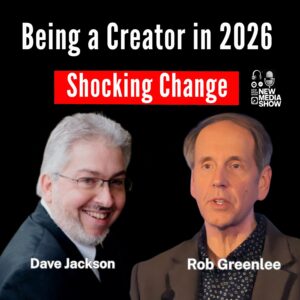
Shocking Change: Video, AI, and RSS Podcasting | Dave Jackson #646

In this new episode from a LIVE Jan 7th, 2026 New Media Show, Host RobGreenlee.com is joined by Dave Jackson (School of Podcasting and co-host of Ask the Podcast Coach) to unpack why the current shift toward video and AI feels like an earthquake inside podcasting, while the YouTube creator world treats it like a normal day.

We dig into how creators are now forced to play two games at once: the RSS subscription game and the algorithm discovery game especially for video, and why the definition debates did not matter as much as audience behavior.

Rob and Dave also get practical about what breaks and what endures, including growing frustration with heavy ad loads and pre-roll stacking, the realities of programmatic monetization, and why the first thing a listener should hear is you.

We cover where video delivery and monetization are heading (including HLS and video ad insertion), why “watch something” still defaults to YouTube for most people, and what Apple Podcasts would need to change if it ever wanted to truly reprioritize RSS-based video podcasting again.

Plus, a look at what live content signals in an AI-accelerated era, including the idea of live as proof of life and real-time audience feedback.

Rob also shares reminders about Podfest Expo (Jan 14–18 in Orlando) and the upcoming 2026 Podcast Hall of Fame activity on Jan 16th, 2026 (PodcastHall.com).

Topics Covered:

Video becoming default across platforms
AI accelerating the creator loop and increasing pressure to optimize for algorithms
RSS portability, ownership, and the growing discovery gap
Programmatic ads, pre-roll backlash, and audience ad tolerance
HLS, video ad insertion, and why the ad infrastructure is pushing streaming delivery
Apple Podcasts video discoverability problems and what would need to change
Netflix exclusivity lessons after the Spotify era of exclusives
Live as proof of life in a world flooding with synthetic content

Hosts Links

New Media Show: https://newmediashow.com/
Rob Greenlee: https://robgreenlee.com/
Rob on YouTube: https://www.youtube.com/@RobGreenlee
Rob on LinkedIn: https://www.linkedin.com/in/robgreenlee
Rob on Instagram: https://www.instagram.com/robwgreenlee/
Podcast Hall of Fame: https://podcasthall.com/
Podfest Expo: https://podfestexpo.com/

Dave Jackson, School of Podcasting: https://schoolofpodcasting.com/
Ask the Podcast Coach (Live Saturdays): https://askthepodcastcoach.com/


What’s a Podcast Era Is Over – Welcome Liquid Content Era #645

New Media Show with Rob Greenlee and Cliff Ravenscraft #645This week (December 17th, 2025) on episode #645 of The New Media Show with Rob Greenlee host is joined by longtime podcasting pioneer and returning guest co-host Cliff Ravenscraft, the Podcast Answer Man, for a wide-ranging and timely conversation about where podcasting has been and where it’s heading next.

The episode opens with a reflection on the long-running industry debate around the definition of a podcast and why that question has resurfaced so often over the last few years. Rob and Cliff explore how audience behavior has quietly moved ahead of industry debates, shifting consumption toward a mix of audio, video, livestreams, and platforms like YouTube, often without waiting for permission or consensus.

Cliff shares the full story behind his return to the Podcast Answer Man brand after stepping away years ago, including why he left, what he focused on during his time away, and what changes in the podcasting and creator landscape made this the right moment to come back. He reflects on two decades in podcasting, helping tens of thousands of creators launch shows, and why many creators today feel overwhelmed by conflicting advice around video, algorithms, and monetization.

Rob introduces the concept of podcasting’s evolving eras, beginning with the often-forgotten “Zero Era” where audio and video podcasting coexisted early on, followed by the MeUndies era, the experimentation and acquisition boom, and the more recent identity-crisis phase defined by the question “What is a podcast?”

Together, Rob and Cliff discuss why the industry may now be entering what’s being called the Liquid Content Era, where shows are no longer confined to a single format and content flows across feeds, platforms, and experiences.

The conversation digs into the tension between creator intent and audience convenience, the role of RSS in a changing ecosystem, and the risks of letting algorithms dictate creative decisions.

Cliff offers a counterbalance to the pressure many creators feel to be everywhere at once, emphasizing that audio-only podcasting can still succeed when aligned with clear goals, sustainable workflows, and meaningful audience relationships.

The episode also explores production quality, evolving audio standards, video integration challenges, international podcast growth, and why podcasting remains a powerful global medium despite constant claims that it’s “over” or “dead.”

This episode is both a reality check and a recalibration, encouraging creators to stop defending definitions, focus on serving audiences, and choose formats intentionally rather than reactively.

Join the conversation in comments, and be part of the discussion about what podcasting really means now and what it can become next.

Rob Greenlee
Rob Greenlee Website
https://RobGreenlee.com
New Media Show for Audio and Video RSS feeds
https://NewMediaShow.com
Adore Podcast Network
https://AdoreNetwork.com
Adore Creator Community on Skool
https://Skool.com/AdoreNetwork
Podcast Hall of Fame
https://PodcastHall.com
https://YouTube.com/@OfficialPodcastHallofFame
The Pro Creator Playbook with Rob Greenlee
Audio podcast
https://www.adorenetwork.com/show/pro-creator-playbook-audio/
Video show
https://www.adorenetwork.com/show/pro-creator-playbook-video/
Spoken Life Show
https://www.adorenetwork.com/show/spoken-life-show/
Spoken Human show on YouTube
https://YouTube.com/@spokenhuman
Rob Greenlee YouTube channel
https://YouTube.com/@RobGreenlee

Cliff Ravenscraft
https://CliffRavenscraft.com
https://PodcastAnswerMan.com